Basic Information
| Field | Detail |
|---|---|
| Full Name | Malcolm Macarthur (family name commonly styled “MacArthur”) |
| Birth | 1878 |
| Death | 1883 |
| Age at Death | 5 |
| Nationality | American |
| Parents | Arthur MacArthur Jr. (U.S. Army general), Mary Pinkney “Pinky” Hardy |
| Siblings | Arthur MacArthur III (U.S. Navy officer), Douglas MacArthur (U.S. Army general) |
| Notable For | Member of the MacArthur military family; died in childhood |
| Cause of Death | Measles |
| Lived | Various U.S. Army posts in the American West (family postings) |
A Child in a Marching Household: Early Life, 1878–1883
Malcolm Macarthur entered the world in 1878, the second son of a family perpetually on the move. His father’s uniform meant trunks packed, orders posted, and horizons forever changing. The MacArthurs lived the clattering rhythm of the late 19th-century U.S. Army—plains, posts, and parades—where the frontier wind carried dust and rumor in equal measure. In that world, a child’s universe was as large as the parade ground and as intimate as a small clapboard quarters near the flagstaff.
Malcolm’s life was heartbreakingly brief. In 1883, at age five, he died of measles, a disease that scythed through American households before modern vaccines. There are no school records, no first letters, no trophies on a shelf. What remains is a child’s name woven into a family tapestry that would soon grow internationally famous.
The Family Constellation
- Father: Arthur MacArthur Jr. (1845–1912), a Civil War hero who earned the Medal of Honor at Missionary Ridge in 1863. He rose through the ranks in a career spanning the Indian Wars, the Spanish–American War, and the Philippine–American War, serving as Military Governor of the Philippines in 1900–1901.
- Mother: Mary Pinkney “Pinky” Hardy (1852–1935), a Virginian by birth, who stewarded a household that was always in transit. She anchored the family through relocations and separations, the familiar burdens of a military life.
- Brother: Arthur MacArthur III (1876–1923), a U.S. Navy officer who earned the Navy Cross and Distinguished Service Medal for World War I service.
- Brother: Douglas MacArthur (1880–1964), the name that would tower over 20th-century military history—five-star general, leader of Allied forces in the Pacific, administrator of Japan’s postwar occupation, and a Medal of Honor recipient like his father.
Even amid a lineage luminous with medals and commands, Malcolm’s place is not marginal. He is the quiet measure of the family’s human stakes: joy, risk, and loss. In every celebrated biography, his short life is a reminder that even the most gilded histories have their silences.
A Snapshot of the MacArthurs: Dates and Milestones
| Person | Lifespan | Notable Milestones |
|---|---|---|
| Arthur MacArthur Sr. | 1815–1896 | Scottish-born lawyer; briefly Governor of Wisconsin (1856); Associate Justice, Supreme Court of D.C. |
| Aurelia Belcher | 1819–1864 | Married Arthur Sr.; maternal line of industrial wealth; died before Malcolm’s birth |
| Arthur MacArthur Jr. | 1845–1912 | Medal of Honor (1863); Military Governor of the Philippines (1900–1901) |
| Mary Pinkney “Pinky” Hardy | 1852–1935 | Matriarch who raised three sons across frontier posts and seacoasts |
| Arthur MacArthur III | 1876–1923 | U.S. Navy captain; decorated for World War I service |
| Malcolm Macarthur | 1878–1883 | Died of measles at age 5 |
| Douglas MacArthur | 1880–1964 | Five-star general; led Pacific campaigns; oversaw Japan’s occupation post-1945 |
Illness and the 19th-Century Frontier
Measles in the 1880s was no mild childhood rite. Without vaccines or antibiotics, epidemics arrived like sudden weather systems. Military posts, with families clustered in close quarters and constant travel along dusty routes, were vulnerable. For a five-year-old, the disease could turn in days. Malcolm’s death is one thread in a national fabric of frontier-era mortality—a stark ledger that later public health breakthroughs would transform.
Brothers in Arms: The World Malcolm Never Saw
Had he lived, Malcolm would have grown up in the shadow—and encouragement—of two extraordinary brothers. Arthur III, two years older, wore Navy blue and specialized in the complexities of modern sea power. Douglas, two years younger, would stride into history like a figure cut from marble, saluted on battlefields from New Guinea to Tokyo Bay. Their arcs diverged—sea and land, staff work and theater command—but each embodied the MacArthur affinity for high stakes and public duty. Malcolm’s absence, a silent negative space, likely shaped the tenderness behind their parents’ expectations and the sternness of their preparation.
Rings of Legacy: Nephews and the Next Generation
The family’s influence extended well beyond the first generation. Arthur III’s son, Douglas MacArthur II (1906–1997), became a prominent U.S. diplomat, serving as ambassador in several countries and navigating the delicate geopolitics of the mid-20th century. Douglas’s son, Arthur MacArthur IV (born 1938), chose privacy over publicity, a quiet counterpoint to a chorus of uniforms and dispatches. In the family’s ledger, duty took many forms: command, diplomacy, and, sometimes, the resolute decision to live beyond the glare.
Not That Malcolm Macarthur: Disambiguation
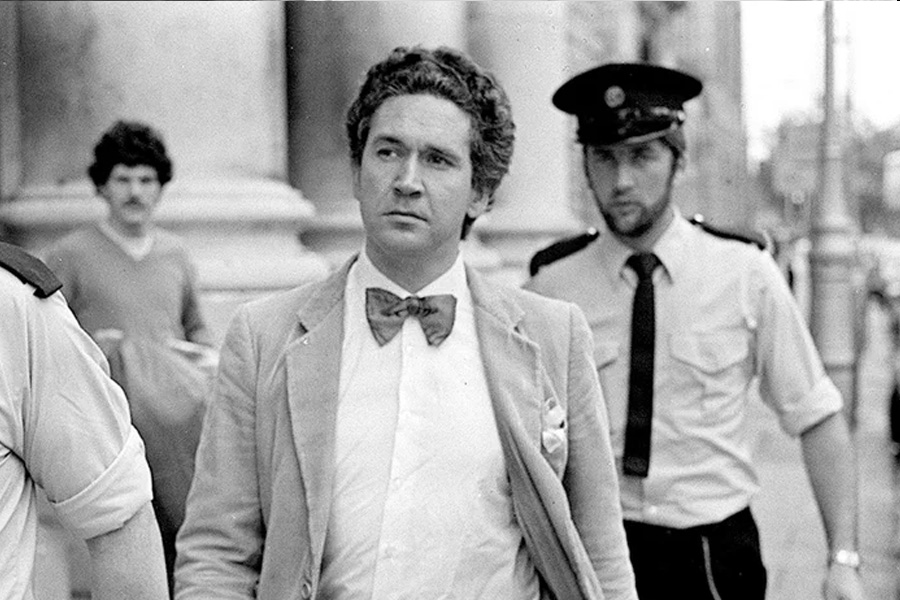
The name “Malcolm Macarthur” can mislead modern searches. It also belongs to a notorious Irish figure from the late 20th century with no connection to the American military family. Context matters: the American Malcolm was a child who lived 1878–1883; the Irish namesake is an unrelated adult from a different era and country. When reading historical references, dates and family ties clarify the distinction in an instant.
A Family Story Told in Numbers
- 2 Medal of Honor recipients in one family (father and son, Arthur Jr. and Douglas).
- 3 sons born to Arthur Jr. and Pinky: Arthur III (1876), Malcolm (1878), Douglas (1880).
- 5 years of life for Malcolm—brief, yet recorded.
- 1900–1901: the year span Arthur Jr. governed the Philippines.
- 1945: the year Douglas accepted Japan’s surrender aboard the USS Missouri.
Numbers here are not just statistics; they’re mile markers on the highway of a family saga that crossed continents and decades.
Why This Brief Life Endures
What does it mean to remember a child who left no diaries, no commands, no public speeches? It means we see the MacArthur story whole. The triumphs were built in households that endured loss. The medals shone in families that knew fragility. Malcolm’s life is a small star in a constellation that guided American military and diplomatic history for over half a century. Without him, the constellation is incomplete—and the sky less honest.
FAQ
Who was Malcolm Macarthur?
He was the second son of Arthur MacArthur Jr. and Mary Pinkney “Pinky” Hardy, born in 1878 and died in 1883.
How is he related to General Douglas MacArthur?
He was Douglas MacArthur’s older brother by two years.
What caused Malcolm’s death?
He died of measles, a common and often deadly childhood illness in the 19th century.
Where did the family live during his short life?
They moved among U.S. Army posts, especially in the American West, following his father’s assignments.
Did Malcolm have any descendants?
No, he died at age five and left no spouse or children.
Why is there so little information about him?
His early death meant he left no personal records, and most documentation comes from family histories.
Was he the same person as the Irish criminal with the same name?
No, that is a different Malcolm MacArthur from a different country and era.
Who were his siblings?
Arthur MacArthur III, a decorated U.S. Navy officer, and Douglas MacArthur, the five-star general of World War II and Korea.
What did his father, Arthur MacArthur Jr., achieve?
He received the Medal of Honor in the Civil War and served as Military Governor of the Philippines in 1900–1901.
How does Malcolm’s story fit into the larger MacArthur legacy?
His brief life underscores the family’s private losses behind its public achievements, completing the picture of a storied lineage.