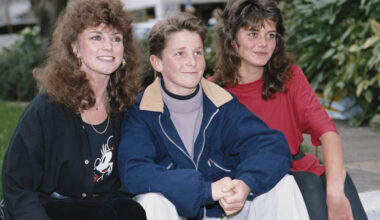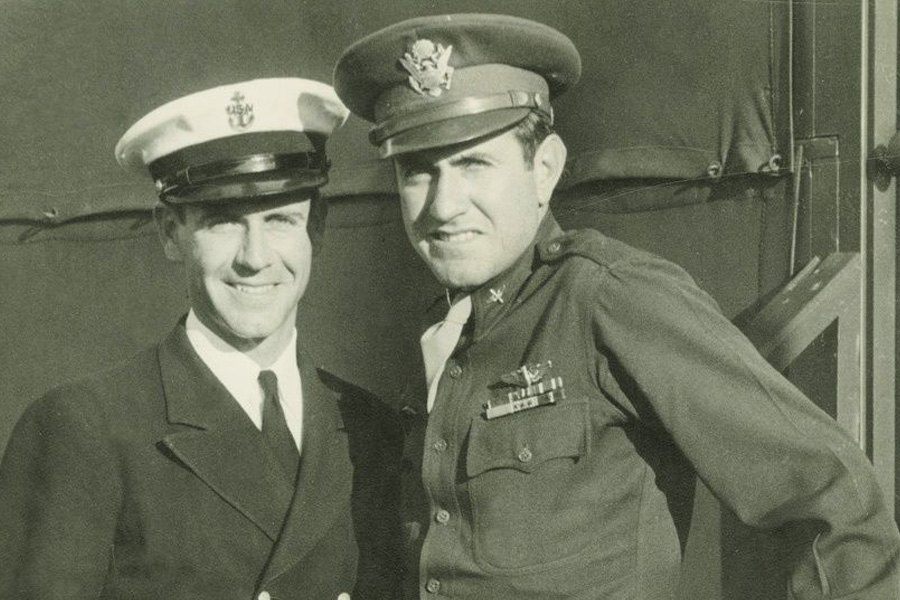
Basic Information
| Field | Details |
|---|---|
| Full Name | Peter S. “Pete” Zamperini |
| Birth | May 24, 1915 — Dunkirk, New York, USA |
| Death | May 15, 2008 — San Clemente, California, USA (age 92) |
| Heritage | Italian-American; eldest son of Anthony and Louise (Dossi) Zamperini |
| Education | Torrance High School; University of Southern California (USC), track scholarship |
| Occupations | High school coach (track and football), athletic mentor; U.S. Navy (WWII, recruit training) |
| Known For | Older brother and first coach of Olympian Louis Zamperini; decades of high school coaching in Southern California |
| Spouse | Doris Zamperini (married 59 years) |
| Children | One daughter, Leslie |
| Siblings | Louis (1917–2014), Sylvia, Virginia |
| Residences | Torrance, California; later San Clemente, California |
| Signature Ethos | “A moment of pain is worth a lifetime of glory” — a lodestar for athletes he mentored |
Early Life and Family Roots
Pete Zamperini was born in 1915 into the hard-edged hope of an immigrant household. His parents, Anthony (1889–1975) and Louise (1898–1993), had the grit typical of families who crossed an ocean to restart life from scratch. The Zamperinis moved from New York to Southern California seeking steadier work and clearer horizons. Torrance became their proving ground. In that sunlit suburb, Pete formed the habits that would define him: steadiness, restraint, a knack for reading people, and the quiet confidence of a big brother who understood responsibility like a native language.
As the eldest, he modeled the family’s creed—work hard, look after your own, keep moving forward. Those traits would soon meet a worthy challenge in his younger brother, Louis.
The Brother Who Built a Legend
The world knows Louis Zamperini as the Olympian, airman, and survivor whose story would become a cultural touchstone. Pete knew him first as a restless kid. When Louis’s mischief threatened to derail him, Pete intervened with a simple idea and relentless follow-through: run. He became Louis’s first coach and chief motivator, a metronome of discipline beside raw talent.
The result was a transformation. Louis’s speed flowered under Pete’s steady hand, carrying him to a 1934 national high school mile record and the 1936 Berlin Olympics. In that crucible, Pete’s words became Louis’s anchor: a moment of pain was worth a lifetime of glory. The line traveled far, but it started close to home.
USC and Athletic Foundations
Pete was no stranger to the track himself. A standout runner at Torrance High School, he earned a scholarship to the University of Southern California. At USC in the 1930s, he honed both athletic craft and leadership poise. The campus tracks and team rooms served as a proving ground for a style that would later shape generations: rigorous yet humane, demanding yet encouraging, built around consistency and character.
That foundation—part muscle memory, part moral compass—prepared him for two arenas: the military and the high school coaching field.
War Years and the Return Home
World War II drew Pete into service. He joined the U.S. Navy and spent the war years stateside, training recruits in San Diego. While he drilled men for the unforgiving mechanics of military life, he carried private fears for his brother missing at sea and then imprisoned. Coaching, discipline, and endurance were no longer abstractions—they were survival. When the war ended, Pete brought that sharpened sense of purpose back to Southern California.
A Coach’s Life: Tenure, Philosophy, Impact
Pete’s postwar career unfolded on high school fields and cinder tracks. He began at Torrance High School for a decade, stewarding athletes across seasons and sports: track in the spring, football in the fall. Over the years, he coached at other Southern California schools, becoming a local institution—a figure greeted with handshakes after meets and quiet nods from parents who appreciated the balance he struck between toughness and care.
His philosophy boiled down to a few firm lines: discipline is freedom, consistency yields results, and pain, properly channeled, can be transformative. He emphasized fundamentals and accountability, the steady drumbeat over the flashy sprint. Hundreds attended his retirement celebrations; the tally of athletes he mentored is impossible to count, but the echoes of his message carry on in the habits and life choices of those he coached.
Marriage, Fatherhood, and the Home Front
If the track was his public stage, home was the sanctuary. Pete married Doris, his partner of 59 years and the love of his life. Their daughter, Leslie, became a bright thread in the family tapestry. Friends and former athletes remembered Pete as composed and warm, with a coach’s eye for detail and a father’s patience. Behind the scenes he remained the same person he was as a brother: the steady hand on the wheel.
A Private, Middle-Class Life
Unlike his brother, Pete never chased spotlights. His life was anchored in the dependable rhythms of education, coaching, and community. Financial details are scarce, but the outline is clear: a coach’s salary, the frugal habits of Depression-era adults, and the modest security of a veteran. It was an educator’s balance sheet—stable, honest, unadorned—yet rich in the currency he valued most: family, purpose, and the next practice.
Memory, Mentions, and Modern Echoes
Pete passed away on May 15, 2008, in San Clemente, California, nine days shy of 93. In the years since, his name surfaces in the wake of his brother’s fame and in the biographies of athletes who remember their first coach’s words. Social posts and commemorations often align his simple, searing phrase with footage of runners straining for the tape. It fits. Pete understood that the human spirit can be trained like a muscle. Discipline isn’t glamourous, but it lasts.
Family at a Glance
| Family Member | Lifespan | Relationship | Notable Notes |
|---|---|---|---|
| Anthony Zamperini | 1889–1975 | Father | Italian immigrant; moved family to CA for work and opportunity |
| Louise (Dossi) Zamperini | 1898–1993 | Mother | Resilient matriarch; moral center of the family |
| Pete Zamperini | 1915–2008 | Eldest child | Athlete, Navy veteran, coach; mentor to Louis |
| Louis Zamperini | 1917–2014 | Younger brother | Olympian, WWII airman and survivor; subject of popular biography and film |
| Sylvia Zamperini | — | Sister | Part of the close Torrance household; less publicly chronicled |
| Virginia Zamperini | — | Sister | Helped sustain the family’s close-knit dynamic |
| Doris Zamperini | — | Spouse of Pete | Married to Pete for 59 years; described as his greatest love |
| Leslie | — | Daughter of Pete | Frequently noted in tributes as adored and a source of pride |
Career Timeline
| Years | Milestone | Details |
|---|---|---|
| 1915–1930s | Early years | Born in New York; family relocates to Torrance, CA |
| Early 1930s | High school athletics | Track success at Torrance High; leadership tendencies evident |
| Mid–late 1930s | USC | Competes on scholarship; refines athletic discipline |
| Late 1930s | Brother’s mentor | Guides Louis into competitive running; foundational coaching |
| 1941–1945 | WWII service | U.S. Navy; recruit training in San Diego |
| Late 1940s–1950s | Coaching begins | Torrance High School—track and football (10 years) |
| 1950s–1980s | Coaching expands | Continues at Southern California schools; community fixture |
| 1980s | Retirement | Celebrated by former athletes and colleagues |
| 2008 | Passing | Dies at home in San Clemente, CA, at age 92 |
FAQ
Who was Pete Zamperini?
He was an American high school coach, Navy veteran, and the older brother and first coach of Olympian Louis Zamperini.
When and where was he born?
He was born on May 24, 1915, in Dunkirk, New York.
How did Pete influence Louis Zamperini’s career?
Pete steered Louis from trouble into track, coached his early training, and instilled the discipline that propelled him to the 1936 Olympics.
Did Pete serve in World War II?
Yes, he served in the U.S. Navy during WWII, training recruits in San Diego.
Where did Pete live most of his life?
He grew up in Torrance, California, and later lived in San Clemente, California.
What was his coaching philosophy?
He emphasized discipline, consistency, and the belief that short-term pain can yield enduring achievement.
Was Pete married and did he have children?
He was married to his wife, Doris, for 59 years, and they had one daughter, Leslie.
When did he pass away?
He died on May 15, 2008, at age 92.