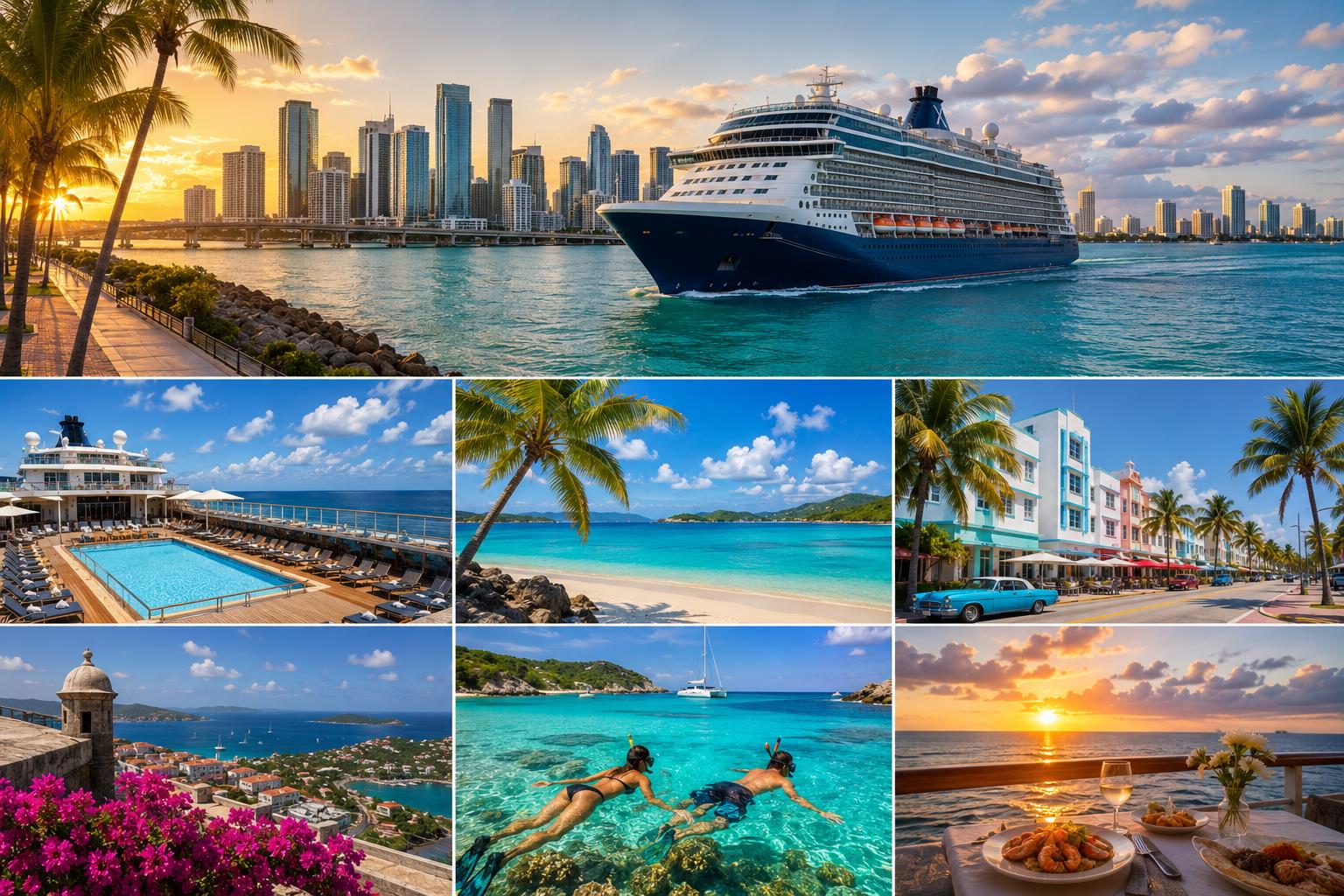
Planning a trip that includes several islands sounds exciting. You can imagine waking up in a new destination every few days, exploring different beaches, tasting local food, and experiencing cultures that vary from one island to the next. The reality, however, can be very different. Moving between islands often means coordinating flights, ferries, luggage transfers, airport connections, and changing hotel reservations. What looks like a relaxing vacation can quickly become a complicated logistics exercise.
One of the simplest ways to reduce this transit friction is to choose a travel format where transportation between destinations is part of the journey itself. For travelers considering the Caribbean, an itinerary on cruises from Miami can provide an efficient way to experience multiple destinations without repeatedly packing, checking out of hotels, and arranging separate transportation between islands.
Why Multi-Island Travel Can Become Complicated
Island hopping offers variety, but every additional destination introduces another layer of planning.
Suppose you want to visit three or four islands during a single vacation. You may need to research which islands have direct flights between them, determine ferry schedules, compare baggage allowances, arrange airport transfers, and make sure each connection fits with your hotel check-in and check-out times.
Even when everything works according to schedule, travel days can consume a significant part of your vacation.
There is also the question of luggage. Moving from one hotel to another means repeatedly packing and unpacking. If you are traveling with children, sports equipment, or larger bags, the process can become even more tiring.
This is where the idea of reducing “transit friction” becomes useful.
What Is Transit Friction?
Transit friction refers to all the small inconveniences associated with moving from one destination to another.
It includes obvious issues such as flight delays and missed ferry connections, but also less noticeable problems:
- Packing and unpacking repeatedly
- Waiting at airports or ferry terminals
- Finding transportation to hotels
- Checking in and out
- Carrying luggage between connections
- Coordinating multiple reservations
- Adjusting plans around transportation schedules
Individually, none of these tasks seems particularly difficult. Together, however, they can take up a surprising amount of time.
A multi-destination cruise changes the equation because your accommodation travels with you.
Your Hotel Moves Instead of You
Perhaps the biggest advantage of cruising between destinations is that you do not need to change hotels every time you visit a new place.
You unpack once, settle into your cabin, and then the ship takes you to different ports according to its schedule.
This can make a multi-destination vacation feel considerably simpler. Instead of spending the morning packing bags and traveling to another hotel, you can enjoy breakfast, participate in onboard activities, or simply relax while the ship moves toward the next destination.
For travelers who enjoy variety but dislike logistical complexity, this can be a major benefit.
More Destinations Without Constant Repacking
Traditional island hopping often involves a cycle that looks something like this: explore an island, return to the hotel, pack your belongings, check out, travel to a terminal, wait for transportation, arrive at another island, find your hotel, and unpack again.
Repeat that process several times and the trip can start feeling like a series of moving days.
Cruising eliminates much of this repetition. Your cabin remains your base while the destinations change around you.
That means you can focus more of your time and energy on experiencing each port rather than managing the mechanics of getting there.
Miami as a Strategic Starting Point
Miami is particularly convenient for Caribbean-focused travel because it is a major departure point for cruises visiting destinations throughout the region.
For travelers arriving from other parts of the United States or internationally, Miami can also function as part of the vacation itself. You can arrive early, spend a day exploring the city, and then begin the cruise the following day.
Arriving before embarkation is often a sensible strategy because it provides a buffer against flight delays or unexpected travel problems. Missing a ship’s departure can be significantly more complicated than missing a local train or ferry, so allowing extra time can reduce stress.
Compare Destinations Rather Than Transportation Routes
When planning an island-hopping vacation independently, travelers often begin by asking, “How do I get from Island A to Island B?”
A cruise encourages a different way of thinking.
Instead of building the trip around transportation connections, you can start by looking at the destinations you want to experience and then compare cruise routes that include several of them.
This shifts the focus from logistics to experiences.
Perhaps one port is appealing for its beaches, another for historical attractions, and another for hiking or local cuisine. Rather than arranging separate transportation between all of them, you can choose a route that combines several interests into one trip.
Make the Most of Port Days
A cruise does not mean that every destination needs to be explored from morning until night.
Port calls usually provide a limited window, so it helps to plan realistically.
Before arriving at each destination, identify two or three activities that interest you most. Avoid creating an overly ambitious schedule that requires crossing the entire island in a few hours.
A relaxed approach often produces a better experience. You might choose a beach day at one port, a cultural excursion at another, and a food-focused experience somewhere else.
The goal is to experience a destination without turning the day into a race against the departure time.
Plan Excursions Around the Ship’s Schedule
Timing is particularly important when exploring independently.
If you book an excursion through the cruise line, the logistics are generally coordinated with the ship’s schedule. Independent excursions can also be excellent, but you need to allow enough time to return to the ship before departure.
Traffic, weather, transportation delays, or unexpected changes can all affect your return journey.
A useful rule is to avoid planning activities that leave almost no margin for delays. The more remote your excursion location, the more important that buffer becomes.
Pack for Variety, Not Every Possibility
One of the underrated benefits of cruising is that you only need to unpack once, but packing can still be challenging.
A multi-destination Caribbean trip may involve beaches, restaurants, excursions, evenings onboard, and potentially more formal events.
Instead of packing a completely different wardrobe for every island, focus on versatile clothing that can work across multiple situations.
Lightweight layers, comfortable walking shoes, swimwear, sun protection, and a few smart-casual outfits can cover many scenarios.
Packing cubes can also help keep your cabin organized without requiring you to unpack your entire suitcase.
Consider the Pace of Your Vacation
Another advantage of a multi-destination cruise is the balance between activity and downtime.
Island hopping independently can encourage travelers to maximize every day because transportation and hotel costs create pressure to keep moving.
A cruise provides natural breaks between destinations. After spending a day exploring a port, you can return to the ship and enjoy a slower evening before arriving somewhere new.
This rhythm can be particularly appealing for travelers who want to see several places without feeling like they are constantly in transit.
Understand What a Cruise Does Not Solve
Cruising is not automatically the perfect solution for every traveler.
Port visits are relatively short compared with staying several nights on an island. If you want to experience a destination deeply, spend time with local communities, or explore nightlife over several days, an independent stay may be better.
Cruises also follow fixed schedules. You cannot usually decide to stay an extra day because you have fallen in love with a particular island.
The best choice depends on whether you prioritize breadth or depth.
If your goal is to experience several destinations during one vacation, cruising can be highly efficient. If your goal is to immerse yourself in one or two locations, a land-based itinerary may offer greater flexibility.
Use Technology to Simplify Planning
Even when the transportation is largely organized, a little digital preparation can make the experience smoother.
Keep digital copies of your travel documents, cruise information, hotel reservations, and excursion confirmations. Check port schedules before departure and download maps or important information that may be useful without an internet connection.
It is also helpful to keep a simple daily schedule. Rather than creating a minute-by-minute itinerary, record the key information you need: arrival time, departure time, planned excursion, meeting location, and any important restrictions.
The simpler the system, the easier it is to follow while traveling.
Build in a Buffer Before and After the Cruise
One of the smartest ways to reduce travel stress is to avoid scheduling your flight too close to embarkation.
Consider arriving in Miami at least a day before the cruise if your travel circumstances make delays possible. This gives you time to recover from a long journey and reduces the risk of a missed departure.
Similarly, if your return flight is scheduled after the cruise, leave enough time to disembark, collect luggage, and reach the airport.
Travel days rarely go exactly according to plan, so a little extra time can be extremely valuable.
The Real Travel Hack: Fewer Logistics, More Experiences
The main advantage of a multi-destination cruise is not simply the number of places you can visit. It is the reduction in logistical effort required to visit them.
You still need to plan excursions, understand port schedules, pack appropriately, and choose a route that fits your interests. But many of the repetitive tasks associated with independent island hopping disappear.
You are not searching for a new hotel every few nights. You are not repeatedly moving your luggage between airports and accommodations. You are not necessarily arranging separate ferry or flight connections for every island.
Your accommodation becomes the constant while the destinations change.
Final Thoughts
Multi-island travel can be one of the most rewarding ways to explore a region, but the transportation between destinations can easily become the least enjoyable part of the experience. Every hotel change, ferry connection, airport transfer, and luggage movement adds another opportunity for delays and complications.
A cruise offers a practical alternative by combining transportation and accommodation into one experience. From a convenient departure point such as Miami, travelers can visit multiple Caribbean destinations while keeping the same cabin throughout the journey.
The key is to choose a route that matches your interests, plan port days realistically, allow extra time around embarkation and flights, and accept that a cruise provides a taste of several destinations rather than an extended stay in each one.
For travelers who value variety but want to minimize the hassle of constant transportation, a thoughtfully planned cruise can be one of the easiest ways to turn a complicated island-hopping trip into a smoother and more enjoyable vacation.