Presbyopia is one of those changes that arrives gradually and then all at once. The menu that was perfectly readable a year ago now requires holding it further away. The phone screen that used to be effortless now needs more light and more distance to focus on clearly. It is a normal part of how the eye ages, caused by the gradual loss of flexibility in the lens inside the eye that allows it to shift focus between distances. And while reading glasses are the most common first response, they are not the only one.
Multifocal contact lenses offer a way to manage presbyopia without reaching for glasses every time you need to read something, and for many people they are a genuinely workable solution. Here is what you need to know before pursuing them.
Multifocal Contact Lenses Work Differently From Progressive Glasses
The instinct is to assume that multifocal contacts work the same way progressive glasses do, with different zones of the lens handling different distances as your eye moves to look through them. The mechanism is actually different, and understanding it helps set realistic expectations about the adaptation period.
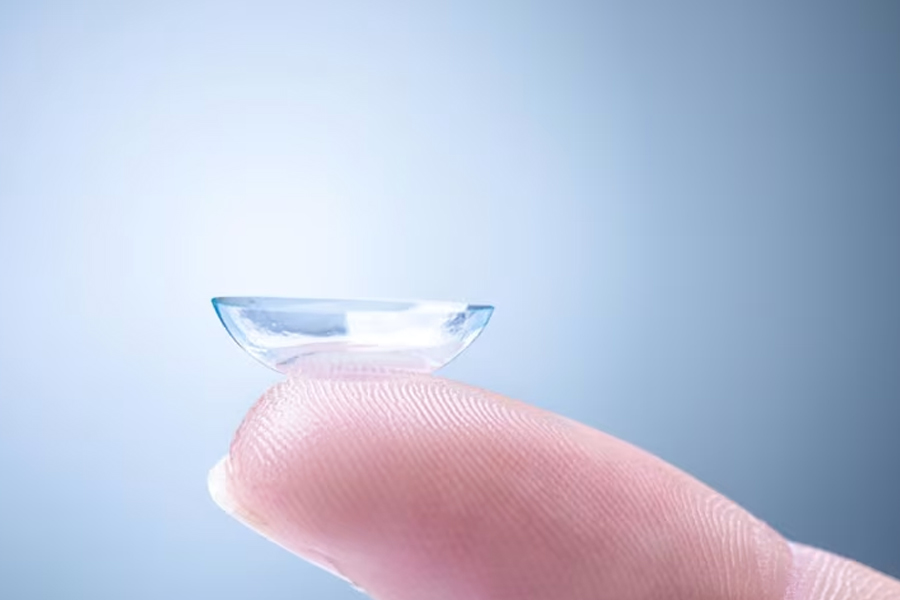
Most multifocal contact lenses use a simultaneous vision design, where multiple focal zones are present across the lens surface at the same time and the visual system learns to select the appropriate focal point for the distance being viewed. The brain essentially learns to process the relevant focal information and suppress the rest, which is why multifocal contacts require an adaptation period during which the visual system is learning this new processing pattern.
Some lenses use concentric ring designs with alternating near and distance zones. Others use aspheric designs that transition gradually across the lens surface. The specific design affects how the lens performs under different lighting conditions, how well it handles intermediate distances like computer screens, and how long the adaptation period typically takes. Your provider selects the design most likely to work for your visual demands based on your prescription and how you use your vision throughout the day.
Your Dominant Eye Plays a Role in How Multifocal Lenses Are Fitted
Eye dominance, the tendency to rely on one eye more than the other for distance vision tasks, is a factor that experienced providers account for when fitting multifocal contact lenses. Some fitting approaches assign more distance power to the dominant eye and more near power to the non-dominant eye, a variation sometimes called modified monovision that uses multifocal lenses rather than the single-vision lenses of traditional monovision.
Understanding which of your eyes is dominant before the fitting allows the provider to make fitting decisions that work with your natural visual system rather than against it. If this is not discussed during your fitting consultation, it is worth raising, because the difference between a fitting approach that accounts for eye dominance and one that does not can significantly affect how well you adapt to multifocal lenses and how satisfying the vision quality is across all distances.
The Degree of Your Presbyopia Affects Which Options Work Best
Presbyopia is not a fixed condition. It progresses over time, typically from the mid-forties through the mid-sixties, and the degree of near vision loss at any given point directly affects which multifocal lens designs are likely to produce satisfactory results.
Early presbyopia, where near vision has declined but is still relatively functional, generally responds well to multifocal contact lenses because the lens does not need to compensate for a large difference between distance and near power. As presbyopia advances and the gap between distance and near prescription requirements grows larger, some multifocal designs struggle to provide vision quality that is sharp across all distances simultaneously, and the tradeoffs become more apparent.
If you’ve ever thought “I have presbyopia, what are the best multifocal contact lens options for me?” look no further than a company like Pearle Vision. Pearle Vision’s licensed optometrists evaluate the current stage of your presbyopia during a contact lens exam and select trial lenses that are matched to your specific prescription requirements rather than applying a one-size approach that does not account for where you are in the progression of the condition.
Daily Disposable Multifocal Lenses Are Worth Considering
Multifocal contact lenses are available in both daily disposable and reusable formats, and for many presbyopic wearers daily disposables offer advantages that make them worth the additional cost per day.
Daily disposables eliminate the deposit buildup that accumulates on reusable lenses throughout their replacement cycle. As proteins and lipids from the tear film coat a lens surface over days and weeks of use, the optical quality of the lens degrades subtly, and for multifocal lenses where the precise optical zones of the lens design are essential for the simultaneous vision mechanism to work properly, surface deposits can noticeably affect vision quality before the replacement date arrives.
Starting each day with a fresh lens maintains the optical precision of the multifocal design throughout the wearing period and eliminates the end-of-replacement-cycle vision degradation that some reusable multifocal wearers experience. For presbyopic patients who are already dealing with the visual compromises inherent in simultaneous vision multifocal designs, maintaining the best possible optical quality throughout each day of wear matters more than it does for single-vision wearers.
Intermediate Vision Is the Most Common Challenge With Multifocal Lenses
Most multifocal contact lens designs are optimized for two primary focal distances: far and near. The intermediate range, roughly the distance of a computer monitor or a dashboard, sits between these two primary zones and is where many multifocal wearers notice the most compromise in vision quality compared to their performance at distance and near.
For people whose daily visual demands include significant computer use, this intermediate compromise is worth discussing explicitly with your provider before committing to a multifocal lens design. Some lens designs handle the intermediate range better than others, and knowing upfront that your work involves extended screen time allows the provider to prioritize intermediate performance in the trial lens selection rather than discovering the limitation after the fitting is complete.
In some cases, a separate pair of computer glasses used alongside multifocal contact lenses for screen-intensive work provides a more practical solution than trying to find a multifocal design that handles all three distances perfectly, which no current design achieves equally well across all lighting conditions and prescription levels.
The Adaptation Period Is Real and Worth Committing To
Multifocal contact lenses require the visual system to learn a new way of processing simultaneous focal information, and that learning takes time. Most providers recommend a trial period of two to four weeks before evaluating whether a specific multifocal lens design is working for you, because the initial impression during the first few days of wear does not reliably predict how the lenses will perform once the visual system has adapted.
Common experiences during the adaptation period include mild ghosting or halos around lights, slightly reduced contrast in low-light conditions, and a sense that vision is not quite as sharp as with single-vision lenses. These experiences typically diminish significantly as adaptation progresses, and many wearers who abandon multifocal lenses during the first week would have found them satisfactory had they continued through the full adaptation period.
Committing to the trial period with realistic expectations, wearing the lenses consistently rather than switching back to glasses whenever vision is not perfect, and communicating specific concerns to your provider rather than making a final judgment during the first few days gives multifocal lenses the best chance of working for your visual needs.
Monovision Remains a Viable Alternative if Multifocal Lenses Do Not Work for You
Multifocal contact lenses are not the only contact lens solution for presbyopia, and for some people they are not the right ones regardless of how long the adaptation period is extended. Monovision, where one eye is corrected for distance and the other for near with single-vision lenses, is a well-established alternative that works well for a significant portion of presbyopic contact lens wearers.
Monovision does not provide the simultaneous binocular vision that multifocal lenses aim for, and it involves a tradeoff in depth perception that affects some wearers more than others. But for people whose visual system adapts well to the monovision arrangement, it often provides sharper vision at both key distances than a multifocal design achieves, without the contrast reduction and halos that some multifocal wearers experience.
Your contact lens exam is the right place to discuss both options, including the possibility of trialing monovision if multifocal lenses do not produce satisfactory results after a genuine adaptation period. A provider who presents both options and helps you understand the tradeoffs of each is giving you a more complete picture of what is available than one who commits to a single approach before evaluating how your visual system responds.