Complex dental implant treatment is not simply a matter of placing a post and attaching a replacement tooth. A durable result depends on how the gums, jawbone, bite, existing teeth, medical history, and planned final restoration work together. For people with significant upper-jaw bone loss, options such as zygomatic pterygoid implants may be part of the discussion, but they are only appropriate after a detailed clinical evaluation.
The purpose of a thorough consultation is to help you understand your choices before committing to surgery. A strong plan should address long-term comfort, chewing ability, appearance, daily hygiene, follow-up needs, and what happens if healing does not go exactly as expected.
Why Careful Planning Matters
Dental implants are designed to support replacement teeth, yet a successful treatment plan involves more than the implant itself. The dental team must consider the health of the gums, the quality and quantity of bone, the position of nearby teeth, the force of your bite, and the way the final teeth will be cleaned. In more involved cases, an implant surgeon, restorative dentist, dental laboratory, and hygienist may each contribute to the plan.
A useful consultation should leave you with realistic expectations and enough information to make an unhurried decision. You should know the recommended approach, reasonable alternatives, potential limitations, likely sequence of care, and the maintenance responsibilities that continue after treatment is complete.
What The First Visit May Include
An initial evaluation commonly begins with a review of your medical and dental history. Bring an updated list of prescriptions, over-the-counter medicines, supplements, allergies, and previous procedures. The team may also examine gum health, signs of infection, remaining teeth, old bridges or dentures, bite alignment, speech concerns, chewing needs, and cosmetic goals.
Past extractions, failed implants, bone grafts, denture discomfort, teeth grinding, or periodontal treatment can all provide useful context. Online photographs and basic price quotes may be a starting point, but they cannot replace an in-person examination of anatomy, function, and oral health.
How Imaging Guides Treatment
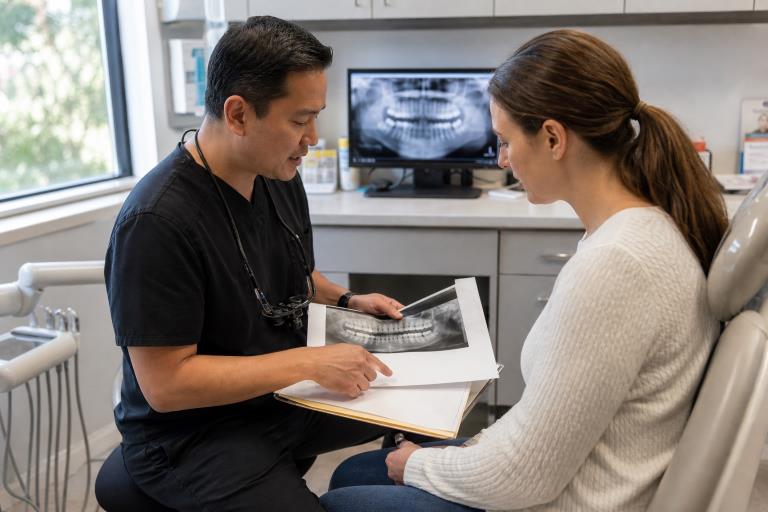
Detailed X-rays and three-dimensional scans can help the team assess bone height and width, sinus spaces, nerve pathways, existing infection, and the ideal position for the final restoration. Planning from the intended tooth position backward can reduce the risk of creating a result that is difficult to clean, uncomfortable, or poorly aligned with the bite.
As you review your dental implant candidacy, ask the clinician to explain what the images show in plain language. Useful questions include:
- Is there enough bone height and width for the proposed option?
- Is gum disease or infection present and in need of treatment first?
- Will additional imaging or specialist evaluation be needed?
- How does the planned final restoration guide implant placement?
How Bone Loss Can Change The Plan
Bone loss does not automatically end the conversation about implant-supported teeth. It can, however, affect the timeline, surgical technique, implant location, restoration design, or need for preparatory treatment. The right path depends on your anatomy, health history, goals, and ability to maintain the result.
Possible Planning Paths
- Place conventional implants when the site has adequate support.
- Use bone preservation or grafting when more support may improve the plan.
- Address infection or active gum disease before implant surgery.
- Consider alternative implant positions in carefully selected cases.
- Choose a fixed bridge or removable restoration when an implant approach is not the best fit.
Some approaches for severe upper-jaw bone loss are highly specialized. For perspective, published research on zygomatic implants has examined their use in patients with severely resorbed upper jaws, while also documenting the importance of case selection, surgical protocol, and complication monitoring.
Questions To Ask At The Consultation
Bring a written list of questions and take notes during the visit. Ask what options are available, why a particular approach is recommended, and what benefits and limitations you should expect. Also, ask whether care will occur in one stage or several, what risks are specific to your case, and what backup plan exists if healing or implant stability is not as anticipated.
It is also reasonable to ask who will place the implants, who will design the final teeth, how temporary teeth will be managed, how the restoration should be cleaned, and how often professional maintenance visits will be needed.
Comparing Different Treatment Paths
When comparing recommendations, use the same standards for every plan rather than focusing only on the lowest fee or fastest promise. Review each option according to these points:
- Function:How it may support chewing, speaking, and bite balance.
- Appearance:How the proposed teeth may support your smile, lips, and facial profile.
- Health:How infection, gum disease, and medical concerns will be addressed.
- Timeline:The number of visits, healing periods, and temporary restorations involved.
- Maintenance:Daily cleaning methods, professional care, likely repairs, and future adjustments.
- Backup plan:What happens if a graft, implant, or temporary restoration does not perform as planned?
Health Factors That May Affect Healing
Smoking, uncontrolled diabetes, active periodontal disease, immune concerns, prior radiation treatment, medications that affect bone metabolism, and other medical conditions may influence surgical planning or healing. This does not mean treatment is impossible, but it does mean the dental team needs accurate information and may recommend added precautions or coordination with another clinician.
Never stop or change a prescribed medication on your own because of planned dental care. Discuss concerns with both the dental team and the clinician who prescribed the medicine.
Cost, Timeline, And Follow-Up Care
Implant costs vary because treatment can include imaging, extractions, sedation, grafting, temporary teeth, laboratory work, surgery, the final restoration, and maintenance. Request a written estimate that clearly identifies what is included, likely additional costs, temporary restoration details, follow-up visits, repair policies, and payment terms.
Complex care may occur in phases: evaluation, disease control, preparation, surgery, healing, temporary restoration, final teeth, and long-term maintenance. A lower initial quote is not always the lower long-term cost if key services, repairs, or follow-up needs are excluded.
When To Seek A Second Opinion
A second opinion can be especially helpful when several teeth are involved, treatment is costly, bone loss is substantial, recommendations differ, or you feel rushed to decide. Bring recent X-rays or scans when available, along with written treatment plans, estimates, medication lists, and your specific concerns.
Seeking another perspective is not a sign of distrust. It is a practical step toward understanding the tradeoffs and choosing a plan you can maintain comfortably for years. The best next step is a detailed evaluation followed by a written plan that explains alternatives, risks, timing, cost, and long-term care in clear language.