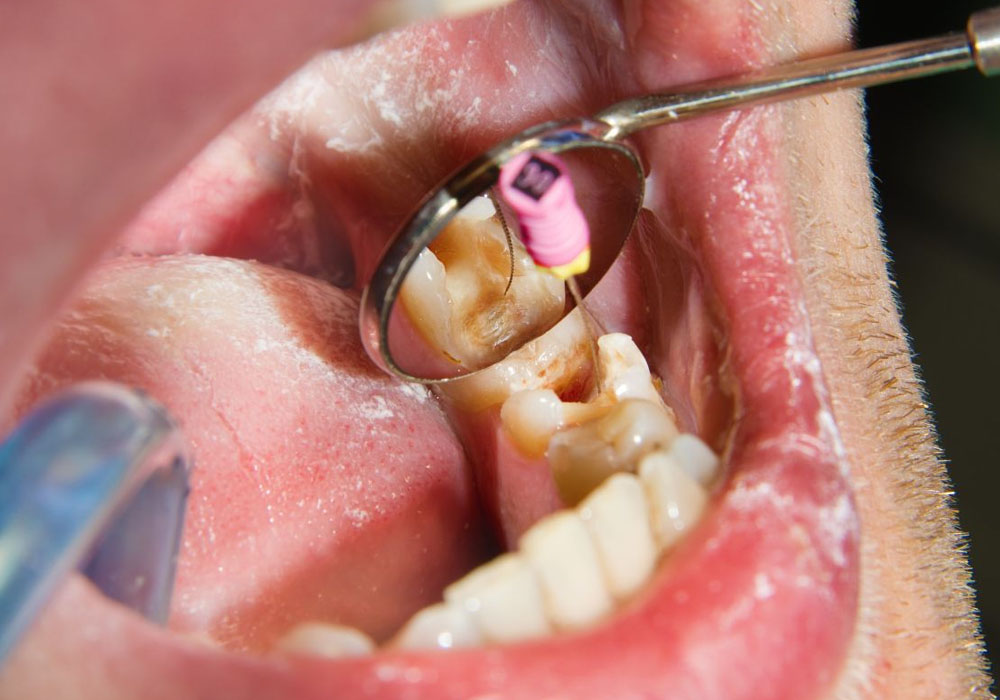
Sometimes a root canal treats the problem but the tooth still won’t settle down. Pain lingers. An X-ray shows a shadow near the root tip that refuses to shrink.
That’s usually the point where a dentist starts talking about surgery, and it’s a scarier word than the actual appointment deserves.
In most cases endodontic surgery means a procedure called an apicoectomy. It’s a small, precise operation on the very tip of the root, done to clear out infection that a standard root canal or retreatment couldn’t reach.
Why Surgery Becomes the Next Step
Root canal treatment cleans the inside of a tooth from the top down. But some canal branches are so fine, so twisted, that even a skilled endodontist working through the crown can’t fully reach them.
An apicoectomy comes at the problem from the other direction. Instead of going back through the crown, the surgeon approaches the infected area directly through the gum, right at the root tip.
What Happens During the Procedure
Local anaesthetic numbs the area first, the same kind used for fillings and standard root canals. Some clinics offer sedation for anxious patients, though it’s not required for most people.
The surgeon makes a small incision in the gum to reach the bone and root tip underneath. The infected tissue and the very end of the root get removed, usually only a few millimetres.
A tiny filling seals the root end from the new access point, stopping bacteria from creeping back in. Stitches close the gum, and the whole thing typically wraps up in 30 to 90 minutes depending on the tooth’s position and root complexity.
| Recovery Milestone | Typical Timeline |
| Return to work or normal activity | Next day for most patients |
| Swelling and mild soreness settle | 3 to 5 days |
| Stitches removed (if not dissolvable) | Around day 5 to 7 |
| Bone fully rebuilds around the root | Several months, tracked by X-ray |
How Well Does It Work
Success rates have climbed a lot since older surgical techniques were the norm. Traditional apicoectomy, without a microscope, hovered around 50% to 59% success in older studies. Modern microsurgical technique, using a surgical microscope and better sealing materials, pushes that figure up to roughly 90% to 94% in current research.
That’s a massive jump, and it’s the reason patients should ask specifically whether their surgeon uses a microscope. It genuinely changes the odds, not just marginally.
What Recovery Actually Feels Like
Most people describe the first two days as similar to a bad wisdom tooth extraction. Some swelling, some tenderness, manageable with over-the-counter pain relief in most cases.
By day five, when stitches usually come out, roughly 90% of patients report feeling close to normal again. Full bone healing underneath the gum takes much longer, often several months, but that part is invisible and painless day to day.
Simple Ways to Support Recovery in the First Week
- Stick to soft, cool foods for the first two or three days to avoid irritating the gum.
- Skip strenuous exercise for about a week, since raised blood pressure can worsen swelling.
- Use an ice pack in short bursts on the first day only, never after that.
- Avoid smoking, which slows healing and raises infection risk noticeably.
- Keep the surgical review appointment at six months, since that’s when true healing gets confirmed on X-ray.
Is It the Right Choice for Every Failed Root Canal
Not always. If the tooth has poor structural support left, or if the surrounding bone loss is severe, extraction and replacement may genuinely serve you better long term.
A good endodontist weighs this honestly rather than defaulting to surgery just because it’s available. Ask directly what your odds look like for your specific tooth, not just the general statistics, before agreeing to move forward.