Concrete projects can improve your property’s functionality, appearance, and long-term value. From installing a new driveway to building a backyard patio, concrete provides a durable surface capable of handling years of regular use.
However, homeowners often face two important decisions before starting a project: Should they hire a professional concrete contractor in Northern Kentucky and what questions should they ask before committing to one?
For homeowners in Northern Kentucky, those decisions deserve careful consideration. The region’s changing temperatures, clay-rich soils in many areas, sloped properties, and seasonal freeze-thaw cycles can complicate concrete installation.
Understanding the construction process, potential challenges, and differences between professional installation and DIY work can help you make an informed decision.
Can You Complete a Concrete Project Yourself?
Yes, homeowners can complete certain concrete projects themselves, particularly small, uncomplicated installations. However, larger projects involving significant excavation, drainage, reinforcement, or structural considerations are generally better suited for experienced concrete contractors.
The most important factor isn’t necessarily the size of the project. It’s the complexity of preparing the site and placing the concrete correctly.
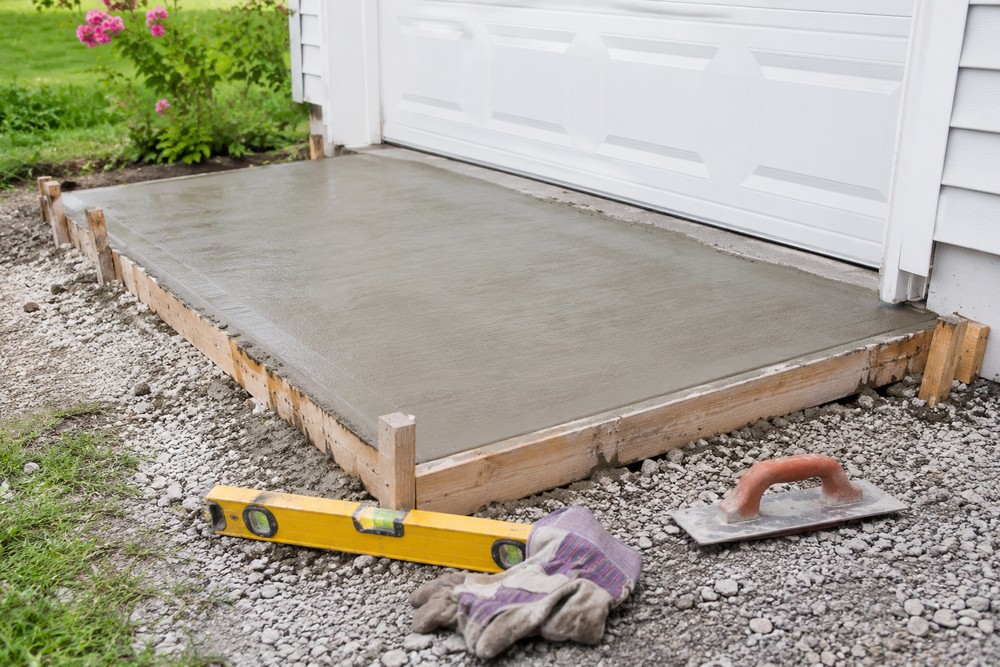
For example, pouring a small equipment pad on stable, level ground presents fewer challenges than replacing a driveway on a sloped property.
Concrete installation requires several steps that directly affect the finished surface:
- Excavating to the appropriate depth and removing unsuitable material.
- Preparing and compacting a stable subgrade and aggregate base where required.
- Establishing proper elevations and slopes for drainage.
- Installing forms and reinforcement when specified.
- Selecting an appropriate concrete mixture for the application.
- Placing, consolidating, leveling, and finishing the concrete.
- Installing properly spaced control joints.
- Protecting and curing the concrete under suitable conditions.
Mistakes during these stages can contribute to cracking, settlement, standing water, surface deterioration, and premature replacement.
Although DIY concrete installation can reduce labor expenses, homeowners also assume responsibility for equipment, materials, scheduling, and any repairs resulting from installation mistakes.
Which Concrete Projects Are Reasonable for DIY Installation?
Some projects are manageable for homeowners with construction experience, the necessary tools, and enough time to complete the work properly.
Small Concrete Pads
A small concrete pad for a trash container, outdoor equipment, or similar nonstructural application may be a reasonable DIY project.
These installations typically involve a limited surface area and relatively straightforward preparation.
However, homeowners still need to consider soil stability, drainage, slab thickness, and curing conditions.
Small Walkways
Short, uncomplicated walkways may also be suitable for DIY installation.
The challenge increases when the walkway connects to an existing driveway, foundation, porch, or other finished surface. Incorrect elevations can create drainage problems or uneven transitions.
Minor Concrete Repairs
Certain cosmetic repairs, including filling appropriate nonmoving cracks or addressing small surface defects, may be manageable without professional assistance.
However, cracks caused by settlement, poor drainage, or structural movement require further investigation.
Covering an underlying problem with patching material rarely provides a permanent solution.
Which Concrete Projects Should Homeowners Hire a Contractor to Complete?
Larger installations require more extensive preparation, specialized equipment, and coordinated labor.
Broom Finished Concrete Installation Service Syracuse & Central Square NY – Distinctive Stone & Concrete
Concrete Driveways
Driveways must support repeated vehicle loads while resisting settlement, drainage problems, and seasonal weather exposure. Proper base preparation, concrete specifications, joint placement, and finishing are especially important.
Creating the Perfect Stamped Concrete Patio: AComprehensive Guide
Concrete Patios
Larger patios require consistent elevations, proper drainage away from structures, and a coordinated finishing process. Decorative and stamped concrete introduces additional timing and finishing challenges.
Hoosier concrete pros
Concrete Steps and Elevated Surfaces
Steps and elevated installations involve safety, consistent dimensions, support conditions, and potentially building code requirements. Professional assessment is advisable.
Retaining Wall Installation in Atlanta | Sudlow Concrete
Concrete Retaining Walls
Retaining walls must resist lateral soil pressure and account for water accumulation behind the structure. Wall height, soil conditions, loading, and drainage may require engineered design.
For these projects, professional installation can reduce the risk of costly mistakes, particularly when site conditions are challenging.
10 Questions to Ask Before Hiring a Concrete Contractor in Northern Kentucky
Choosing a contractor involves more than comparing estimates. Homeowners should understand how each contractor evaluates the property, prepares the site, selects materials, and manages installation.
The following questions can help identify differences in construction methods and overall project planning.
1. What Experience Do You Have With This Type of Concrete Project?
Concrete contractors may specialize in different applications.
Some primarily install residential driveways and sidewalks, while others focus on decorative patios, retaining walls, foundations, or commercial concrete.
Ask whether the contractor has completed projects similar to yours.
For example, installing a stamped concrete patio requires different finishing techniques than constructing a standard broom-finished driveway.
Request photographs of comparable work and, when available, references from previous customers.
2. How Will You Prepare the Ground Before Pouring Concrete?
Ground preparation is one of the most important factors affecting concrete performance.
A properly installed concrete slab depends on stable support beneath the surface.
Ask the contractor to explain:
- How much excavation the project requires.
- Whether unsuitable soil or existing material must be removed.
- How the subgrade will be evaluated and compacted.
- Whether an aggregate base is necessary.
- How the contractor will address soft or unstable areas.
Northern Kentucky properties can present varying soil conditions, including clay-rich soils that retain moisture and change volume as moisture conditions fluctuate.
A contractor should evaluate the actual site rather than assume every property requires the same preparation.
3. What Concrete Thickness and Strength Will You Recommend?
Concrete thickness and compressive strength should reflect the intended use of the finished surface.
A pedestrian walkway and a driveway supporting heavy vehicles do not necessarily require the same specifications.
Ask what slab thickness and concrete strength, commonly expressed in pounds per square inch (PSI), the contractor recommends.
Also ask why those specifications are appropriate.
For outdoor concrete in Northern Kentucky, freeze-thaw exposure and deicing salts are important considerations. Suitable air-entrained concrete and appropriate mixture specifications can help improve durability under these conditions.
The contractor should be able to explain the proposed concrete mixture without relying on vague assurances.
4. How Will You Handle Drainage Around the Concrete?
Drainage should be evaluated before construction begins.
Improper grading can cause water to collect on the concrete surface, flow toward a foundation, or erode material supporting the slab.
Ask how the contractor plans to establish the finished elevations and direct runoff.
For patios and driveways near a home, the contractor should consider the relationship between the new concrete, existing structures, surrounding landscaping, and nearby drainage systems.
On sloped Northern Kentucky properties, drainage planning may require additional grading or site preparation.
5. Will the Concrete Need Reinforcement?
Reinforcement requirements depend on the project’s design, loading, soil conditions, and application.
Some installations use reinforcing steel, welded wire reinforcement, or fibers for specific purposes.
Ask whether reinforcement is recommended and what it is intended to accomplish.
It’s also important to understand that reinforcement does not eliminate cracking. Its primary role in many slab applications is to help control crack widths and maintain continuity after cracking occurs.
A knowledgeable contractor should explain both the benefits and limitations of the proposed reinforcement.
6. How Will You Control Cracking?
All concrete has the potential to crack as it shrinks, responds to temperature changes, or experiences movement.
Proper installation reduces the likelihood of uncontrolled cracking, but no contractor can reasonably guarantee a completely crack-free surface.
Ask how the contractor determines control joint locations, spacing, and depth.
Control joints create planned locations where shrinkage cracking is more likely to occur.
Also ask about isolation joints where concrete meets structures or other fixed elements, and how the contractor plans to cure the finished slab.
These details can significantly influence long-term appearance and performance.
7. What Happens if You Discover Problems During Excavation?
Excavation can reveal conditions that aren’t visible during an initial estimate.
Examples include buried construction debris, unsuitable fill, soft soil, drainage problems, or unexpected underground obstructions.
Ask how the contractor handles unforeseen conditions.
Will they stop and explain the issue before proceeding? Will they provide a written change order identifying additional work and cost?
Clear expectations can prevent disagreements once construction begins.
8. Are You Properly Insured, and Who Will Perform the Work?
Before hiring a concrete contractor, request evidence of applicable insurance coverage.
Ask whether the contractor carries general liability insurance and workers’ compensation coverage where required.
You should also determine whether the work will be completed by the contractor’s employees, subcontractors, or a combination of both.
Clarify who will supervise the project and who will be responsible for addressing concerns.
Depending on the location and scope of work, local contractor registration, permits, or inspections may also apply.
9. What Is Included in the Written Estimate?
A written estimate should explain the work being proposed rather than simply provide a total price.
Important details include excavation, removal of existing concrete, base preparation, concrete specifications, reinforcement, finishing, joint installation, cleanup, and restoration of disturbed areas.
Ask whether the estimate includes hauling and disposal fees, equipment access considerations, and any necessary drainage improvements.
When comparing contractors, make sure the estimates describe comparable work.
A lower price may reflect a different scope, fewer preparation steps, or excluded services rather than a more efficient installation.
10. What Happens After the Concrete Is Poured?
Concrete installation doesn’t end when the surface is finished.
Curing allows concrete to develop strength and durability. Weather conditions, moisture retention, and the concrete mixture influence the curing process.
Ask the contractor how the concrete will be protected during curing and when it can safely receive foot traffic, vehicles, or other loads.
Also discuss any recommended sealing, maintenance, or restrictions involving deicing products.
Finally, request written information about any workmanship warranty, including its coverage and exclusions.
DIY Concrete vs. Hiring a Professional: Comparing the Options
The right choice depends on the complexity of the installation, your experience, and the consequences of potential mistakes.
| Consideration | DIY Concrete | Professional Contractor |
|---|---|---|
| Labor expenses | Potentially lower | Included in project cost |
| Equipment | Must be owned or rented | Typically supplied |
| Site preparation | Homeowner’s responsibility | Managed within agreed scope |
| Concrete finishing | Requires skill and timing | Experienced crew |
| Drainage planning | Homeowner must determine | Contractor evaluates |
| Project scheduling | Depends on available time | Coordinated installation |
| Mistake correction | Homeowner bears the cost | Depends on contract and responsibility |
| Larger installations | Higher execution risk | Generally more practical |
One factor homeowners sometimes underestimate is the limited working time available after concrete arrives.
Concrete begins stiffening as hydration progresses. The crew must place, consolidate, screed, finish, and complete other necessary operations within an appropriate timeframe.
Unlike some home improvement projects, concrete placement cannot simply be stopped halfway through and resumed the following weekend without affecting the construction plan.
For larger projects, the availability of an experienced crew is a substantial advantage.
What Are the Hidden Costs of DIY Concrete Installation?
DIY concrete projects may appear inexpensive when homeowners compare only the cost of concrete materials with a contractor’s estimate.
However, a complete budget should include the resources needed to prepare and finish the installation.
Potential expenses include excavation equipment, compactors, form materials, reinforcement, concrete delivery, finishing tools, protective equipment, disposal fees, and curing supplies.
Concrete delivery can also involve minimum-order charges or additional fees depending on the supplier and project logistics.
Labor is another consideration.
Even a relatively small slab may require several people working simultaneously during placement and finishing.
If a DIY installation develops significant drainage problems, surface defects, or settlement, correcting the work may involve removing and replacing the concrete.
That possibility should be considered before choosing DIY solely to reduce upfront expenses.
Why Does Northern Kentucky’s Climate Matter for Concrete Installation?
Northern Kentucky’s seasonal weather introduces several considerations that can influence concrete performance.
Freeze-Thaw Cycles
Water can enter concrete pores and cracks. When temperatures drop below freezing, repeated freezing and thawing can contribute to deterioration.
Appropriate concrete mixtures, air entrainment, finishing practices, curing, and drainage help reduce this risk.
Clay-Rich Soils
Some properties contain clay-rich soils that retain moisture and may expand or shrink as moisture levels change.
These conditions can contribute to uneven support beneath concrete if the subgrade isn’t properly evaluated and prepared.
Sloped Properties
Hillside lots and properties with changing elevations may require additional excavation, grading, drainage planning, or retaining structures.
The concrete must work with the property’s existing conditions rather than create new water management problems.
Seasonal Installation Conditions
Hot, cold, windy, and wet weather can all affect concrete placement and curing.
Contractors should plan around forecast conditions and use appropriate protection and curing procedures.
These local factors are important reasons to ask detailed questions about the installation process before selecting a contractor.
How Can You Tell Whether a Concrete Contractor Is Trustworthy?
A trustworthy concrete contractor should be willing to explain the construction process, discuss site-specific concerns, and provide a clear written scope of work.
Pay attention to how the contractor approaches the initial evaluation.
Do they inspect the property carefully? Do they discuss drainage and soil conditions? Can they explain their recommendations?
Contractors who provide thoughtful answers about preparation, materials, and installation methods give homeowners a stronger basis for evaluating the proposed work.
Warning signs include vague estimates, reluctance to discuss insurance, pressure to make immediate decisions, and promises that concrete will never crack.
A contractor should also communicate realistic expectations about scheduling, weather delays, curing, and potential site complications.
When Should You Contact a Concrete Contractor Instead of Attempting DIY?
Professional evaluation is especially valuable when a concrete project involves substantial excavation, vehicle loads, drainage changes, structural support, steep slopes, or connections to existing structures.
It also makes sense when the project requires a large continuous pour, specialized decorative finishing, or equipment that isn’t practical for occasional homeowner use.
Northern Kentucky homeowners considering these projects can consult a local company such as Elevation Outdoor Services to discuss concrete installation and related site preparation.
A site evaluation can help clarify the proposed construction approach, identify potential complications, and determine the scope of work before installation begins.
Frequently Asked Questions About Hiring a Concrete Contractor
Is it cheaper to pour concrete yourself?
DIY concrete installation can cost less upfront because homeowners avoid some professional labor expenses. However, equipment rentals, concrete delivery, preparation materials, and potential mistakes can reduce those savings. Larger projects may be more cost-effective to complete professionally.
Can a homeowner pour their own concrete driveway?
A homeowner can potentially install a concrete driveway, but the project requires substantial preparation, appropriate equipment, and coordinated labor. Driveways must support vehicle loads and manage drainage, making professional installation advisable for most homeowners.
How many estimates should I get from concrete contractors?
Obtaining two or three detailed estimates can help homeowners compare construction methods, materials, schedules, and overall costs. Compare the scope of work rather than choosing solely on the lowest price.
Do I need a permit to pour concrete in Northern Kentucky?
Permit requirements depend on the municipality, county, and project scope. Driveway approaches, work within public rights-of-way, retaining walls, and certain structural installations may require approvals. Contact the appropriate local building or public works authority before beginning construction.
How long does concrete need to cure?
Concrete continues developing strength over time, with 28 days commonly used as a reference period for specified compressive strength. However, the appropriate waiting period before foot traffic or vehicle use depends on the mixture, weather, curing conditions, and contractor recommendations.
Should I replace cracked concrete or repair it?
The appropriate solution depends on the cause and severity of the cracking. Minor, stable cracks may be repairable, while significant settlement, widespread deterioration, or recurring movement may justify replacement. Identifying the underlying cause should come before selecting a repair method.
Making the Right Decision for Your Northern Kentucky Concrete Project
Choosing between DIY concrete installation and hiring a contractor requires more than comparing material and labor costs.
Homeowners should evaluate the project’s size, site conditions, drainage requirements, technical complexity, and long-term performance expectations.
Small, straightforward concrete projects may be practical for experienced DIY homeowners. Larger driveways, patios, retaining walls, and installations involving difficult site conditions generally benefit from professional planning and construction.
Before committing to a contractor, ask detailed questions about excavation, subgrade preparation, concrete specifications, drainage, reinforcement, curing, and project responsibilities.
For homeowners planning concrete improvements in Northern Kentucky, Elevation Outdoor Services is one option to consider when discussing project requirements and installation approaches.
Taking the time to understand how the work will be completed can help protect your investment and reduce the likelihood of avoidable problems.