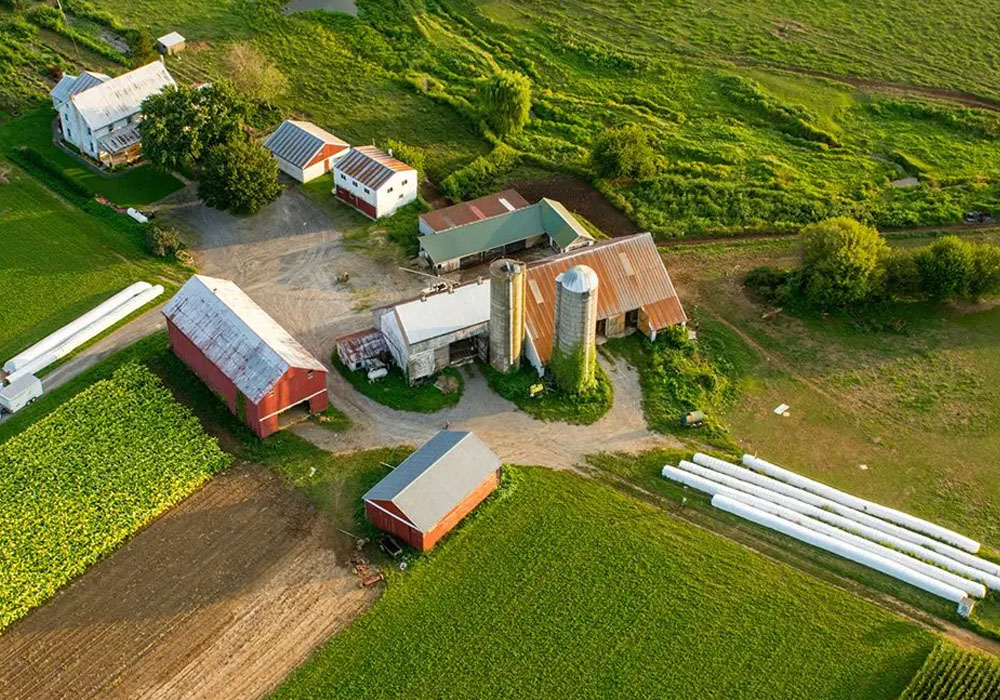
Modern agriculture operates at a challenging intersection of unpredictable weather patterns, rising input costs, and volatile global markets. Running a profitable agricultural property—whether it is a large-scale commercial crop farm, a livestock ranch, or a specialized orchard—requires far more than hard work and traditional intuition. It demands strategic resource planning, operational resilience, and modern land management.
To safeguard your land and secure steady profit margins, farm managers and property owners must focus their capital and daily efforts on foundational systems that drive long-term productivity. Here are the core priorities every agricultural property should address to build a resilient, high-yielding operation.
1. Water Security and Precision Irrigation Infrastructure
Quick Answer: Agricultural properties must prioritize water efficiency through drip irrigation, automated moisture sensors, and rainwater capture to lower utility overhead and protect crops against severe drought conditions.
Water is the lifeblood of any agricultural operation, yet traditional flood irrigation methods lose vast amounts of water to evaporation and surface runoff. Upgrading to smart, sensor-driven irrigation systems delivers water directly to plant roots only when soil moisture drops below critical thresholds.
Implementing agricultural water conservation strategies protects your local water rights while yielding measurable cost savings:
- Drip and Micro-Sprinklers: Reduces water consumption by 20% to 50% compared to conventional flooding while delivering liquid nutrients directly where needed.
- Soil Moisture Telemetry: Real-time ground sensors transmit data directly to your smartphone, preventing overwatering, soil salinization, and root rot.
- Tailwater Return Systems: Captures and recycles runoff from fields, allowing farms to reuse irrigation water safely and prevent chemical runoff into nearby watersheds.
2. On-Farm Energy Independence and Power Resilience
Quick Answer: Transitioning to localized renewable energy systems insulates agricultural operations from fluctuating utility rates and provides backup power for critical well pumps, climate-controlled storage, and automated feeding systems.
Energy represents one of the highest ongoing operational costs on a working farm. Running high-horsepower irrigation pumps, grain dryers, cold-storage refrigeration units, and automated machinery consumes immense amounts of electricity and fossil fuel.
To reduce input expenses, forward-thinking agricultural operators are investing in on-farm solar arrays, dual-use agrivoltaics (growing crops or grazing livestock under solar structures), and battery storage. For instance, agricultural producers operating in sun-rich Western regions can utilize lease models for solar panels in Utah to power deep-well pumps and cold storage units at a fraction of standard utility costs. Placing solar panels over irrigation structures or livestock pastures reduces water evaporation, provides shelter for animals, and guarantees reliable power when local rural grids go down during severe weather.
3. Regenerative Soil Health and Land Stewardship
Quick Answer: Soil health is maintained by practicing reduced tillage, planting multi-species cover crops, and managing organic nutrients to boost biological fertility, retain moisture, and stop soil erosion.
Without biologically active, fertile topsoil, even the most expensive seed varieties and synthetic fertilizers will underperform. Over-tilling strips the soil of beneficial microbes and organic matter, leaving cropland prone to wind washouts and dust storms.
A commitment to sustainable farm management starts beneath the surface:
- No-Till and Reduced-Till Methods: Leaves crop residue undisturbed, keeping soil cool and locking in vital moisture.
- Off-Season Cover Cropping: Sowing legumes, radishes, or winter rye off-season prevents topsoil erosion, suppresses invasive weeds, and fixes biological nitrogen naturally.
- Rotational Grazing: Moving herds systematically across smaller paddocks prevents overgrazing and builds soil fertility through natural manure distribution.
4. Precision Farming Technology and Data-Driven Monitoring
Quick Answer: Utilizing GPS-guided machinery, drone mapping, and IoT sensors allows producers to apply seed, fertilizer, and water with pin-point accuracy, cutting input waste while maximizing crop yields.
Guesswork in farming is an expensive habit. Modern precision agriculture leverages real-time field data to optimize every square foot of land, ensuring that expensive inputs are never wasted.
Adopting modern precision farming technology transforms daily decision-making:
| Technology Tool | On-Farm Application | Primary Operational Benefit |
| GPS Variable-Rate Sprayers | Applies fertilizer based on real-time soil maps | Cuts input waste by 20% to 40% |
| Multispectral Drones | Identifies crop stress and pest outbreaks early | Enables targeted, localized chemical treatments |
| IoT Livestock Tags | Tracks animal health and body temperature | Detects illness early to protect herd health |
5. Preventive Maintenance and Physical Asset Protection
Quick Answer: Systematic preventive maintenance for tractors, well pumps, outbuildings, and perimeter fencing stops costly operational downtime during time-sensitive planting and harvest windows.
An unexpected mechanical failure during a short harvest window can mean thousands of dollars in lost crops or missed market opportunities. Heavy equipment, irrigation systems, and physical structures represent substantial investments that require continuous care.
Build a structured preventive maintenance schedule for core farm assets:
- Seasonal Machinery Overhauls: Inspect hydraulics, belts, engine fluids, and tires on tractors and harvesters months before heavy operational use.
- Structure & Fence Integrity: Audit perimeter fencing, gates, and barn roofing regularly to protect livestock from predators and keep feed supplies dry.
- Pump and Well Audits: Test pump efficiency, clean intake screens, and service electrical connections before summer irrigation schedules begin.
6. Common Strategic Mistakes Agricultural Operators Should Avoid
Avoiding common management traps helps farm owners protect their capital and maintain high productivity:
- Over-Capitalizing on Oversized Machinery: Purchasing massive tractors or implements that exceed your actual acreage needs incurs unnecessary debt and inflates daily fuel consumption.
- Relying on a Single Revenue Stream: Sowing a single crop or raising one livestock breed leaves your business vulnerable to sudden market crashes or crop-specific blights. Consider crop rotation, agritourism, or carbon credit enrollment.
- Ignoring Waste-to-Value Cycles: Viewing manure or crop residue as disposal headaches rather than valuable resources. Composting livestock waste or using anaerobic digesters turns waste into rich organic fertilizer or usable biogas energy.
7. Operational Priority Checklist for Agricultural Properties
Use this checklist to evaluate your property’s readiness for long-term productivity:
- Water Infrastructure: Are your irrigation lines leak-free and integrated with smart automated timers?
- Energy Security: Do you have solar or generator backup systems for well pumps and cold storage?
- Soil Testing: Have you conducted annual soil tests to measure organic matter and nutrient levels?
- Tech Integration: Are you using GPS mapping or remote sensors for field management?
- Preventive Upkeep: Are maintenance schedules logged for all primary heavy machinery and outbuildings?
Summary of Key Takeaways
Managing a thriving agricultural property requires balancing day-to-day field labor with forward-looking asset management. By prioritizing water security, on-farm energy independence, soil health, precision technology, and preventive maintenance, farm owners build a business that remains profitable through changing market conditions.
The ultimate goal of modern land management is adaptability. When you protect your natural resources and optimize your power and machinery inputs, you safeguard your land’s long-term fertility, protect your operating margins, and preserve your property’s value for generations to come.