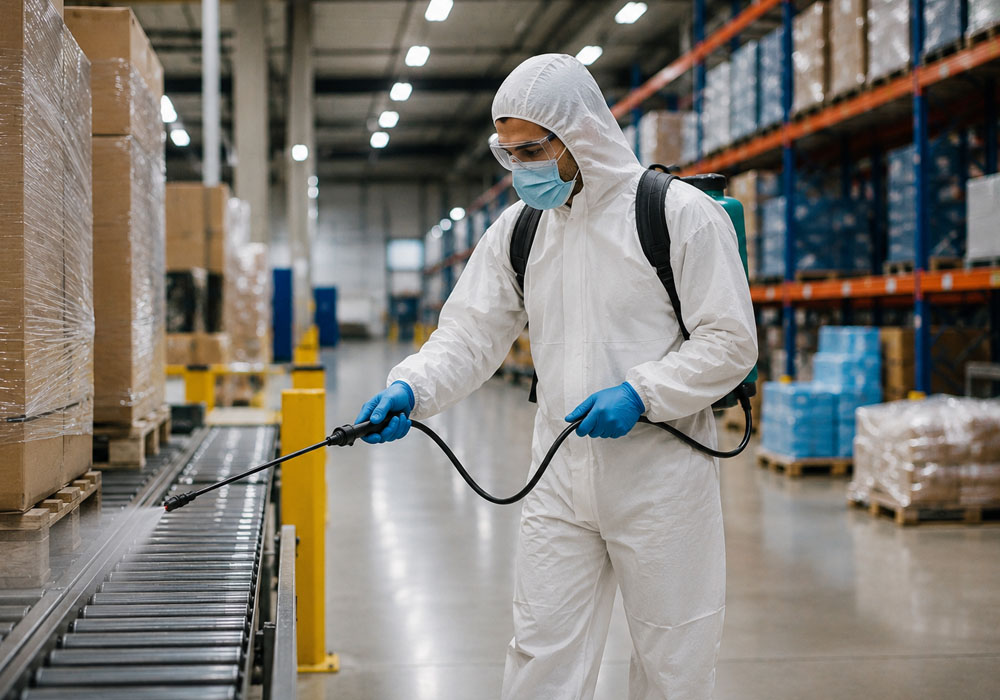
Distribution centers face demanding requirements around cleaning and disinfection. These facilities process and move large volumes of goods every day, so a lapse in sanitation procedures can affect workplace conditions, product handling, and supply chain operations.
Maintaining compliance means paying attention to everything from appropriate cleaning products to documented response procedures during potential contamination events. Facilities should select EPA-registered disinfectants when disinfection is required and use them according to applicable label directions and site procedures.
Audits and routine inspections can help identify gaps before they become larger operational concerns while providing documentation for customers and other stakeholders who expect consistent facility standards. Each distribution center should establish procedures appropriate to its operations, including high-traffic areas, shared spaces, equipment, and employee facilities.
Meeting these expectations starts with ongoing employee training and documented procedures designed around the actual risks present inside modern warehouses.
Regular Employee Training and Certification Programs
Regular employee training helps distribution centers maintain consistent cleaning and disinfection procedures. Workers should understand the products, equipment, PPE, and procedures used at the facility before performing tasks in higher-risk areas.
Training should cover applicable OSHA requirements, facility-specific SOPs, chemical handling, equipment use, and procedures for responding to spills or suspected contamination. Refresher training can also help employees remain familiar with updated procedures when products, equipment, or regulatory requirements change.
Documented training records provide useful evidence that employees have received appropriate instruction. The process is similar to the approach used by commercial disinfection services in Atlanta to support consistent service procedures and accountability.
Partnerships With Certified Disinfection Providers
Working with an experienced commercial cleaning and disinfection provider can help distribution centers establish consistent procedures across large or complex facilities.
- Cleanstar National Inc can develop cleaning and disinfection procedures around the facility’s operating environment, applicable requirements, and identified contamination risks.
- Cleaning products should be evaluated for their intended use, surface compatibility, application requirements, and label directions before implementation.
- Service programs can combine manual cleaning with appropriate specialized equipment when the facility’s needs justify additional methods.
- Cleaning teams can identify visible buildup, damaged surfaces, or other conditions that may interfere with effective cleaning and notify facility management when corrective action is needed.
- An established service relationship can also provide access to trained personnel and additional response resources when operational conditions or contamination concerns change.
Use of EPA-Approved Cleaning Products
Selecting appropriate EPA-registered disinfectants is an important part of maintaining a documented disinfection program.
- Efficacy Assurance: Facility managers should select products based on the microorganisms of concern and the specific claims appearing on the product label. A product’s EPA registration does not mean it is automatically appropriate for every pathogen, surface, or application.
- Compatibility With Facility Surfaces: Distribution centers contain conveyors, sorting equipment, floors, rails, handles, workstations, and other surfaces that may have different material requirements. Product selection should account for compatibility and manufacturer recommendations.
- Clear Safety Documentation: Product labels provide important information about dilution, application, required contact time, PPE, ventilation, and other precautions. Employees should follow these directions consistently.
- Audit-Ready Proof: Maintaining records of the products used, service dates, areas treated, and relevant procedures can help demonstrate that the facility follows its established disinfection program.
Routine Inspection and Compliance Audits
After appropriate products and procedures are established, routine inspections help verify that the disinfection program is being followed consistently. Reviews can identify missed areas, incomplete documentation, improper product use, or gaps in employee training.
Facility managers should maintain records showing when cleaning or disinfection occurred, which areas were addressed, which products were used when relevant, and who performed the work. Documentation should reflect the actual procedures required by the facility rather than relying on generic records.
Periodic internal reviews can also help managers identify recurring issues before an external audit or customer inspection. Where appropriate, facilities may use ATP testing or other verification methods as part of a broader quality-control program, depending on the environment and objectives.
Consistent audits give management greater visibility into service quality while helping identify areas where procedures, training, or scheduling may need adjustment.
Documentation and Recordkeeping Best Practices
Documentation is an important component of a distribution center’s cleaning and disinfection program. Clear records make it easier to verify completed work and investigate issues when they occur.
- Centralized Digital Records: Use an organized system to store service records, training documentation, product information, inspection results, and corrective actions.
- Backup Procedures: Maintain appropriate backups so important records remain accessible if a primary system experiences an outage or other disruption.
- Organized and Accessible Information: Keep records current and assign responsibility for maintaining documentation and responding to inspection or customer requests.
- Pre-Inspection Reviews: Review documentation before scheduled inspections and address missing or inconsistent information promptly.
- Transparent Communication: During inspections or customer reviews, provide accurate documentation that reflects the facility’s actual cleaning and disinfection practices.
Monitoring High Traffic and Shared Areas
High-traffic and shared areas often require particular attention because employees, contractors, and visitors regularly interact with the same surfaces.
- Traffic Pattern Reviews: Monitor entrances, break rooms, restrooms, shared work areas, and other heavily used spaces to determine where cleaning frequency may need to increase.
- Surface Inspection Schedules: Establish routine inspections for frequently touched surfaces such as door handles, rails, shared equipment controls, and other applicable touchpoints.
- Risk-Based Monitoring: Adjust inspection and cleaning frequency according to occupancy, facility use, operational changes, and identified contamination concerns rather than relying on a single schedule for every area.
- Service Alerts: Digital work-order or facility-management systems can help notify supervisors when scheduled tasks are due or when identified issues require corrective action.
Implementing Rapid Response Protocols
Disinfection concerns can arise quickly in a busy distribution center, making a documented response plan valuable for limiting disruption and coordinating personnel.
- Team Activation: Establish clear responsibilities so supervisors and designated employees know who should initiate the response when a contamination concern is reported.
- Supply Access: Maintain appropriate PPE, cleaning supplies, and EPA-registered disinfectants in accordance with facility procedures so trained personnel can respond efficiently.
- Communication Chain: Establish a clear process for notifying supervisors, affected employees, contractors, and other stakeholders when a response is required.
- Isolation of Exposed Zones: Where appropriate, restrict access to affected areas until trained personnel can assess conditions and complete the required cleaning or disinfection procedures.
A documented response process helps distribution centers address unexpected events without relying on improvised decisions during an operational disruption.
Staying ahead of disinfection compliance in distribution centers demands more than routine cleaning. Facilities need documented procedures, trained personnel, appropriate products, consistent inspections, and records that demonstrate how the program is being implemented.
Cleanstar National Inc supports high-volume facilities with commercial cleaning and critical-environment cleaning programs designed around facility requirements. Service plans can incorporate documented procedures, appropriate cleaning products, specialized equipment, and quality-control practices based on the environment being serviced.
Consistent service can also help facility managers identify cleaning gaps and respond to changing operational conditions. Quick response becomes particularly important when a facility experiences an unexpected contamination concern, spill, or other event that requires additional cleaning support.
Facility managers can leverage Cleanstar National Inc’s commercial cleaning services in Atlanta and other service regions for consistent support across complex commercial environments. Service programs can be structured around operating schedules to minimize disruption while addressing high-traffic and higher-priority areas.
A compliance-focused approach also helps reduce the risk of incomplete records, inconsistent procedures, and missed cleaning requirements. Cleanstar National Inc’s self-performing teams bring trained personnel and established processes to commercial and specialized environments where accountability and consistency matter.
Cleanstar National Inc continues to support distribution centers and other demanding facilities with disciplined cleaning and disinfection services. By aligning service procedures with facility-specific requirements and maintaining clear documentation, distribution centers can strengthen sanitation practices while supporting operational continuity.