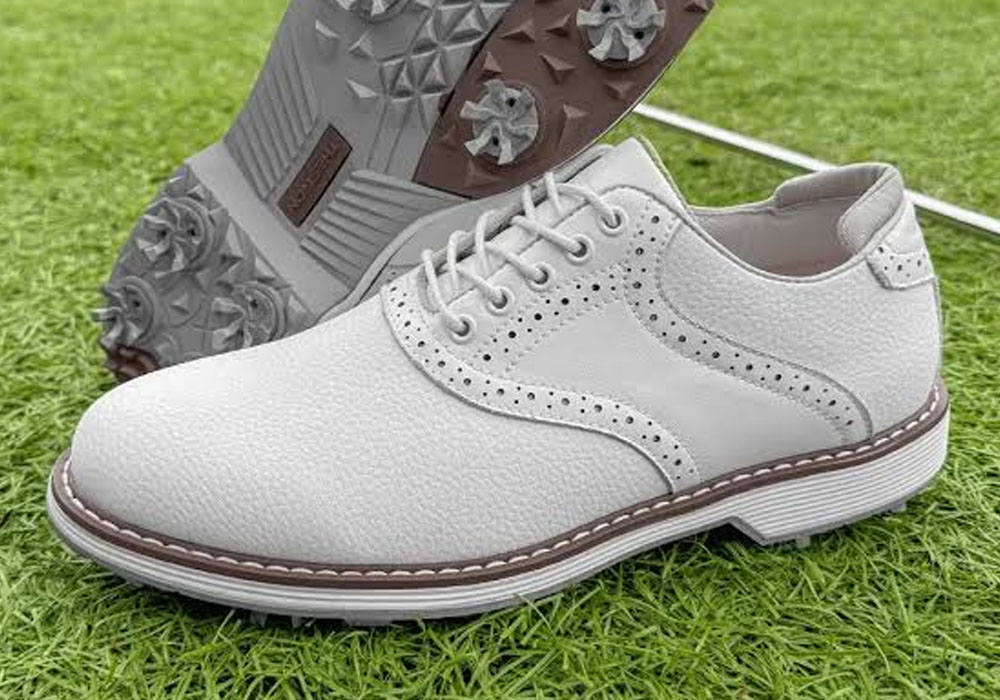
Golfers walk between 5 and 7 miles in an average 18-hole round, depending on the course layout and how much you’re zigzagging after a bad tee shot. That’s more walking than most people do in a full day, and it’s happening on grass, slopes, and uneven lies.
Your feet are also the base of every swing you make. Bad footwear doesn’t just cause blisters. It can quietly wreck your balance at impact.
Picking golf shoes isn’t about looking sharp on the first tee, though that’s a nice bonus. It’s about traction, stability, and keeping your feet in one piece for four hours straight. Here’s what actually matters when you’re shopping.
Traction Is Not Optional
A golf swing generates rotational force through the hips and feet. Without grip, your back foot can slip mid-downswing, and that slip translates directly into lost distance and mis-hits. Spiked shoes generally outperform spikeless models on wet grass, with traction tests showing up to 20% better grip in damp conditions. Spikeless shoes have closed the gap significantly in dry weather thanks to better rubber compounds, but wet mornings still favor traditional spikes.
If you play early tee times with dew still on the ground, spikes are worth the tradeoff. If you play mostly dry afternoon rounds or walk to the clubhouse restaurant after, spikeless gives you more versatility.
Spiked vs Spikeless Shoes
| Feature | Spiked | Spikeless |
|---|---|---|
| Wet grass grip | Excellent | Good |
| Comfort off course | Fair | Excellent |
| Weight | Slightly heavier | Lighter |
| Durability of grip | 3-4 seasons | 1-2 seasons |
| Versatility | Golf only | Golf and casual wear |
Waterproofing Saves Your Round
Wet socks are miserable. They also change how your foot sits inside the shoe, which shifts your balance without you realizing it. Look for a waterproof membrane rating, not just a shoe marketed as water resistant. Genuine waterproof golf shoes are usually backed by a manufacturer guarantee, often one or two years, promising dry feet even in heavy morning dew or light rain. Water resistant shoes offer no such guarantee and can soak through in under 30 minutes of wet grass contact.
Fit Checks Before You Buy
- Half a thumb’s width of space at the toe box front
- No heel slippage when you walk a few steps in the store
- Wide enough toe box to allow natural splay during the swing
- Arch support that matches your foot type, flat or high
- Try shoes on later in the day when feet are slightly swollen
Cushioning Affects More Than Comfort
Modern golf shoe midsoles use foam compounds designed to absorb impact from walking while still transferring energy efficiently during the swing. Studies on standing and walking fatigue show that proper cushioning can reduce lower leg fatigue by a noticeable margin over a 4-hour period compared to flat, unsupportive soles. That fatigue matters most on the back nine, exactly when your swing mechanics start to slip because your legs are tired.
Breathability Keeps Feet Cooler
Feet sweat a surprising amount, sometimes producing half a pint of moisture in a single day of activity. Trapped inside a non-breathable shoe, that moisture builds heat and increases blister risk. Mesh panels and perforated leather allow airflow, keeping foot temperature more stable across a long round. If you’ve ever pulled off your shoes after golf and felt like you’d been standing in a sauna, breathability was probably the missing piece.
Replace Shoes Before They Fail You
Golf shoes lose grip performance gradually, which makes it easy to miss the decline until you’re slipping on a shot that matters. A general rule many equipment fitters use is replacing golf shoes every 40 to 60 rounds, depending on how often you walk versus ride a cart. Waiting until the sole is visibly worn smooth means you’ve already been playing with compromised traction for weeks, maybe longer, without noticing.