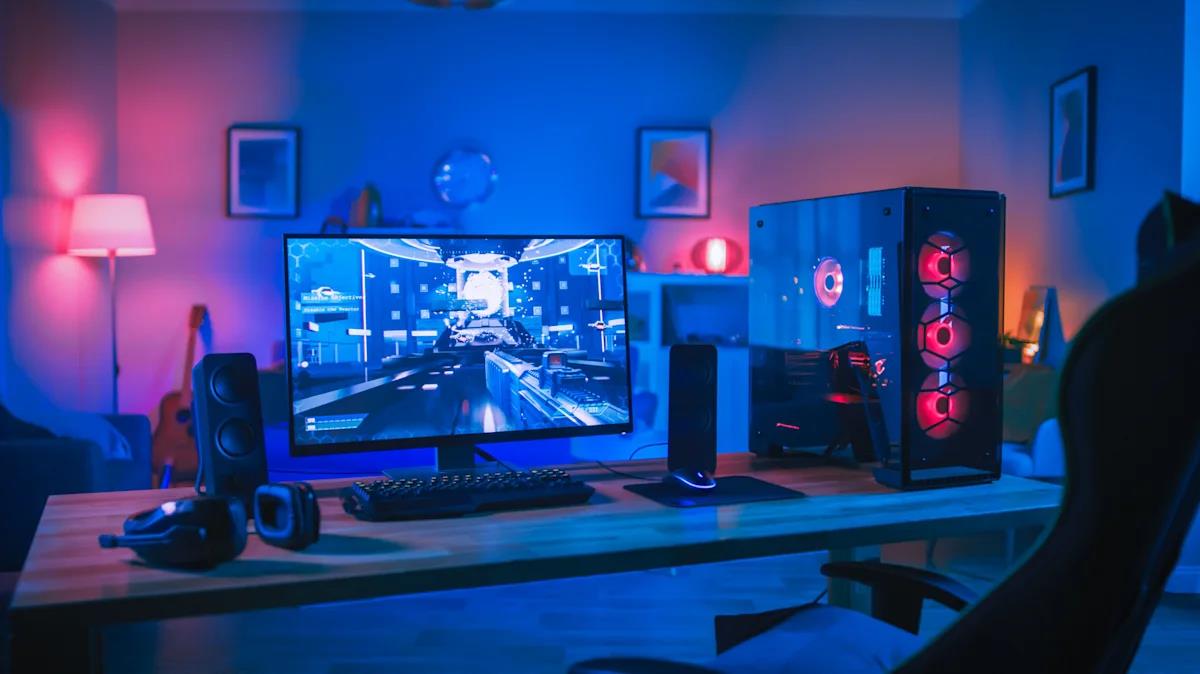
PC gaming has never been more demanding or more rewarding. Today’s titles push hardware to its limits with stunning visuals, expansive open worlds, and ultra-competitive online gameplay. But having powerful hardware alone isn’t enough. The difference between a sluggish, frustrating experience and a smooth, immersive one often comes down to how well your system is maintained and optimized.
Why PC Optimization Matters More Than Ever
Modern games like a space strategy game are significantly more resource-intensive than titles from just a few years ago. A system that handled everything smoothly in 2022 may now struggle with the latest releases not because the hardware is inadequate, but because it isn’t running at its full potential.
System optimization covers everything from keeping your drivers current to understanding how your hardware performs under real gaming conditions. When these factors are properly managed, the results are immediately noticeable: smoother frame rates, fewer crashes, faster load times, and an overall more responsive experience.
Understanding Frame Rate and Why It Defines Your Experience
Frame rate measured in frames per second (FPS) is one of the most critical factors in gaming performance. It determines how smoothly movement appears on screen and how quickly your system responds to your inputs.
Here’s a quick breakdown of what different frame rates mean in practice:
- 30 FPS: Playable for slower-paced single-player games, but can feel sluggish.
- 60 FPS: The standard for smooth, enjoyable gameplay across most genres.
- 120 FPS and above: The target for competitive gaming, where split-second reactions matter.
What Does an FPS Calculator Actually Do?
Before installing a demanding new game or adjusting your graphics settings, using an FPS calculator gives you a realistic picture of what performance to expect from your current setup. It estimates the frame rate your system is likely to achieve based on your graphics card model, processor speed, installed RAM, screen resolution, and in-game settings. Rather than guessing, or downloading a large game only to find it runs poorly, it gives you the information you need upfront and helps identify which settings to adjust to hit your target frame rate without sacrificing visual quality.
The Role of Drivers in Gaming Performance
While most gamers focus on hardware specifications, software, specifically device drivers plays an equally important role in performance. Drivers are the bridge between your operating system and your hardware. Without up-to-date drivers, even the most powerful GPU may not perform to its full potential.
What Driver Updates Actually Deliver
When you update drivers, you unlock improvements hardware manufacturers have specifically developed to boost performance and compatibility:
- Game-Ready Optimizations: GPU manufacturers release driver updates tuned for major new releases, often boosting FPS significantly on day one.
- Stability Improvements: Many crashes and freezes are caused by outdated drivers. Updates resolve these directly.
- Security Patches: Drivers can contain vulnerabilities. Keeping them current protects your system.
- Better Hardware Utilization: Updated drivers reduce bottlenecks and help your system use resources more efficiently.
- Support for New Technologies: Features like ray tracing and DLSS require current drivers to function correctly.
Manually tracking driver updates for every component: GPU, audio, network adapter, USB controllers, and more is time-consuming and easy to forget. The right tool automatically scans your system, identifies outdated drivers, and installs the latest versions with minimal effort, without requiring you to visit multiple manufacturer websites.
Common Reasons Your FPS May Be Lower Than Expected
Low frame rates aren’t always caused by weak hardware. Before assuming you need an upgrade, consider these common culprits:
- Outdated graphics or chipset drivers: Often the single biggest fixable performance issue.
- Background applications: Programs running silently consume CPU and RAM your game needs.
- High system temperatures: Thermal throttling causes your hardware to reduce performance to avoid overheating.
- Insufficient storage space: Low disk space affects load times and causes stuttering in open-world games.
- Mismatched graphics settings: Settings like ray tracing can devastate FPS on mid-range hardware.
A Smart Pre-Gaming Checklist
Whenever a major new game releases, or when you notice performance dropping run through this simple checklist:
- Check expected FPS to set realistic expectations.
- Update all drivers, especially your GPU driver, before launching.
- Close background applications to free up RAM and CPU.
- Review in-game settings and adjust based on your hardware.
- Check storage space and free up room if running low.
- Monitor temperatures to ensure your system isn’t throttling under load.
This takes less than 15 minutes and can make a dramatic difference from the moment you launch a game.
Final Thoughts
Getting the most out of your gaming PC doesn’t always require spending money on new hardware. In many cases, the performance boost you’re looking for is already within reach through smarter software maintenance and better system awareness. These two steps alone can deliver a noticeably smoother, more stable, and more enjoyable gaming experience with no hardware upgrade required.
Your best gaming sessions are often just an update away.