Soap scum can make a bathroom look dirty even when the sink, shower, and bathtub are cleaned regularly. The cloudy film on shower doors, rough patches around faucets, and dull coating on tiles often develop gradually. At first, these marks may disappear with a quick wipe, but once the buildup becomes thicker, ordinary bathroom cleaners may struggle to remove it. Using stronger chemicals or scrubbing harder might seem like the obvious solution, yet these methods can damage certain finishes without removing the underlying residue.
The better approach is to identify what has accumulated and choose a cleaning method that suits the surface. This is particularly relevant when comparing routine bathroom maintenance with the deeper work offered by a professional cleaning service. Companies such as SQKY Cleaning deal with bathroom cleaning tasks involving showers, tubs, sinks, glass, and tile surfaces, where the condition of the material matters just as much as removing visible dirt. Understanding how soap scum develops makes it easier to clean these areas safely and keep the residue from returning too quickly.
Why Soap Scum Builds Up on Bathroom Surfaces
Soap scum forms when ingredients in traditional bar soap react with minerals such as calcium and magnesium found in hard water. The reaction produces a residue that does not dissolve easily in water. As the bathroom surfaces repeatedly become wet and dry, this material accumulates on shower walls, glass panels, bathtubs, and plumbing fixtures.
The buildup can also contain body oils, dirt, shampoo residue, and other material washed away during bathing. These substances make the coating harder to remove, particularly around corners and textured surfaces. What begins as a thin, almost invisible layer may eventually turn into a noticeable white or grey film.
The appearance varies depending on the material underneath. Glass doors may develop cloudy patches that become obvious in bright light, while ceramic tiles often lose some of their original shine. Around faucets and shower controls, residue can collect in narrow spaces where water droplets remain after use.
Not every cloudy mark is soap scum, however. Hard-water mineral deposits can leave similar white marks, and some surfaces become dull because their finish has been scratched or chemically damaged. Recognising the difference prevents unnecessary scrubbing that could make the appearance worse.
Choose the Right Cleaning Method for Each Surface
Different bathroom materials respond differently to moisture, cleaning chemicals, and abrasion. A product that works well on glazed ceramic tile may damage natural stone, while an abrasive pad that removes buildup from one surface could leave permanent scratches on another. Before cleaning a large area, check the manufacturer’s care recommendations and test the selected product somewhere inconspicuous.
Glass Shower Doors Need Gentle Cleaning and Thorough Rinsing
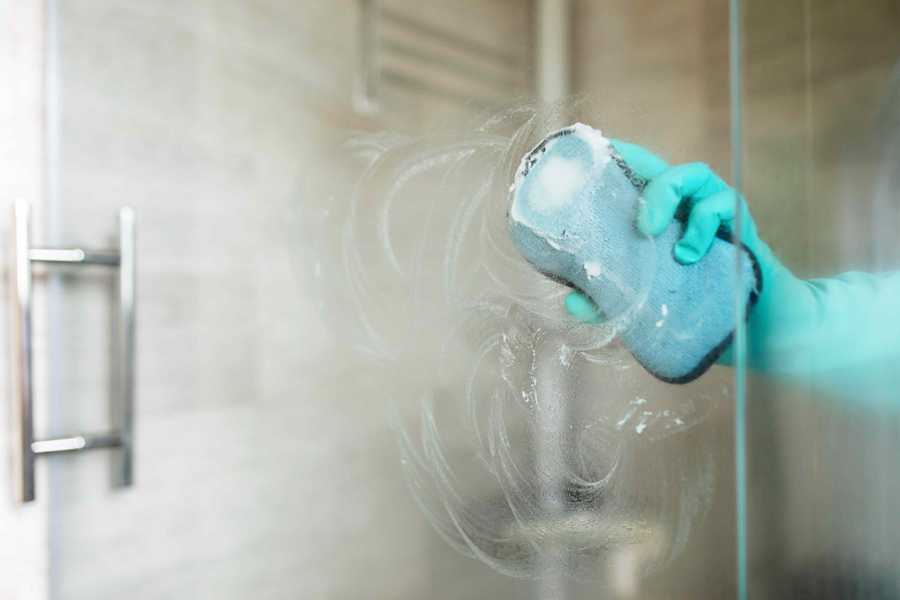
Glass shower doors often show soap scum clearly because the residue changes how light passes through the surface. Fingerprints, water spots, and mineral deposits can make the glass appear even cloudier, especially when several layers have accumulated.
Start by rinsing away loose residue and applying a cleaner specifically approved for shower glass. Allow it to remain on the surface for the time stated on the product label, then gently wipe with a soft microfiber cloth or non-scratch sponge. Older buildup may require a second application rather than aggressive scrubbing.
Some household cleaning advice recommends vinegar for glass, but acidic cleaners are not suitable for every shower enclosure. Protective coatings, adjacent stone, metal trim, and certain finishes may be affected. A product approved for the enclosure is the safer choice.
After removing the residue, rinse the glass thoroughly and dry it with a clean cloth or squeegee. Leaving the cleaning solution behind can create another film, making the door appear streaky even after the soap scum has been removed.
Ceramic Tiles and Grout Require Different Levels of Attention
Glazed ceramic tiles generally tolerate gentle washing well, but grout lines create a separate cleaning challenge. Their recessed texture collects residue, and some grout surfaces absorb moisture more readily than the surrounding tile.
Apply a compatible bathroom cleaner to the affected tiles and use a soft sponge to loosen the coating. Where grout needs attention, a soft nylon brush can help reach narrow lines without the excessive pressure of a stiff scrubbing tool. Rinse the area carefully so loosened residue does not settle back into the joints.
Professional bathroom cleaning often involves treating tile faces and grout lines separately rather than scrubbing the entire wall with the same pressure. For bathrooms with soap scum on shower walls, stained grout, and residue around fixtures, a cleaning service nyc residents hire for detailed bathroom cleaning can address several problem areas during one visit. The goal of a thorough clean is to remove accumulated grime while respecting the materials being maintained.
Avoid using harsh acids on grout without checking compatibility. Acidic products can damage some grout materials, particularly if they are unsealed or already deteriorating. Cracked or missing grout also needs repair rather than repeated chemical treatment.
Bathtubs and Shower Bases Can Scratch More Easily Than Expected
Acrylic and fiberglass tubs can develop scratches from abrasive powders, stiff brushes, and rough cleaning pads. Although these marks may be small, they can make the surface harder to maintain because residue and dirt collect inside them.
For these materials, choose a non-abrasive product recommended by the manufacturer. Spread it gently across the affected area with a soft cloth or sponge, paying attention to the tub edges and the points where water tends to collect. After cleaning, rinse away the solution and dry the surface to check whether any film remains.
Porcelain-enamel surfaces have different care requirements, but they are not immune to damage. Worn or chipped enamel can expose vulnerable material underneath, and harsh cleaning may worsen the affected areas. If the finish is already rough, discoloured, or peeling, stronger cleaners are unlikely to restore it.
Remove Stubborn Buildup Without Relying on Harsh Chemicals
Older soap scum often requires more patience than strength. Applying several products in quick succession can leave chemical residue, create unpleasant fumes, or damage bathroom finishes. Mixing bleach with acids or ammonia-containing cleaners is particularly dangerous because it can release toxic gases.
Begin by clearing toiletries, soap containers, and other items from the affected surfaces. Rinse away loose debris with water where appropriate, then apply a compatible cleaner according to its instructions. Giving the product its recommended contact time allows it to work on the residue before you begin wiping.
Use moderate pressure and repeat the process if necessary. Scrubbing aggressively may remove some visible material, but it also increases the risk of scratched glass, damaged grout, and dulled fixtures. A clean microfiber cloth or non-scratch sponge is usually a more suitable starting point than steel wool or abrasive pads.
When buildup has been neglected for months, it may extend beyond the obvious shower walls. Soap dishes, faucet bases, shower-door frames, drain surrounds, and the edges of bathtubs can collect thick residue. These areas deserve attention because leftover deposits can become a starting point for renewed buildup.
A deep bathroom clean can be useful when ordinary wiping no longer produces a satisfactory result. For example, the detailed bathroom work described by SQKY Cleaning includes shower and tub cleaning, sinks, mirrors, fixtures, and grout scrubbing as part of its deep-cleaning checklist. Anyone arranging a cleaning service nyc should clarify which surfaces need extra attention and whether the work involves ordinary soap residue, mineral deposits, or damaged finishes that cleaning alone cannot correct.
If repeated cleaning makes no difference, stop and examine the surface before trying something stronger. Permanent etching, worn protective coatings, and damaged enamel can resemble deposits. These conditions may require refinishing, repair, or replacement instead of further scrubbing.
Prevent Soap Scum From Returning Too Quickly
Removing an established layer of soap scum is usually more demanding than preventing a new one from forming. The most useful preventive habits focus on reducing the amount of soapy water left behind after bathing.
A squeegee can remove much of the water from glass shower doors and smooth tiled walls. Following it with a clean, dry cloth around fixtures and corners reduces the moisture that would otherwise evaporate and leave residue. This does not mean every shower requires a full cleaning session; a brief wipe of the most affected surfaces can make a noticeable difference over time.
It also helps to rinse visible soap and shampoo residue from the shower before leaving the bathroom. Corners, soap shelves, and the lower edges of glass panels deserve particular attention because water and cleaning products can collect there.
Switching from traditional bar soap to a liquid body wash may reduce some types of soap scum because many liquid formulations do not react with hard-water minerals in the same way. However, body washes can still leave surfactant and oil residues, so changing products will not eliminate the need for regular cleaning.
Ventilation matters for controlling dampness, although it does not remove the minerals responsible for soap scum. Running the bathroom exhaust fan during and after showers, where appropriate, can help surfaces dry and reduce conditions that encourage mold growth.
For bathrooms that receive heavy daily use, a regular cleaning schedule may prevent residue from becoming difficult to remove. SQKY Cleaning provides routine and deep residential cleaning options, which reflect two different levels of household maintenance. A recurring cleaning service can address ordinary dirt and bathroom residue before it becomes heavily established, while an occasional deeper session may be appropriate for areas that routine wiping has not fully addressed.
Know When the Problem Is More Than Soap Scum
Not every mark in a bathroom should be treated as ordinary cleaning residue. Black or discoloured patches around caulk, grout, and other damp areas may indicate mould rather than soap scum. Persistent growth can point to leaking plumbing, inadequate ventilation, or moisture trapped behind damaged materials.
Small patches on suitable nonporous surfaces may be manageable with appropriate cleaning, but recurring growth or damage beneath the surface needs closer investigation. Simply applying stronger bathroom chemicals will not resolve a continuing moisture problem.
Water marks that return almost immediately can also suggest heavy mineral deposits rather than soap residue alone. If a faucet, showerhead, or glass panel repeatedly develops white deposits despite regular cleaning, checking water hardness and selecting material-safe treatment methods may be more productive than increasing scrubbing pressure.
Another warning sign is a surface that remains dull after all visible residue has been removed. Glass can become etched, and certain finishes may deteriorate after exposure to unsuitable products. Continuing to scrub these areas risks causing more damage without improving their appearance.
Before arranging professional cleaning, it helps to describe the actual problem rather than simply requesting that the bathroom be made spotless. A cleaning service can address many forms of surface buildup, but permanent material damage and underlying plumbing or moisture issues require different solutions. Knowing that distinction prevents unnecessary treatments and sets realistic expectations for the result.
Keep Bathroom Surfaces Clean Without Wearing Them Down
Soap scum is easier to manage when cleaning methods match the surface instead of relying on increasingly strong products. Glass, tile, grout, acrylic, and metal fixtures each have different care requirements, and taking those differences seriously can prevent avoidable scratches, discoloration, and finish damage.
Regular rinsing, gentle wiping, proper drying, and timely removal of residue can reduce the need for heavy scrubbing. When the buildup becomes too extensive for ordinary maintenance, arranging a detailed cleaning service may be a practical option. SQKY Cleaning is one example of a residential cleaning provider that includes bathroom surfaces and grout in its cleaning offerings, although the appropriate treatment still depends on the material and its condition.
A bathroom does not need aggressive chemicals or constant scrubbing to remain presentable. Consistent care and a little attention to the areas where residue settles can keep showers, tubs, and fixtures cleaner while preserving their finishes for longer.