For many owners of older condominiums and apartments, the ceiling is one of those features that can remain unnoticed for years. Walls get painted, flooring gets replaced, kitchens are updated, and bathrooms receive modern fixtures, while the textured ceiling stays exactly as it was. That often changes when a major renovation begins—or when a property is being prepared for sale.
Popcorn ceilings, also known as acoustic or textured ceilings, were once a common design choice in residential construction. Today, however, many homeowners consider the heavily textured appearance dated and difficult to coordinate with contemporary interiors. Removing the texture and creating a smooth, painted surface can significantly change how a condo looks and feels.
What Is a Popcorn Ceiling?
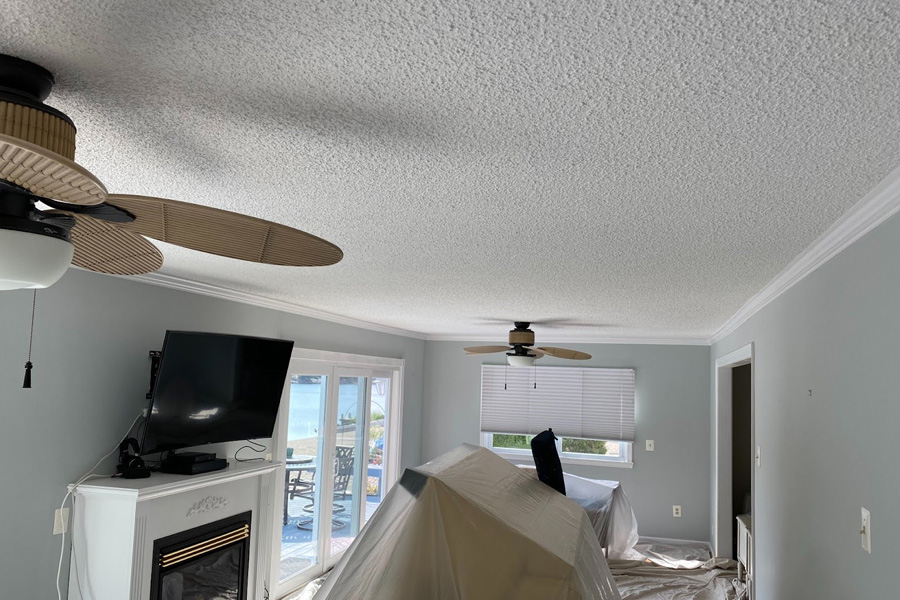
A popcorn ceiling is a ceiling finished with a sprayed or applied textured coating that creates a bumpy, uneven appearance. Depending on the age and construction of the property, these ceilings were used for aesthetic reasons, to help disguise minor imperfections, and sometimes for acoustic purposes.
The finish became particularly common in older apartments and condominiums because it offered builders a relatively practical way to achieve a uniform-looking ceiling without spending as much time creating a perfectly smooth surface.
The problem for today’s condo owner is that design preferences have changed. Modern interiors tend to favour clean lines, minimal textures, and uninterrupted surfaces. Against contemporary lighting, cabinetry, flooring, and furniture, a popcorn ceiling can stand out as an obvious reminder of an older design era.
Why Older Condos Used Them So Often
There was a practical reason behind the popularity of textured ceilings. A smooth ceiling requires careful preparation, including filling imperfections, sanding, and creating an even surface before painting. Texture could help conceal small flaws and provide a consistent finish more efficiently.
Popcorn ceilings were also associated with certain acoustic benefits. The texture could help diffuse sound, although the degree of acoustic improvement varies depending on the specific material and construction.
In an older condo, therefore, the ceiling may have made perfect sense when the building was constructed. Decades later, however, the same feature can clash with a renovation that otherwise has a clean, contemporary appearance.
Why Homeowners Suddenly Notice the Ceiling
Most people don’t spend much time staring at their ceiling. That’s why popcorn texture can remain in place for years without becoming a priority.
Renovation changes that.
Once new flooring, modern light fixtures, fresh wall colours, and updated cabinetry are installed, the ceiling can become one of the few remaining dated elements in the room. The contrast makes the texture much more noticeable.
Selling a condo can have a similar effect. Owners often become more conscious of details that could influence how prospective buyers perceive the property. A dated ceiling may not determine a buyer’s decision on its own, but it can contribute to an overall impression of whether a property feels updated or still requires work.
This is where popcorn ceiling removal and painting can become part of a broader condo improvement strategy. Instead of treating the ceiling as an isolated cosmetic issue, owners can incorporate the work into a renovation plan and create a consistent finish throughout the space.
Popcorn Texture vs. a Flat Modern Ceiling
One of the biggest differences is the way the two surfaces interact with light.
A heavily textured ceiling contains countless small ridges and shadows. Under ceiling lights, recessed lighting, or strong natural sunlight, these variations can become more visible. The result can be a ceiling that looks visually busier.
A flat ceiling, by comparison, creates a cleaner uninterrupted plane. Light tends to spread across it more evenly, making the room feel more streamlined.
Maintenance is another consideration. Dust can settle within the irregular surface of a popcorn texture, while repairing a damaged area can be challenging because matching the existing texture is not always straightforward.
A smooth ceiling generally offers a simpler visual surface for future painting and repairs. Small imperfections can still occur, but the finished appearance is typically easier to integrate with modern interiors.
| Feature | Popcorn Ceiling | Flat Ceiling |
| Appearance | Textured and traditional | Clean and contemporary |
| Light reflection | Creates additional shadows | More even visual surface |
| Cleaning | Texture can collect dust | Easier to maintain |
| Repairs | Matching texture can be difficult | Easier to blend and refinish |
| Design flexibility | Can feel dated with modern décor | Works with many interior styles |
| Buyer perception | May signal an older finish | Often complements updated interiors |
Why Condo Ceiling Removal Isn’t Simply a Weekend DIY Project
It can be tempting to look at a popcorn ceiling and assume that removing it is as simple as scraping the texture away and applying paint. In practice, achieving a professional result involves considerably more preparation.
The condition of the existing ceiling has to be assessed first. Once the texture is removed, imperfections that were previously hidden can become visible. The underlying surface may require patching, skim coating, sanding, priming, and additional preparation before it is ready for paint.
There can also be important considerations regarding the age and composition of older ceiling materials. Before disturbing an older textured ceiling, property owners should determine whether professional testing or other precautions are necessary.
In a condo, the situation can be even more complicated because work may need to account for building rules, neighbouring units, ventilation, dust control, elevators, common areas, and the practical limitations of working inside an occupied residence.
For these reasons, an efficient and experienced process can make a major difference. The goal isn’t simply to remove the texture; it is to leave behind a ceiling that looks as though it was originally designed to be smooth.
The Importance of Professional Painting After Removal
Removing the popcorn texture is only half of the transformation. The final painting and finishing work determine how polished the ceiling ultimately looks.
A professional approach typically focuses on creating an even surface before applying the final coating. This can involve multiple preparation stages depending on the condition of the ceiling.
For condo owners who want the entire renovation to feel cohesive, working with professional condo painters Toronto homeowners can rely on can also help coordinate ceiling work with the rest of the interior. A professional painting team can consider the relationship between ceiling colour, wall colour, trim, lighting, and the overall design of the unit.
A clean white ceiling remains a popular choice because it keeps the room bright and neutral, but homeowners may also choose subtle variations depending on their design goals.
A Small Change That Can Affect the Entire Room
Ceilings occupy a large visual area, even though homeowners rarely think about them. When the surface changes from heavily textured to smooth, the difference can influence how the entire room is perceived.
In an older condo undergoing renovation, this can be particularly noticeable. New flooring and modern furniture may look disconnected from an old popcorn ceiling. Once the texture is removed and the surface is properly finished, the other improvements can appear more cohesive.
The transformation is therefore about more than removing an outdated texture. It is about creating a cleaner foundation for the rest of the interior design.
Planning a Condo Ceiling Update
If you’re considering removing a popcorn ceiling in an apartment or condominium, the best time to address it is often before other major finishing work is completed. Ceiling preparation can generate dust and require several stages of work, so coordinating it with a broader renovation can reduce disruption.
Owners should also consider the age of the building, the condition of the existing ceiling, building requirements, lighting fixtures, and the desired final finish before work begins.
For a property being prepared for sale, the decision can also be viewed as part of the overall presentation of the condo. While no renovation guarantees a particular buyer response or return on investment, a clean, modern ceiling can help create a more consistent appearance when paired with other well-maintained finishes.
Ultimately, popcorn ceilings were popular for practical reasons in their time. But as condo design has moved toward brighter, cleaner, and more minimalist interiors, many owners are choosing to replace that texture with a smooth painted surface. With appropriate preparation and an experienced process, an outdated ceiling can become a subtle but important part of a modernized home.