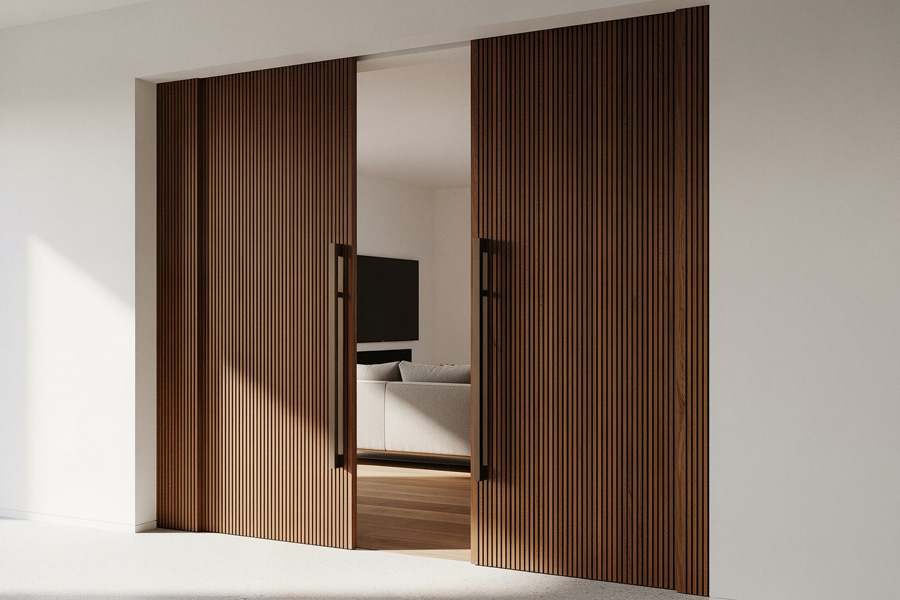
Why Interior Doors Deserve More Respect
Interior doors are the introverts of home design. They do important work, rarely ask for applause, and only get noticed when they squeak like a haunted hamster or clash with the room like a tuxedo at a pool party.
However, the right door may transform a property. It makes a bedroom quieter, a bathroom brighter, a closet less irritating, and a home office less sensitive to blenders, vacuums, and emotional family calls. Doors affect light, privacy, and atmosphere. They also sneakily affect a room’s gloss or cohesion.
Doors in modern homes are expected to do more. Open layouts demand separation flexibility. Smaller dwellings need space-saving tips. Multipurpose spaces need limits without being confined. Thus, the best interior door is not the nicest showcase door. It gracefully handles the room’s everyday bustle.
What Makes a Door Feel Modern Today
A modern interior door usually looks calm, crisp, and confident. It does not beg for attention with fussy details or thick decorative trim. Instead, it relies on strong proportions, smooth surfaces, restrained hardware, and finishes that feel clean rather than flashy.
Flush doors are a favorite because they create a sleek, uninterrupted plane. Slim-framed glass doors are also having a moment because they let light travel through the house like it owns the place. Hidden hinges, minimal handles, and soft matte finishes all add to that streamlined look.
Color matters too. Bright white is still popular for its airiness, but warm wood tones, charcoal, taupe, and soft black are trendy. Shades make doorways appear deliberate rather than invisible. A door may blend into the wall or stick out for a personalized look.
Modern design also loves visual quiet. That matters more than people think. A door with too much visual weight can interrupt a room. One with the right finish and profile can make the whole space feel more composed.
The Best Bedroom Doors for Peace and Quiet
A bedroom door has one primary job: protect the sacred art of being left alone.
Privacy and sound control important. A hollow lightweight door can be as useful as a paper napkin in a downpour if the bedroom is near a living area, corridor, or kitchen. A stronger solid core alternative decreases sound transmission and provides the space a more substantial, reassuring feel. Choices like these quietly shape how a property performs over years of use, and the same diligence applies when it comes to investing in real estate.
Bedroom doors look best when they encourage slumber rather than attention. Soft wood grain, off-white finishes, subdued gray, and earthy neutrals soothe the environment. Hardware should be easy to use and look good. A door knob in matte black, brushed nickel, or mild bronze adds individuality without becoming a jewelry display.
If the room is small, consider a door swing that does not interfere with furniture placement. That one detail can save a surprising amount of frustration. Nobody wants a beautiful bed layout ruined by a door that smacks into a nightstand every morning.
Smart Bathroom Doors for Moisture and Privacy
Bathrooms demand a careful balance. They need privacy, yes, but they also often need help with airflow, durability, and sometimes borrowed light. A bathroom door has to survive humidity without curling up emotionally and physically.
Materials matter a lot in this room. Doors made to resist moisture perform better over time, especially in bathrooms that see frequent hot showers. Painted engineered construction and quality sealed finishes can hold up well when matched with good ventilation.
Minimalist surfaces with sophisticated features are popular for modern bathroom doors. Frosted or textured glass inserts let light into gloomy rooms discreetly. Powder rooms and bathrooms off gloomy corridors benefit from this. It might feel airy rather than cave-like.
If several people use the bathroom daily, ease of cleaning becomes part of the design brief. Smooth surfaces and uncomplicated hardware are practical heroes here. They quietly make life less irritating, which is a noble achievement for any door.
Living Room Doors That Keep Things Open but Not Too Open
The living room is where a home tends to show off a little. It hosts guests, movie nights, conversations, naps disguised as movie nights, and the occasional attempt to make the house look effortlessly stylish. Doors in this space should support that open, welcoming character.
Glass doors are ideal for living rooms because they separate without overwhelming. Glazed doors retain light and movement whether the living room links to a study, sunroom, dining area, or patio. Wood frames are softer and warmer, while steel-look frames offer structure.
Sliding doors can also work beautifully in living rooms, especially when space is limited or a flexible divide is needed. They make it possible to open the room wide during gatherings and close it off when someone wants peace, quiet, or a place to hide wrapping paper in December.
The trick is choosing a style that does not dominate the room. A living room door should contribute presence, not drama. Unless your goal is dramatic, in which case proceed carefully and maybe keep the cape in storage.
Kitchen Doors That Handle Noise Smells and Traffic
Kitchens are energetic spaces. Things sizzle, clatter, spill, and occasionally explode in a tiny puff of culinary overconfidence. The door to this room must handle constant movement while helping manage noise and cooking odors.
Many kitchens benefit from partial openness. Glass-panel doors enable light and sightlines while providing a physical boundary when needed. French-style interior doors are beautiful in classic or transitional settings, but a single large-panel contemporary door is more architectural and tidy.
For compact homes, pocket or sliding doors are particularly useful. They save floor space and make circulation easier, especially where a swinging door would block cabinets, pathways, or appliances. This is one of those practical choices that keeps paying rent long after installation day.
Because kitchens are busy, finishes should also be forgiving. Fingerprints, smudges, and accidental splashes are part of the territory. A door that looks great only when cleaned every seventeen minutes is not helping anyone.
Home Office Doors That Defend Your Sanity
The home office has evolved from luxury to necessity in many households. Sometimes it is a proper room. Sometimes it is a reclaimed corner trying its best. Either way, the door matters more than most people expect.
A decent office door aids concentration. Even if the job is simply spreadsheets and unopened emails, it blocks home noise, sets a barrier, and gives a subliminal signal that work is happening within. Sound isolation and reduced chaos make solid core doors ideal for virtual meetings.
Home office doors may open two ways stylistically. It can match the rest of the house or stand out to define the room. Without distracting, reeded glass, small vertical glass inserts, and dark painted finishes work well.
If the office feels cramped, a full solid slab may seem visually heavy. In that case, a door with limited translucent glazing can preserve privacy while keeping the room from feeling sealed inside a shoebox.
Closet Doors That Save Space and Hide the Mess
Closets are where design ideals often meet real life and lose spectacularly. Behind those doors live shoes, bags, vacuum cleaners, winter coats, tangled hangers, and at least one mysterious item nobody remembers buying.
That is why closet doors should be functional first and attractive second, though they may be both. Because they don’t need clearance, sliding doors are great in small spaces. Bifold doors are good for big openings that need complete access. When you want the closet to blend into the wall, use flush doors.
Mirrored closet doors make bedrooms with little natural light appear bigger and brighter. They also eliminate the requirement for a full-length mirror on the wall, a nice win. Rather of mirrors, painted panels in the same wall color can give a tranquil, built-in effect.
The best closet door is the one that makes daily routines easier. If it glides smoothly, opens without fuss, and spares you from wrestling a door panel before coffee, it is doing excellent work.
Choosing Materials Without Getting Lost in the Showroom Fog
Door materials affect cost, durability, maintenance, and performance. This is where many homeowners start confidently and end up blinking at twenty near-identical samples under fluorescent lighting.
Solid wood is beautiful and heavy, but improperly made it can react to humidity and cost more. Engineered alternatives offer solidity and a more affordable refined finish. MDF’s flat, clean surface makes it ideal for painted treatments. Solid core design provides weight and sound resistance, making it ideal for bedrooms, workplaces, and other private spaces.
Glass should be considered by kind, not simply look. Clear glass lets in light, frosted glass provides seclusion, and textured glass softens views. Frame materials also affect mood. Modern metal frames are crisper. Warm, relaxing wood frames are typical.
Hardware finishes complete the story. A simple door with excellent hardware often looks more expensive than a fancy door with cheap, shiny handles that wobble like nervous jelly.
Matching Door Types to the Way a Home Actually Lives
The best door plan comes from real habits, not fantasy. Think about how each room functions on a normal Tuesday. Is the space noisy? Humid? Tiny? Busy? Shared? Does it need openness, privacy, flexibility, or all three before lunch?
Some families require better bedroom sound control, durable bathroom finishes, and kitchen doors that keep mess out without interrupting power. Pocket doors, mirrored closet doors, and light-friendly glass panels may be essential in a smaller flat. Flush hidden systems may offer an almost seamless architectural impact in a design-forward house.
When doors match the life happening around them, the whole home works better. It feels easier to move through, easier to use, and much easier to enjoy.
FAQ
Which interior door type is best for reducing noise?
Solid core doors are usually the strongest choice for noise reduction. Their denser construction helps limit sound transfer much better than lightweight hollow doors, which tend to let every laugh, argument, and blender performance travel freely.
Are glass interior doors a bad idea for privacy?
Not necessarily. Frosted, textured, or reeded glass can provide a good level of privacy while still allowing light to pass through. They are especially useful in offices, bathrooms, and transitional spaces that need brightness without full exposure.
Do sliding doors save space compared to swinging doors?
Yes, in many layouts they do. Sliding and pocket doors remove the need for swing clearance, which makes them useful in compact rooms, narrow hallways, and areas where furniture placement is tight.
What door finish is easiest to maintain?
Matte and satin finishes are often easier to live with than high-gloss surfaces. They tend to show fewer fingerprints, smudges, and minor scratches, which is helpful in busy spaces like kitchens, bathrooms, and hallways.
Should all interior doors in a home match exactly?
They do not have to match exactly, but they should feel related. Keeping a consistent overall style, finish family, or hardware tone helps the home feel cohesive, even if some rooms need different door types for practical reasons.