Des Moines homeowners ask a lot of their windows and doors. They must help manage winter cold, summer humidity, wind-driven rain, bright sun, and sudden storms, sometimes within a short span of months. Before committing to a large project, start with a room-by-room inspection and prioritize the openings that show the clearest signs of drafts, moisture, or poor operation. For homeowners comparing professional options, Des Moines window replacement information from Renewal By Andersen Polar Block Sales covers custom replacement windows and doors, in-home consultations, and installation services tailored to local conditions. The company serves Des Moines and surrounding communities, including Altoona, Ankeny, Urbandale, Waukee, and West Des Moines, making it a relevant local resource when evaluating replacement options for both older and newer homes.
Start With Comfort Problems You Can Feel
A window does not need visible damage to create a problem. Walk through the home on a windy or especially cold day and note rooms that feel noticeably different from the rest of the house. Moving curtains, a faint whistle, cold air near the sash, or a persistent chilly spot beside a window can point to air leakage. Use the back of your hand to compare the area around the frame, locks, and meeting rails. This is not a diagnostic test, but it can help identify rooms worth investigating. Also pay attention to doors. A front or patio door that rattles, sticks, or lets daylight show around the edge may need adjustment, new weatherstripping, or a closer look at the frame.
Catch Moisture Issues Before They Reach the Wall
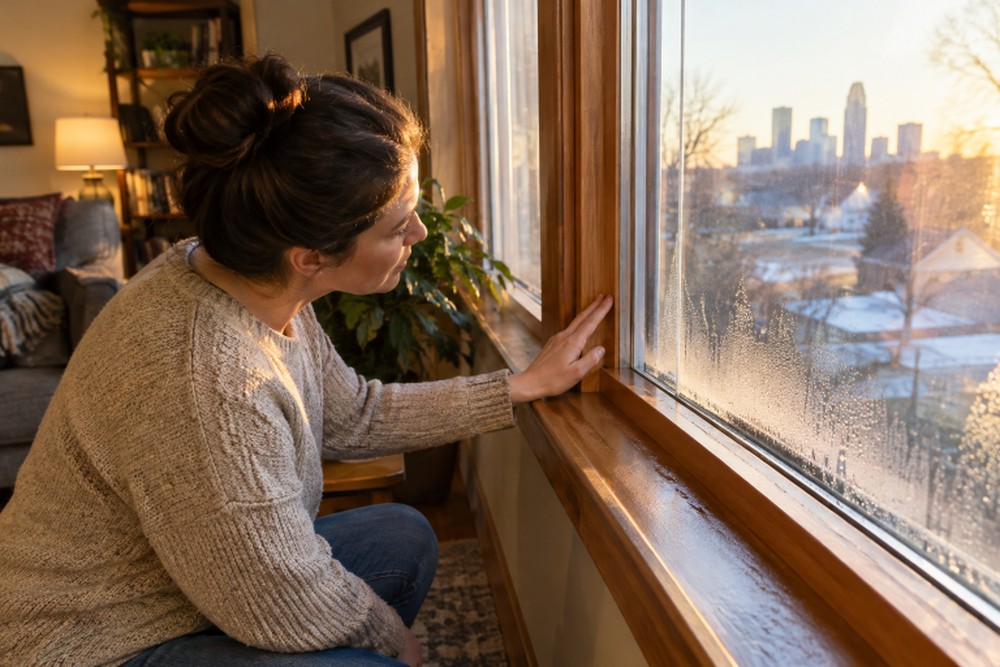
Moisture around windows can be easy to overlook until paint peels, trim feels soft, drywall bubbles, or staining appears below the sill. Take photos and write down when you see the issue. Does it happen after heavy rain, during spring thaw, or only during a stretch of very cold weather? That pattern helps distinguish a likely window issue from a concern involving siding, roofing, drainage, or indoor humidity.
Understand the Type of Condensation
- Interior surface condensation forms on the room-side glass. It can occur when warm, humid indoor air comes into contact with a cold surface. Managing indoor humidity and improving air circulation may help.
- Condensation between panes usually indicates that the seal on an insulated glass unit has failed. The glass may look foggy, hazy, or streaked even after cleaning.
- Water entering around the opening may be related to exterior caulking, flashing, cladding, blocked drainage paths, or another part of the wall system. Avoid assuming the glass itself is the only cause.
Compare Glass and Frame Performance for Iowa Weather
Window labels can feel technical, but a few terms are useful. U-factor describes how readily a window transfers heat. Lower numbers generally mean less heat transfer. Solar heat gain coefficient, often shortened to SHGC, describes how much solar heat passes through a window. Low-E coatings are thin coatings that help manage heat transfer while allowing useful daylight into the room.
Des Moines homes need a balanced approach. Winter performance matters, but west-facing rooms can also become uncomfortable during hot, sunny afternoons. When comparing products, look beyond a single glass feature. Frame material, air leakage performance, installation quality, spacers, hardware, and the condition of the rough opening all affect real-world results. The U.S. Department of Energy explains that frame materials, glazing features, gas fills, spacers, and operating style all contribute to a window system’s performance. Double-pane insulated glass is common, while triple-pane options may be worth considering in particularly exposed rooms or when comfort is a major priority. The right choice depends on the home, budget, orientation, and the existing condition of the opening, rather than on a one-size-fits-all rule.
Choose Window Styles Room by Room
Style should support how a room is used, not just how the exterior looks. Common choices include:
- Double-hung windows: Familiar in bedrooms and traditional homes, with upper and lower sashes that can open for ventilation.
- Casement windows: Hinged units that crank outward. Their closing hardware can create a tight seal, which is useful where drafts are a concern.
- Sliding windows: Practical for wider openings and areas where an outward-swinging sash would be inconvenient.
- Picture windows: Well-suited to views and daylight, where ventilation is not needed.
- Awning windows: Hinged at the top and useful for controlled ventilation, including during light rain when conditions allow.
Give Older Des Moines Homes Extra Attention
Older homes can have distinctive trim, masonry details, and openings that are no longer perfectly square due to settling or prior remodeling. Inspect sill condition, exterior cladding, nearby brickwork, and interior casing before selecting a replacement approach. Photograph historic details that matter to you, especially if the home has original woodwork or a traditional façade. An insert installation may work when the existing frame is sound. At the same time, a full-frame approach may be more appropriate when there is frame deterioration, water damage, or a need to address the opening itself. A qualified evaluator should explain why one method fits the conditions better than the other.
Prepare Windows and Doors for Wind, Rain, and Seasonal Changes
Routine maintenance can prevent small issues from becoming urgent repairs. Check locks, latches, hinges, screens, weatherstripping, and exterior sealant. Clear leaves from window wells and drainage areas so water has a path away from the foundation. Before storm season, confirm that all operable windows close and lock properly. Windows and doors can improve everyday weather resistance, but they are not a replacement for local alerts, an emergency plan, or appropriate shelter during severe weather. If a window has cracked glass, a loose frame, or recurring leakage after storms, document the condition and arrange an assessment rather than relying on temporary caulk alone.
Repair, Replace the Glass, or Replace the Entire Unit?
- Consider repair when the frame is solid, and the issue is limited to hardware, weatherstripping, minor trim damage, or adjustment.
- Consider glass replacement when the insulated glass seal has failed, but the sash and frame remain in good condition.
- Consider full replacement when frames are deteriorated, operation is unreliable, leaks recur, or several problems affect the same opening.
Before paying for a major upgrade, remember that eligible households may be eligible for support through the Polk County Weatherization Assistance Program, which evaluates issues such as air infiltration, insulation, mechanical systems, and health and safety conditions. Eligibility and available work depend on program requirements.
Questions to Ask Before Hiring a Contractor
- Who takes final measurements, and when are they confirmed?
- Will the project use insert replacement or full-frame installation?
- What happens if hidden rot, damaged sheathing, or other conditions are discovered?
- Which product details, labor coverage, cleanup expectations, and warranty terms will be included in writing?
- Can the contractor provide proof of insurance, local references, and an itemized estimate?
Common Des Moines Window Questions
Can replacement windows be installed during an Iowa winter?
Installation may be possible in cold weather when conditions are safe, and the installer follows a plan to limit exposure. Scheduling, precipitation, wind, and the scope of work can affect timing.
Should windows be replaced before siding?
Coordinate the sequence before either project begins. If window trim, flashing, or exterior cladding will be disturbed, planning the two projects together can reduce duplicated work.
What should I do if water appears around a basement window?
Check the window well, nearby grading, drainage, and visible sealant, then document the problem. Repeated water entry warrants a professional evaluation because the source may be outside the window assembly.
A Simple Plan for the Next Season
Inspect each opening inside and out. Mark drafts, fogged glass, sticking sashes, damaged weatherstripping, and signs of moisture. Handle practical maintenance items, then seek professional input for recurring leaks, deteriorated frames, or rooms that remain uncomfortable. A careful inspection gives Des Moines homeowners a clearer path forward and helps keep the project focused on the windows and doors that need the most attention.
Conclusion
Preparing Des Moines windows and doors for Iowa’s changing weather starts with identifying problems before they become more extensive. Drafts, condensation, damaged frames, and recurring leaks can indicate different issues, so homeowners should understand the cause before deciding whether to repair or replace an opening. Comparing glass performance, frame materials, window styles, and installation methods can also help ensure that upgrades address the home’s actual needs. Professional guidance from providers such as Renewal By Andersen Polar Block Sales can help homeowners evaluate replacement options and project requirements. A careful inspection and informed plan can support better indoor comfort, weather protection, and long-term home maintenance.