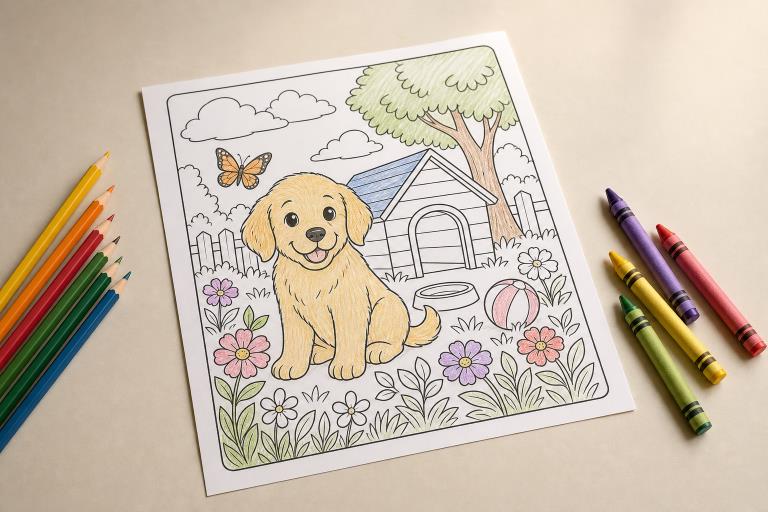
A calm routine does not need to be complicated, expensive, or perfectly planned. A few minutes of coloring can create an easy offline pause between work, school, chores, and other daily demands.
Whether you are looking for a quiet family activity, a classroom transition, or a low-pressure creative break for yourself, the goal is simple: make it easy to begin. A page, a few tools, and a comfortable place to sit are often enough.
Why Coloring Works As A Simple Offline Activity
Coloring gives your hands a clear, repeatable task. Instead of deciding what to write, cook, answer, or organize, you can focus on one small area of a page. Repeated patterns, familiar scenes, and simple shapes make the activity approachable for people who do not consider themselves artistic.
It can fit into a short break, a quiet evening, family time, or a classroom transition. Some people find that the steady motion helps them settle into a slower pace, though coloring is not a cure for anxiety, stress, or other health concerns. Research on digital mandala coloring among university students has examined its effects on anxiety. Still, one activity should not be treated as a replacement for professional support when someone is struggling.
Choose The Right Time And Place
The setting can shape whether coloring feels restorative or frustrating. You do not need a dedicated craft room or an uninterrupted hour. Start by choosing a spot with steady lighting, a firm surface, and enough room to spread out one page and a small set of supplies.
Helpful Setup Ideas
- Use a table, tray, clipboard, or lap desk that feels stable.
- Keep pencils, crayons, or markers in one easy-to-reach container.
- Place plain paper beneath your page to protect the surface.
- Choose a time that usually has fewer interruptions.
- Begin with 10 to 20 minutes rather than planning a long session.
Try coloring after breakfast before the day speeds up, during a lunch break, after school, or before reading at night. The best time is not the most impressive one. It is the time you can repeat without making your routine feel like another obligation.
Gather Simple, Comfortable Supplies
Comfort matters more than having every possible color. Colored pencils are useful for detail and gentle shading; crayons work well for bold blocks of color and for younger children; and washable markers create bright results quickly. Add a sharpener and a small storage box, then keep everything together so setup takes less than a minute.
Test markers on a spare sheet before using them on a thin page, since some inks can show through. Starting with a small collection also makes choosing easier. Too many supplies can turn a relaxing activity into a decision-making task.
Build A Routine That Feels Easy
A repeatable process removes guesswork. Think of your routine as an invitation, not a rule you must follow exactly.
A Five-Step Coloring Routine
- Set a small time goal. Choose 10 or 15 minutes.
- Prepare the space. Clear one small area and bring out your supplies.
- Choose one page. Avoid browsing through dozens of options.
- Color without racing. Pay attention only to the next section.
- End with a simple reset. Put supplies away and notice what you enjoyed.
Consistency matters more than session length. Missing a day does not mean the routine has failed. Leave a page unfinished if needed, then return when you have another small pocket of time.
Make Coloring Work For Children
Children often enjoy coloring more when adults provide choices without directing every result. Offer two or three pages, keep sessions short, and ask open questions such as, “What is happening in this picture?” Accept unexpected color choices and resist correcting the work.
Coloring can also connect with storytelling, quiet music, or a nature walk. Display a finished page if the child wants to share it. If coloring does not hold their interest, try other hands-on options, including clay, chalk drawing, sorting activities, building sets, or cutting and collage work.
Make Coloring Work For Adults
For adults, coloring can be a creative transition rather than a project to complete. Choose a detailed page when you have energy, or a page with larger spaces when you feel tired. A limited palette of three to five colors can reduce distractions, while slow shading can make the process feel more deliberate.
For example, someone might color for 15 minutes after work, before starting dinner, or turning on a show. That small interval creates a boundary between a busy day and a calmer evening. There is no need to finish the page, match a particular style, or make it worth displaying.
Reduce Screen Distractions Without Pressure
Screen-free time does not require rejecting technology. It simply creates a planned pause from alerts, scrolling, and constant input. Put phones in another room for a short block, silence nonessential notifications, and use a kitchen timer instead of a phone timer when possible.
Recent guidance from the Surgeon General highlights concerns about excessive and harmful screen use among young people. For families, placing coloring supplies in a common area can provide an easy offline option before boredom turns into an argument.
Try Simple Coloring Prompts
- Choose only three colors for the entire page.
- Use colors that match the current season.
- Try warm colors on one page and cool colors on another.
- Color while thinking about a favorite place.
- Create a page that matches your current mood.
- Trade pages with a family member and compare choices.
- Use leftover colored paper scraps to make a simple collage.
Avoid Common Coloring Routine Mistakes
Making The Session Too Long
Long sessions can feel tiring, especially for beginners and younger children. A short session is easier to repeat and leaves room to look forward to the next one.
Focusing On Perfect Results
Coloring is a process, not a performance. Uneven lines, unfinished sections, and unusual color combinations can all be part of personal style.
Buying Too Many Supplies
Start with a few dependable tools. A crowded box may create more friction than inspiration.
Treating Coloring As A Replacement For Care
Coloring can be a pleasant support activity, but ongoing anxiety, depression, or severe stress deserves guidance from a qualified health professional.
Final Thoughts
A useful coloring routine is simple, flexible, and realistic. A clear page, comfortable tools, and a short pause can create meaningful offline time. Build a routine that fits your actual life, leaves room for curiosity, and feels easy to begin again tomorrow.