Key Takeaways
- Check under sinks, faucets, supply lines, and appliances regularly for hidden leaks.
- Prevent clogs by keeping grease, oil, and food debris out of drains.
- Inspect garbage disposals safely and watch for unusual noises or repeated jams.
- Monitor dishwasher and refrigerator water lines for moisture, corrosion, or worn connections.
- Clean faucet aerators and watch for changes in water pressure or flow.
- Address recurring clogs, sewage odors, backups, and concealed moisture promptly.
- Use monthly and seasonal checks to catch small kitchen plumbing problems before they become costly repairs.
Kitchen plumbing works hard every day, yet many problems begin quietly. A small drip under the sink, a slow drain, or a weak faucet stream can lead to a damaged cabinet, ruined flooring, or an inconvenient backup if ignored. A few routine checks can help homeowners catch issues early and protect one of the busiest rooms in the house. Whether the concern is a leaky faucet, a troublesome disposal, or an appliance water line, understanding the basics of kitchen plumbing services and common repair needs at https://lutzplumbing.com/kitchen-plumbing/ makes it easier to know when simple maintenance is enough and when professional help is appropriate.
Why Kitchen Plumbing Checks Matter
A leak does not need to be dramatic to cause trouble. Water can soak into cabinet bases, swell particleboard, create musty odors, and damage stored supplies before it is noticed. Slow drainage can also signal grease, food debris, or buildup developing farther down the line. The average household’s leaks can waste nearly 10,000 gallons of water each year, so a quick monthly inspection is worthwhile.
Start With the Area Under the Sink
The sink cabinet is one of the best places to find early warning signs. Occasionally, remove bottles, bins, and cleaning products so moisture is not hidden behind them. Look for puddles, water stains, damp wood, swollen cabinet panels, or rust on metal parts.
- Run a dry paper towel around visible pipe joints and the drain trap.
- Check that slip nuts and connections are snug, but do not overtighten plastic fittings.
- Notice any musty smell, which can point to trapped moisture or a slow leak.
- Inspect the cabinet floor after filling and draining the sink.
Spot Faucet and Supply Line Leaks
Dry the faucet base, handles, and shut-off valves first. Turn the water on and off while watching for seepage around the handle, spout, base, and supply connections. Flexible supply lines should not show bulges, corrosion, kinks, or worn fittings. If a valve is heavily corroded or difficult to turn, do not force it. A small container placed beneath a suspected drip can confirm whether water is collecting over several hours.
Prevent Drain Clogs Before They Start
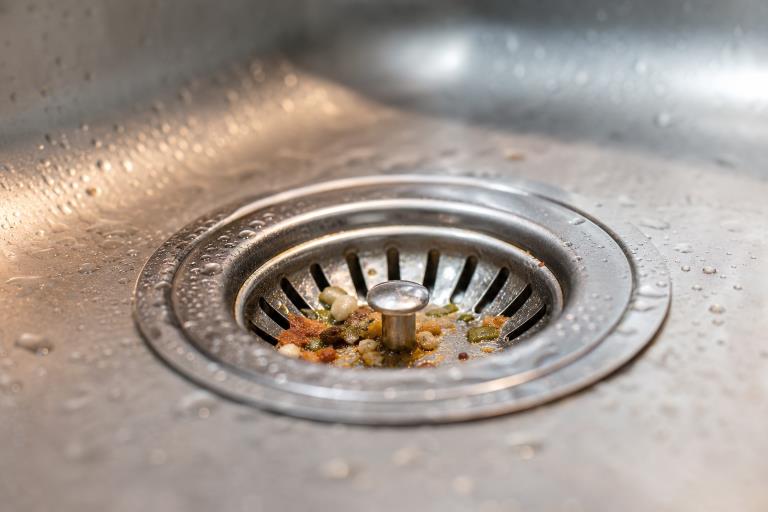
Prevention is usually easier than clearing a packed drain. Scrape dishes into the trash or compost before rinsing; use a sink strainer and empty it frequently. Put cooking oil and grease into a heat-safe container for disposal instead of washing them down the drain. Grease may seem harmless while warm, but it can cool and collect food particles inside the pipe. A sink that still drains, but increasingly slowly, may already have buildup farther along the line. Avoid relying on harsh chemical cleaners, which can be ineffective and may damage certain plumbing components.
Check the Garbage Disposal Safely
Always turn off the disposal switch before inspecting the sink opening, and never put your hands into the disposal chamber. With power fully disconnected, kitchen tongs can be used to retrieve a clearly visible object. Keep bones, hard items, grease, fibrous vegetable scraps, and large amounts of food out of the unit. Humming, rattling, grinding, or repeated trips of the reset button may indicate a jam or motor problem that requires proper inspection.
Inspect Dishwashers and Refrigerators
Dishwasher and refrigerator connections are easy to overlook because they are often concealed. After a dishwasher cycle, check the floor and nearby cabinet edges for moisture. Inspect the dishwasher supply hose and drain connection when accessible. For refrigerators, look at the ice-maker line for kinks, dampness, loose fittings, or corrosion. A slow appliance leak can travel beneath cabinets or flooring long before it becomes visible, so replace visibly worn hoses promptly.
Test Water Pressure and Flow
Compare the hot and cold water flow at the kitchen faucet. If only the kitchen stream has gradually weakened, remove and rinse the aerator to clear any mineral sediment or debris. If multiple fixtures have poor flow, sputtering water, or unusual pipe noises, the issue may involve a broader supply, valve, or leak concern. Sudden pressure changes deserve attention, especially when they occur without an obvious cause.
Reduce Kitchen Water Waste
Small habit changes can reduce water use without making the kitchen work harder. Run the dishwasher only with full loads, collect water while waiting for it to warm, and repair drips rather than leaving a bowl beneath the faucet. When replacement is needed, consider efficient fixtures. Modern water-efficient kitchen and bath products, including faucet aerators, leak detectors, and automatic shut-off devices, can reduce waste and limit damage from an active leak.
Know When to Call a Professional
Professional Help May Be Needed When:
- A connection continues leaking after a careful adjustment.
- A drain repeatedly clogs, or several fixtures drain slowly at once.
- Water appears inside a wall, cabinet base, ceiling, or floor.
- The main shut-off valve will not close, or a supply line is badly damaged.
- There is a sewage odor, wastewater backup, or a sharp, unexplained pressure change.
During an active leak, turn off the nearest fixture shut-off valve if it works. If the leak cannot be isolated, turn off the home’s main water supply while arranging service.
Use a Simple Seasonal Checklist
- Monthly: Check beneath the sink, around the faucet, and near appliance connections.
- Every few months: Clean the sink strainer, rinse the aerator, and inspect visible hoses.
- Before holidays: Test the dishwasher, disposal, and accessible shut-off valves before heavy kitchen use.
- After repairs: Recheck the area for several days to make sure moisture does not return.
Conclusion
Kitchen plumbing problems often provide small clues before they become major disruptions. Paying attention to damp cabinets, slow drains, weak water flow, appliance leaks, unusual disposal sounds, and changes in water pressure can help homeowners address problems early. Simple habits, such as avoiding grease down the drain, cleaning strainers, checking supply connections, and inspecting visible pipes, can reduce unnecessary wear and recurring clogs.
Regular inspections are especially useful around sinks, dishwashers, refrigerators, and garbage disposals, where small leaks can remain hidden and damage cabinets or flooring. When warning signs continue, or moisture reaches concealed areas, professional evaluation can identify the source before repairs become more complicated. Consistent maintenance, better drain habits, and timely repairs help keep the kitchen safer, more efficient, and ready for daily use throughout 2026 while protecting surrounding fixtures, cabinetry, flooring, and other parts of the home.