Why Outdoor Shade Now Feels Like a Design Superpower
A garden without shade is like a sofaless living room. Though technically usable, nobody wants to stay there. Even the loveliest patio might seem like a frying pan with throw cushions when the midday sun is too bright.
Thus, shading is one of the wisest design choices in modern homes. It does more than block sunlight. It affects how a room feels, how often it’s utilized, and whether people spend 10 minutes or an evening there, notes the MHN Property Management team. A decent shading solution makes an exposed stone or wood surface a destination. Creates atmosphere. It structures outdoor spaces. It can even make a little yard look costly and polished, which is nice.
Umbrellas that bounce like anxious flamingos are no longer popular with modern homes. They want deliberate, beautiful shadow that complements the building. The latest generation of outdoor solutions is sleek, versatile, and shockingly striking in the best way.
Pergolas That Do More Than Look Handsome
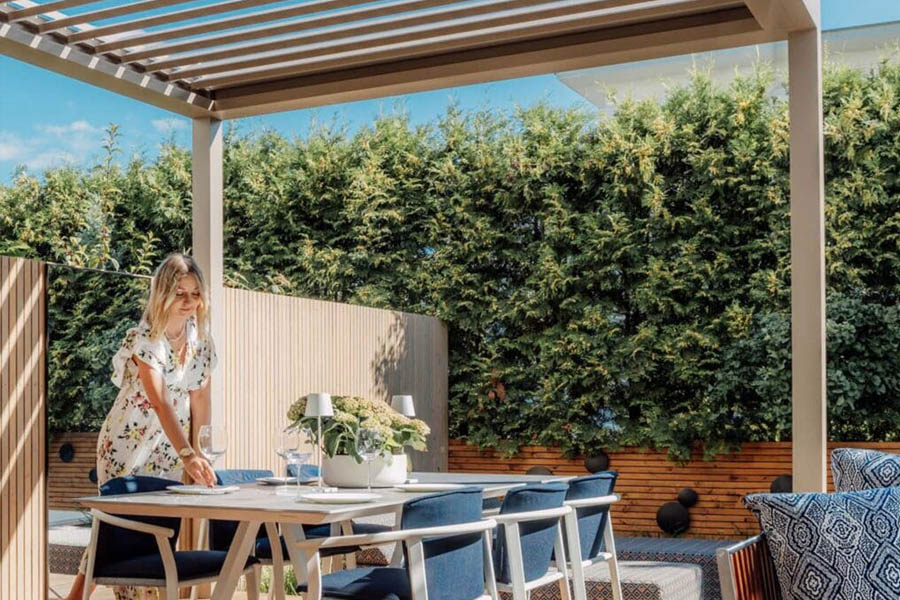
A pergola has sprouted. Originally, the garden’s lovely wooden frame held a few vines and made everyone feel Tuscan. Today, it may act as a sophisticated outdoor ceiling with more intelligence, flair, and work ethic than half the house’s electronics.
Modern pergolas include movable roof panels for full sun, filtered light, or full covering. That much control alters everything. Lunch in comfortable shade, morning coffee in soft light, and nighttime gatherings beneath the stars are all possible.
Pergolas anchor outdoor spaces visually. They delineate dining, relaxing, and where the dog will disregard all furnishings and lie in the hallway in open layouts. Outdoor rooms without walls are a great architectural trick. Contemporary homes look great with clean-lined metal frames on patios and terraces.
Retractable Shade for People Who Refuse to Commit
Not every homeowner wants permanent coverage all day long. Some want options. They want the freedom to sunbathe at noon, eat in the shade at one, and then reintroduce sunlight when the breeze picks up and the mood changes. Retractable shade systems are made for exactly this sort of personality.
These systems provide a reasonable balance between openness and shelter. A room may go from bright and breezy to cold and shielded with a simple adjustment. That adaptability is especially beneficial in places where the weather is unpredictable. With a retractable arrangement, the patio may adapt to mood fluctuations without requiring the homeowner to adjust their schedule.
Calling up shade is also enjoyable. Efficiency, cleanliness, and smugness prevail. Fabric canopies, retractable roof panels, and sliding shade features make a place feel dynamic. The yard develops various fascinating characters.
Living Shade That Grows Into the Scene
Some of the most beautiful shade does not arrive in a box or require a remote. It grows. It climbs. It rustles. It occasionally drops a leaf into your drink just to remind you that nature is still in charge.
Living shade is softer than constructed buildings. With trees, thick hedges, and vine-covered frames, the space feels older, richer, and more established. Modern dwellings with hard surfaces like concrete, steel, and stone are severely affected. Greenery’s charm keeps the party from getting serious.
An appropriately positioned tree may shade a dining area, frame a vista, and establish the yard. Dappled light from climbing plants over a pergola is like restaurant lighting. Under it, even overdone kebabs and twenty-minute visitors seem great.
Natural shade also changes with the seasons, and that makes it interesting. It is never frozen in one look. It evolves, thickens, blooms, and shifts the atmosphere throughout the year. For homeowners who want outdoor spaces with personality, living shade offers charm in generous amounts.
Screens and Smart Shades for the Control Enthusiast
Someone enjoys hitting a button and seeing an issue disappear. Smart outdoor blinds delight them. Too much glare? Tap. Wind rising? Tap. Need seclusion before the neighbors emerge mysteriously the second meal is served? Tap again.
Automated blinds and screens bring interior comfort to the garden. They minimize heat, harsh light, and create a more intimate room without sealing it off. This is especially ideal for patios linked to the home, where indoor and outdoor life are already pleasantly blurred.
These methods are great for visual organization. Many withdraw discreetly and virtually undetected. They appear deliberate and not impromptu when employed. That complements modern houses with clear geometry and uncomplicated materials.
Functionally, smart shades earn their keep. They help preserve furniture, improve comfort, and make outdoor areas far more usable during the brightest and hottest parts of the day. A patio that once sat empty in summer can suddenly become the most popular square footage on the property.
Freestanding Structures That Rescue Awkward Spaces
Some outdoor areas are rebels. They do not sit next to the house. They do not have a convenient wall for mounting anything. They catch low sunlight at weird angles and behave as though they were designed specifically to test human patience. This is where freestanding shade structures shine.
A separate lounge, fire pit nook, poolside seat, or random patch of yard with suspiciously good sunset views might benefit from independent shade. These structures operate well since they’re not architecture-bound. They can go where they’re required, which is great for vast yards or unusual layouts.
Freestanding choices also form destinations. One over a dining table or outdoor sofa makes that yard part appear organized and meaningful. Instead of excess space, it becomes a room. A significant design win. It means more spaces to sit comfortably without squinting like a detective from an old movie.
Their versatility is another advantage. Some are light and movable, while others are sturdy and sculptural enough to feel permanent. Either way, they solve sun problems without demanding a full renovation.
How Shade Changes the Mood of an Outdoor Room
Shade goes beyond temperature. Emotional tone matters. Bright, open rooms may be vibrant yet restless. Shaded areas draw people in. Light softens. The furniture is friendlier. Conversations linger. Lunch becomes coffee, coffee becomes nibbles, and someone asks for dessert before everybody notices.
The finest outdoor spaces are functional, so this mood shift counts. People live there. They back rituals. When the area seems safe, reading in a corner, eating a slow weekend lunch, hosting a raucous family gathering, or fleeing with headphones for 20 minutes of stillness are more probable.
Proper shade can also enhance proportion. It lowers the eye and creates a more intimate size, especially in open or flat yards. A homeowner can enclose the room without compromising airflow by adding overhead features, vertical plants, or side screening.
Choosing Shade That Matches the House Instead of Arguing With It
Treating an outdoor element as an afterthought might make it unpleasant. A fussy traditional house may seem confused next to a sleek modern one. Industrial shades might look abrupt in a house with soft natural textures. Shade design works best when it fits the structure, landscape, and lifestyle.
That doesn’t imply everything must match. It implies shapes, materials, and colors should make sense together. Minimalist architecture suits slim frames. Warm wood tones soften harsh exteriors. Fabric can provide texture to rigid things. Due to their sociable nature, plants may complement most styles.
The most successful outdoor spaces often mix practicality with a dash of theater. A dramatic canopy, a sculptural pergola, or a lush vine-covered retreat can become a genuine focal point. Shade is no longer just background equipment. It is part of the visual story.
FAQ
What is the best shade option for a small modern patio
For a small patio, compact pergolas, retractable canopies, or slim motorized screens tend to work well. They provide comfort without making the area feel crowded. The key is choosing a design with clean lines and a footprint that respects the limited space.
Can outdoor shade improve how often a backyard gets used
Yes, dramatically. A shaded outdoor area stays cooler, feels more comfortable, and invites longer visits throughout the day. Spaces that were once too hot during peak sun often become favorite spots for dining, reading, or entertaining.
Is natural shade enough on its own
It can be, depending on the layout and climate. Mature trees and climbing plants create beautiful filtered coverage, but they usually take time to develop. Many homeowners combine living shade with structural elements for faster results and a more reliable level of protection.
Are motorized shade systems only about convenience
Convenience is a major benefit, but not the only one. Motorized systems also help control heat, reduce glare, protect furniture, and create privacy. They can make outdoor areas more adaptable and comfortable from morning to evening.
Do freestanding shade structures work for detached seating areas
Yes, they are often ideal for those locations. Because they do not rely on the house for support, they can be placed over garden lounges, poolside seating, or dining setups in the middle of the yard. They are especially helpful in spaces where the sun hits from awkward angles.