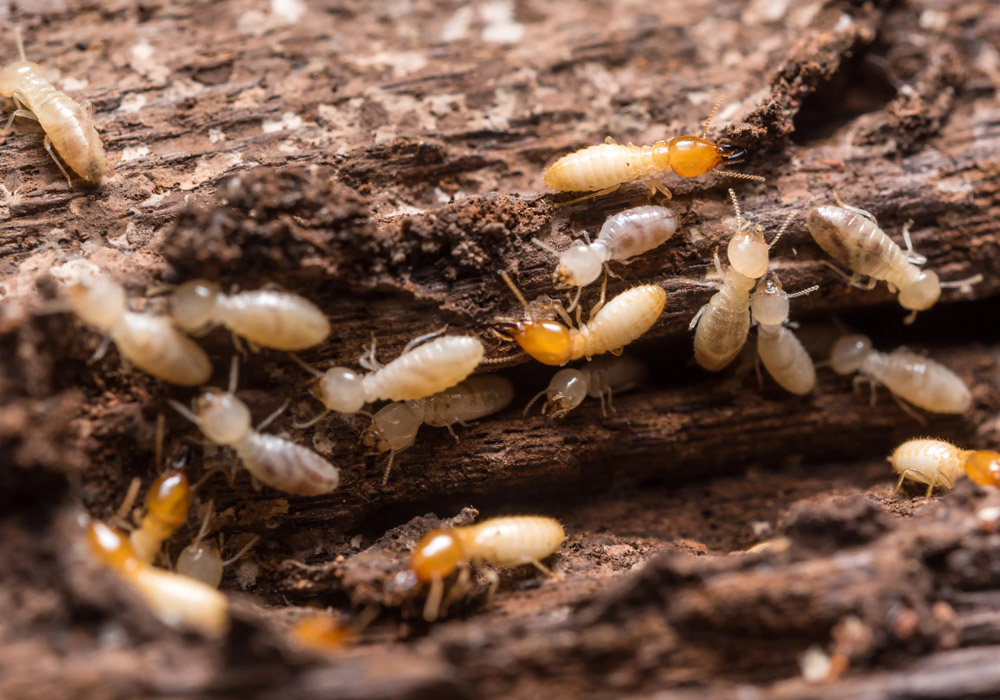
A termite problem can develop long before damaged wood becomes obvious. Much of a colony’s activity takes place in soil, wall spaces, crawl spaces, or inside wood, where homeowners rarely see it. Different termites perform different jobs, including reproduction, feeding, defense, and colony care. Knowing these roles helps explain why seeing a few insects does not always reveal the size or location of a problem.
How a Termite Colony Starts
Colonies produce winged reproductive termites, often called swarmers. When conditions are suitable, they leave the colony, mate, and look for places where new colonies can become established. Homeowners may notice swarmers around windows, doors, lights, or other bright areas.
Discarded wings can remain after the insects disappear. They are useful evidence, but they do not reveal a colony’s exact location or size.
Workers and Other Colony Members
Immature termites develop into members with different jobs. Workers gather food, soldiers defend the colony, and reproductive termites maintain its population. Workers usually stay hidden, so homeowners may notice damage before seeing the insects.
When termite activity is suspected, Agile Pest Control may inspect accessible areas such as foundation sections, crawl spaces, and exposed wood. Not finding live termites on an exposed surface does not prove that activity has ended.
Why Wood Damage Can Stay Hidden
Worker termites feed on cellulose, which is present in wood and other plant-based materials. When they reach wooden parts of a home, they can create internal galleries while leaving the outer surface looking relatively normal.
A board may look sound while its interior is affected. Soft areas, hollow sounds, and damaged trim can provide clues. Replacing wood does not eliminate termites, and termite treatment does not restore weakened timber. These are separate parts of the response.
What Soldiers Tell Homeowners
Soldier termites defend the colony. They are not responsible for most feeding damage, but their presence shows how organized the colony is.
Homeowners do not need to identify every caste themselves. Termites can also be mistaken for ants, making professional identification important. Several insects in one location may represent a much larger hidden population.
Swarming Is Not the Whole Problem
Swarming attracts attention because reproductive termites become visible. Routine feeding is different. Workers may continue moving through soil, shelter tubes, wall spaces, or wooden components without appearing in rooms.
Waiting for another swarm is not a dependable way to check for activity. New shelter tubes, fresh damage, wings, or changes in affected areas can be more useful. Photos and notes can help compare conditions later.
Why Spraying Visible Termites May Not Solve It
The termites seen on a surface may represent only a small part of the colony. Others can remain in soil, concealed pathways, structural joints, or wood.
Spraying a visible insect may therefore have little effect on the larger population. It can also destroy evidence that could help with identification or assessment.
A proper inspection considers more than the spot where termites appeared. Agile Pest Control can evaluate accessible evidence and its relationship to the surrounding property. Homeowners should avoid opening walls or applying products blindly.
Monitoring Still Matters
A termite colony changes as it grows and develops. Because most of its activity can remain hidden, a quiet period does not necessarily prove that earlier evidence is no longer important.
Watch for new shelter tubes, damaged wood, fresh wings, or changes around previously affected areas. Photos and brief notes can make changes easier to recognize.
Treatment and Repairs Are Different Jobs
Termite control and wood repair address different problems. Pest professionals focus on the insects, while qualified building professionals determine whether damaged components need repair or replacement.
Having suspected evidence assessed before damaged material is removed can preserve useful clues about the activity.
Protecting Residential Wood
The termite life cycle explains why these pests can be difficult to detect. Reproductive termites establish colonies, workers gather food, soldiers provide defense, and developing termites eventually take on roles that keep the colony functioning.
A few wings, damaged wood, or a shelter tube should be treated as evidence worth investigating.
Regular observation and accurate identification give homeowners a stronger basis for protecting residential wood. The goal is not simply to remove the termites that happen to be visible. It is to understand the activity behind the evidence and deal with the problem before hidden damage becomes a larger repair.