The first cool days of the season often bring a furnace back into regular operation after months of limited use. That transition is a useful time for homeowners to pay attention to basic conditions around the heating system. A few simple observations can reveal whether the equipment appears ready for normal operation or deserves professional evaluation.
Preseason checks are not a substitute for Furnace Repair, and homeowners should avoid opening equipment or testing internal components themselves. The goal is to confirm familiar settings, look at accessible areas, and notice whether the first heating cycles resemble normal operation. This approach can identify changes before colder weather places greater demand on the system.
Climate Systems Air Conditioning & Heating can evaluate heating concerns that appear during the transition into colder weather. An HVAC Contractor can combine homeowner observations with appropriate system testing when something seems different from previous seasons. Preparing a clear description of the concern can make the service conversation more useful.
Begin With Familiar Thermostat Settings and Controls
The thermostat provides a practical starting point because it communicates the household’s heating demand. Before expecting the furnace to operate, homeowners can confirm that the control is set to the intended heating mode and that the selected temperature reflects current comfort needs. Recently changed schedules can also affect when heating begins.
Programmable or connected controls may retain schedules established months earlier. Reviewing familiar settings can prevent a scheduling issue from being mistaken immediately for an equipment failure. Residents should avoid rewiring or dismantling the thermostat when ordinary checks do not explain unusual behavior.
After requesting heat, notice how the system responds. A familiar startup pattern provides useful context, while a substantial change from previous operation deserves attention.
Inspect the Accessible Filter Before Regular Heating Begins
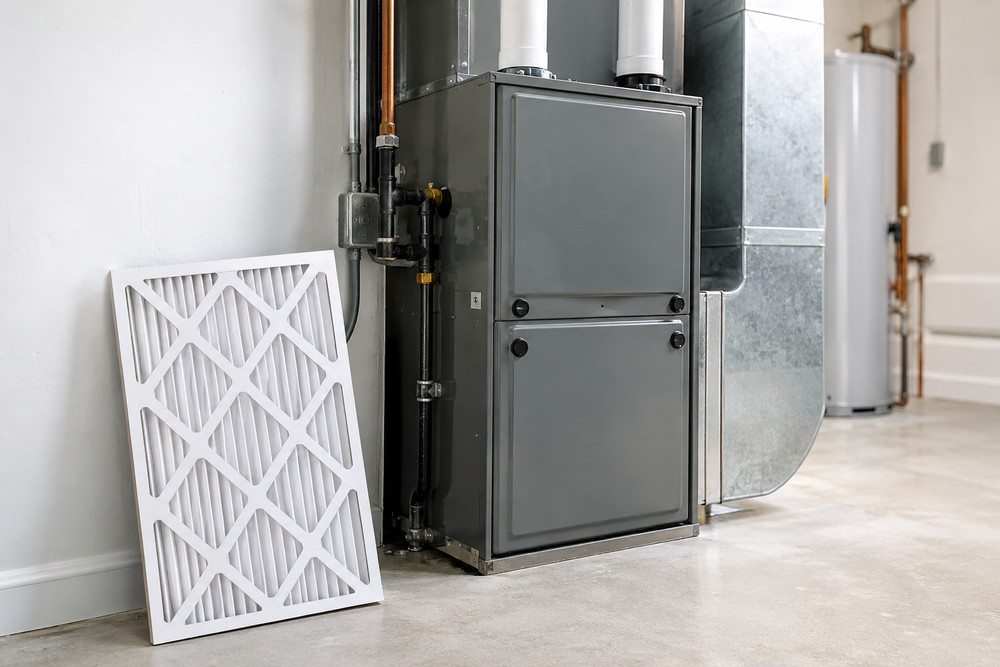
A filter is one of the few system components many homeowners can inspect safely according to equipment guidance. If replacement is appropriate for the installed filter and maintenance schedule, completing that task before sustained heating begins can support normal airflow. The correct filter type should follow system or manufacturer requirements.
Do not assume that installing a more restrictive filter automatically improves the heating system. Filter characteristics need to remain appropriate for the equipment. When uncertain about compatibility, professional guidance is more useful than choosing solely by appearance or packaging claims.
Climate Systems Air Conditioning & Heating can consider filter conditions alongside broader system performance when airflow or comfort concerns develop. A filter is only one part of the air-distribution path, so replacing it should not become an automatic explanation for every heating problem.
Make Sure Supply Registers Remain Open and Unobstructed
Furniture arrangements often change between heating seasons. A sofa, rug, storage container, curtain, or other household object may now interfere with a supply register that was previously clear. Walking through the home can reveal these straightforward obstructions before regular heating starts.
Accessible registers should remain reasonably clear so conditioned air can enter occupied spaces as intended. Homeowners should not begin closing numerous registers in an attempt to redirect heat without understanding how the system is designed. Large changes can alter airflow rather than solve the underlying comfort concern.
An HVAC Contractor can investigate persistent airflow differences that remain after ordinary household obstructions have been ruled out. Professional evaluation is particularly useful when several rooms suddenly behave differently from previous heating seasons.
Check Return Areas for Household Obstructions
Return pathways also contribute to air circulation in a forced-air heating system. Large furniture, stored possessions, or other objects placed directly against accessible return openings can interfere with the intended path. A visual room-by-room review may identify changes that occurred during warmer months.
Homeowners do not need to remove grilles or access ductwork for this check. The purpose is simply to confirm that visible openings are not blocked by ordinary household belongings. Internal airflow concerns require a different level of evaluation.
Compare Room Conditions With Last Winter
Think about which rooms typically warm quickly and which have historically been more difficult to keep comfortable. A new difference can be more informative than a condition that has existed for years. Previous seasonal experience gives homeowners a useful baseline for comparison.
Clear the Area Immediately Around the Furnace
Storage can gradually accumulate around mechanical equipment, particularly when a furnace is located in a basement, utility room, garage, or dedicated closet. Before heating season begins, review the surrounding area and remove inappropriate stored items according to equipment and safety guidance. Access to the system should remain reasonably clear.
Avoid placing combustible or heat-sensitive household materials near heating equipment. Homeowners should also resist using the furnace enclosure or connected components as shelves. Keeping the area orderly makes visual observation and professional access easier.
This check concerns the space around the equipment rather than its internal condition. Panels, wiring, burners, controls, and other technical components should remain untouched by homeowners who are not trained to service them.
Pay Attention During the First Complete Heating Cycle
The first heating cycle offers an opportunity to compare current operation with what homeowners remember from previous seasons. Notice whether the system starts, produces airflow, warms the home, and shuts down in a generally familiar sequence. Exact technical timing is unnecessary.
Some normal seasonal effects can attract attention after months without heating. The important question is whether a behavior appears substantially different, persistent, or connected with another performance concern. Homeowners should avoid repeatedly forcing additional cycles simply to test the equipment.
If the system does not start, repeatedly stops, or fails to provide expected comfort, Furnace Repair may require proper diagnosis. Observations about what occurred before the problem appeared can help describe the complaint without identifying a presumed failed component.
Notice New Odors Without Trying to Trace Them Internally
A furnace returning to service may produce odors that homeowners notice because heating has been inactive for an extended period. Residents should pay attention to whether an odor is brief or persistent and whether it is accompanied by smoke, visible electrical concerns, or other unusual conditions.
Serious warning signs should not be treated as routine seasonal behavior. Homeowners should follow applicable equipment and emergency guidance when a condition appears unsafe. Continuing to operate equipment simply to see whether a concerning symptom disappears is not a useful test.
Climate Systems Air Conditioning & Heating can evaluate unusual operating conditions when the source is not clear from ordinary homeowner observations. Describing when an odor begins and whether it changes during operation provides more useful information than attempting internal investigation.
Listen for Changes From the Furnace’s Familiar Operation
Homeowners often recognize the ordinary sounds of their heating equipment even without knowing what creates each one. Startup, airflow, and shutdown produce an established pattern that can serve as a practical reference. A noticeably new sound deserves attention when it repeats.
Rather than trying to diagnose a component from the noise, record when it occurs. A sound appearing at startup provides different context from one beginning after the furnace has operated for several minutes. Timing can help make the description more precise.
Do not remove panels or reach toward moving or electrical components to locate a noise. Safe observation from outside the equipment is enough for a homeowner-level check.
Observe Whether the Home Warms Consistently
Successful startup does not necessarily mean every aspect of heating performance is unchanged. Pay attention to whether occupied rooms reach expected comfort and whether airflow feels generally consistent with previous seasons. Significant new differences can deserve evaluation.
A single cool room does not automatically establish a furnace problem. Building conditions, closed doors, household changes, register obstructions, and other factors can influence comfort. Comparing several rooms can provide better context.
An HVAC Contractor can evaluate the complete heating system when persistent differences cannot be explained through ordinary accessible checks. Technical diagnosis should determine whether the furnace, controls, airflow, or another condition is contributing to the problem.
Keep Notes When a Problem Appears Intermittently
Some preseason concerns occur once and then disappear temporarily. The furnace may hesitate during one cycle but operate normally later, making the original behavior difficult to remember accurately. Brief written notes can preserve useful details.
Record when the condition occurred, what the thermostat was requesting, whether airflow began, and whether any unusual sound or odor appeared. There is no need to create technical measurements. A straightforward sequence is usually more helpful.
Furnace Repair can be approached more systematically when intermittent behavior has been documented rather than reconstructed from memory. Homeowners should observe normal operation instead of repeatedly adjusting settings to reproduce the symptom.
Use the First Heating Days as an Early Performance Check
The beginning of heating season gives homeowners an opportunity to become reacquainted with their system before sustained cold weather arrives. Thermostat settings, filters, accessible registers, return openings, equipment surroundings, sounds, odors, and room comfort can all be reviewed without attempting internal service.
The purpose of these checks is not to prove that every component is functioning correctly. Instead, they establish whether the system appears to be operating similarly to previous seasons and highlight changes that deserve closer evaluation. Familiar household observations can provide valuable context when professional testing becomes necessary.
A calm preseason review can make heating concerns easier to describe and address. By noticing meaningful changes early and leaving technical work to qualified professionals, homeowners can enter the colder months with a clearer understanding of how their heating system is behaving.