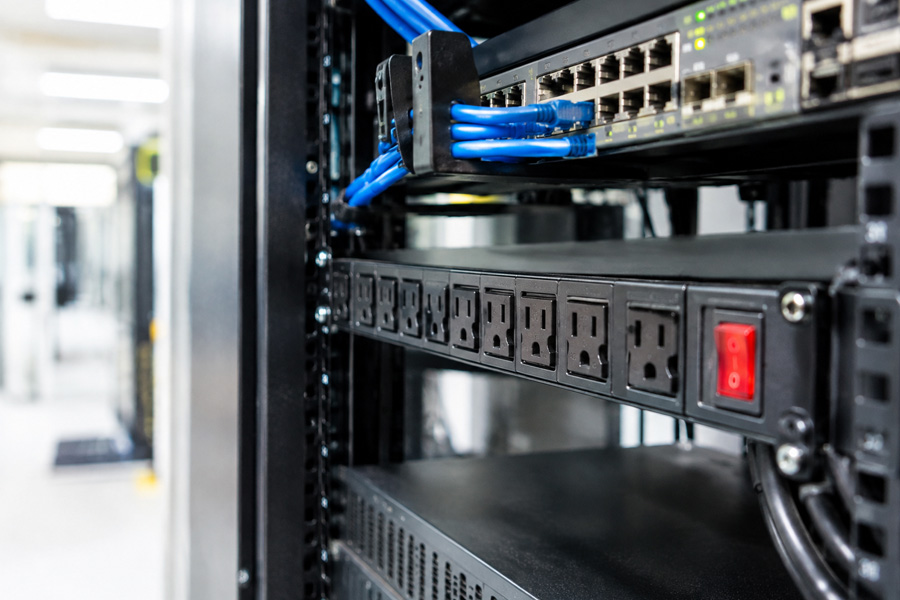
Many individuals construct their rack builds centered on servers and switches. They forget the thing that actually keeps all of it alive. Power comes last in the planning, then first in the list of things that go wrong. That order needs to flip. A proper Rack Mount Power Board isn’t a shopping afterthought, it’s the backbone the whole rack hangs off. AFCOM’s 2025 data center report put average rack density at roughly 16 kW, up from about 7 kW back in 2021, more than double in four years. If your power planning hasn’t changed since 2021, your rack has already outgrown it.
How Much Power Does Your Rack Really Draw?
Add up the nameplate wattage for each device going in – not what you expect it to use on an extremely quiet Tuesday. Nameplate numbers are often very high indeed, since manufacturers include a little extra margin, so actual usage will generally be lower. Still, plan for the nameplate figure plus headroom for growth, not the comfortable average. I’ve watched teams size a board for today’s load and run out of capacity within a year, because nobody budgeted for the next switch upgrade.
- List every device and its rated wattage, no guessing
- Add 20 to 30 percent headroom for future gear
- Check whether your power comes in as single phase or three phase
- Confirm the breaker rating upstream, not just what the board can handle
- Factor in redundant paths if the rack can’t afford downtime
Single Phase or Three Phase, Which One Do You Need?
Small racks, light load, single location, single phase usually does the job fine and it’s simpler to install. Once density climbs past roughly 10 to 15 kW per rack, three phase starts making real sense, because it moves more power through less copper and balances load better across circuits.
| Feature | Single Phase | Three Phase |
| Typical Use | Small to mid size racks | High density or hyperscale racks |
| Power Delivered | Lower, simpler wiring | Higher, more efficient distribution |
| Installation Cost | Lower upfront cost | Higher upfront cost |
| Best For | Light, steady loads | Growing or dense server loads |
What About Redundancy?
If a rack runs anything a client actually depends on, one power board is a single point of failure, plain and simple. Two boards, fed from separate circuits, mean a breaker trip or a maintenance job on one side doesn’t take the whole rack down. This costs more. It also means you sleep properly when a storm rolls through and the power flickers.
Why Outlet Type Is Not a Small Detail
IEC C13 and C14 connectors dominate rack gear for good reason, they lock better than a standard domestic plug and they’re rated for the job. Mixing plug types across one board because “it was what we had” is how you end up with an adapter graveyard taped to the side of a rack. Pick the connector type that matches your gear before you order, not after.
Should You Pay Extra For Metering?
On a small rack with three servers, probably not, you can walk over and check it yourself. On anything bigger, metering earns its keep fast. A metered board shows load in real time, so you catch a circuit creeping toward its limit weeks before it trips, instead of finding out at the worst possible moment.