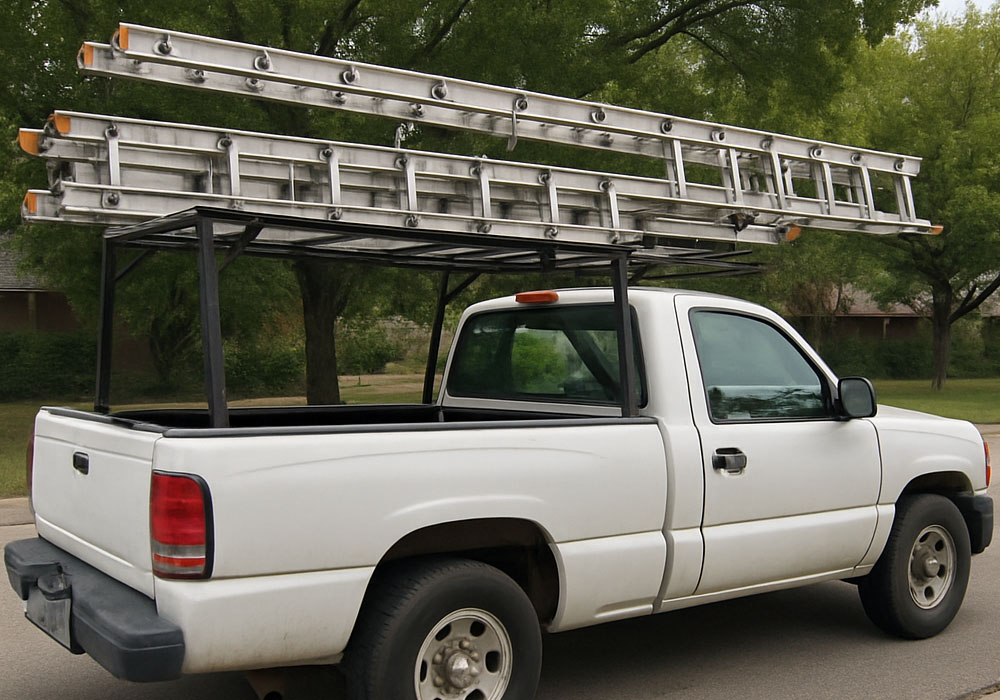
Not every job needs the same setup. One week you’re hauling a step ladder and some conduit. The next week it’s full extension ladders and a rooftop tent for a weekend away.
A fixed rack can’t adapt to both. An adjustable ladder rack can, and that flexibility is worth more than most buyers realise until they’ve owned one for six months.
The word “adjustable” gets thrown around loosely in this market, so it pays to know what it actually means before spending money. It usually refers to leg height, mounting width, or both, letting the same frame suit a bare tub today and a canopy tomorrow. Some go further, with modular channels that accept accessories from other brands entirely.
What “Adjustable” Actually Covers
There are three separate things people lump under this one word, and mixing them up leads to disappointment.
Leg height adjustment changes how far the rack sits above the tub floor. This matters when you swap between a bare tub and a canopy, since the canopy roofline sits higher and needs the rack raised to clear it. Width adjustment changes how far apart the mounting legs sit, which lets one rack fit a Hilux tray one month and a Ranger the next if you change vehicles or run a mixed fleet. Then there’s accessory-channel adjustability, which isn’t about the rack’s shape at all but about what you can bolt onto it later, like tie-down points, pipe holders, or a second crossbar.
A rack with leg height adjustment on its own is one product built for two setups. A rack with all three is genuinely built for the long haul, because your needs at year one rarely match your needs at year three.
Real Numbers Worth Knowing
One Australian-made system uses adjustable front and rear legs alongside a universal joiner bar, rated at 150 kg of dynamic load, and can mount either directly to the tub or onto a roll-top cover’s channel system. That second option matters more than it sounds. Mounting to the cover instead of the tub means zero new holes drilled into the vehicle, and it keeps full access to whatever’s underneath.
Quick list of what changes when a rack goes from fixed to adjustable:
- Height can be raised or lowered to clear a canopy, a bullbar, or a roof console
- Width shifts to match different tub dimensions without buying a second rack
- Mounting channels accept third-party gear from brands like Rhino-Rack, Thule, and Yakima
- The rack can move between vehicles if you upgrade or run more than one ute
That last point saves real money over time. A rack locked to one tub width is scrap metal the day you change vehicles. An adjustable one just gets re-fitted.
Weighing Cost Against Flexibility
Adjustable systems usually cost more upfront than a basic universal rack, and that price gap is fair to question. Here’s a side by side of what you’re actually paying for:
| Feature | Fixed Rack | Adjustable Rack |
|---|---|---|
| Upfront cost | Lower | Higher |
| Fits multiple vehicles | No | Often yes |
| Clears canopy or bullbar | Only if designed for it | Usually, via leg height |
| Resale value if selling ute | Low, tub-specific | Higher, can be re-fitted |
| Accessory compatibility | Limited | Broad, modular channels |
My honest take is that if you’re keeping the same ute for its full service life and never touching a canopy, a fixed rack is fine and cheaper. But most tradies I’ve spoken to change vehicles, add a canopy, or start touring on weekends within a few years. The adjustable option earns its price back the first time your setup changes, and setups always change eventually.
One thing to watch for regardless of adjustability: legal payload limits don’t move just because your rack does. Whatever weight the rack itself adds, plus whatever you strap to it, still counts against the vehicle’s total payload rating.