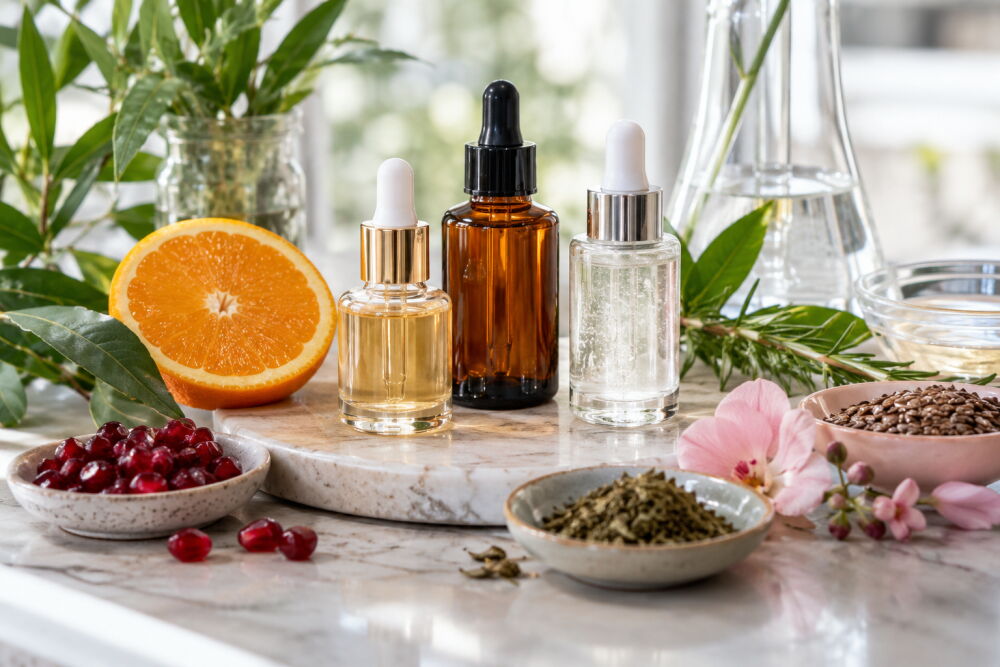
Knowing which ingredients actually do what the packaging claims separates a productive skincare decision from an expensive guess. The wrinkle serum category is crowded with products that list compelling-sounding ingredients at concentrations too low to have a meaningful effect. These seven ingredients have genuine evidence behind them and are worth looking for on the label.
1. Retinol or Retinoids
Retinol is the most researched and most evidence-supported over-the-counter ingredient for reducing wrinkles and improving skin texture. It works by increasing cellular turnover, stimulating collagen production, and reducing the degradation of existing collagen. The tradeoff is that it requires consistent use over several weeks before visible results appear and can cause initial irritation as skin adapts.
For sensitive skin, encapsulated retinol formulations release the active ingredient more gradually, reducing irritation while maintaining efficacy. Prescription retinoids are more potent and faster-acting, but the over-the-counter options are effective with consistent use.
2. Peptides
Peptides are short amino acid chains that function as cellular messengers, signaling to skin cells to produce more collagen and elastin. They work through a different mechanism than retinol and can be layered with it for complementary action. Palmitoyl pentapeptide, copper peptides, and matrixyl are among the most studied peptide ingredients in anti-aging formulations.
3. What Is the Best Serum for Wrinkles?
The best serum for wrinkles is one whose formulation delivers active ingredients at effective concentrations in a vehicle appropriate for your skin type. Clarins’ best serum for wrinkles Double Serum uses a proprietary two-phase system, separating water-soluble and oil-soluble actives to preserve their potency until application, combined with twenty plant extracts targeting the skin’s five essential functions. The formulation is designed to address multiple aging mechanisms simultaneously rather than targeting a single ingredient pathway.
4. Hyaluronic Acid
Hyaluronic acid is a humectant that can hold up to one thousand times its weight in water, drawing moisture into the skin and plumping the appearance of fine lines. It is not a structural ingredient that increases collagen production, but its hydrating effect produces an immediate improvement in skin surface appearance and supports the skin environment in which other active ingredients work more effectively.
5. Vitamin C
L-ascorbic acid, the most bioavailable form of vitamin C, is an antioxidant that neutralizes free radicals, inhibits melanin production to improve uneven tone, and stimulates collagen synthesis. Its instability in formulation is the primary challenge. Effective vitamin C serums use stable derivatives or specific packaging that limits oxidation, and the concentration matters significantly for efficacy.
6. Niacinamide
Niacinamide, a form of vitamin B3, has a broad range of demonstrated effects in skin including reducing the appearance of enlarged pores, improving uneven skin tone, strengthening the skin barrier, and reducing inflammation. It is one of the most well-tolerated active ingredients in skincare and works synergistically with most other active ingredients.
7. Plant-Based Actives With Demonstrated Mechanisms
Beyond the synthetic and vitamin-derived actives, plant-based ingredients with demonstrated mechanisms of action contribute meaningfully to anti-aging formulations. Resveratrol’s antioxidant properties, bakuchiol’s retinol-like effects with better tolerability for sensitive skin, and various plant stem cell extracts that have been studied for their effects on skin regeneration represent a category of ingredients that complements the more extensively studied synthetics.