Have you ever walked down a residential street and immediately felt at ease? The air feels fresher, the homes look warm and approachable, and you get an overwhelming sense that people actually enjoy living there. Conversely, some streets feel sterile, cold, or defensive—even if the houses are modern and expensive.
What creates this difference? An inviting neighborhood is rarely an accident. It is the result of intentional design, healthy greenery, human-scale architecture, and an active sense of community.
Whether you are a homeowner looking to boost your street’s charm, a community leader, or simply curious about urban design, understanding these core principles reveals how physical spaces shape human connection.
1. The Transformative Power of Greenery and Streetscapes
Quick Answer: Lush tree canopies, flowering front garden beds, and healthy foliage soften hard urban surfaces, lower ambient temperatures, and signal pride of ownership across a community.
Plants are the ultimate visual welcome mat. Streets lined with mature shade trees, manicured lawns, and vibrant flower beds automatically feel softer and more livable than concrete-heavy corridors. Tree canopies provide crucial shade during hot summer months, reduce traffic noise, and slow down passing cars naturally.
On an individual level, thoughtful front yard landscaping communicates that residents care about their environment. Adding native perennials, flowering shrubs, or windowsill planter boxes creates visual interest for pedestrians.
When upgrading your own property to contribute to neighborhood charm, sourcing hardy foliage from a reputable plant store in Salt Lake City or your regional garden center ensures your plant choices thrive through local seasonal shifts.
2. “Eyes on the Street” and Walkable Design
Quick Answer: Walkable street design with wide sidewalks, active windows, low fences, and clear sightlines creates natural passive surveillance, making streets feel safer and more energetic.
Urban activist Jane Jacobs famously coined the phrase “eyes on the street” to describe how natural human observation keeps neighborhoods safe and lively. When homes feature large front windows, open entryways, and shallow setbacks, residents naturally monitor street activity without feeling like security guards.
Walkability is equally critical to building walkable street design. Neighborhoods feel welcoming when pedestrians are prioritized over high-speed vehicular traffic.
Features of a Walkable Street
- Continuous Sidewalks: Wide, well-paved walkways separated from traffic by grass strips or shade trees.
- Traffic Calming: Speed humps, narrow driving lanes, and raised crosswalks that force vehicles to drive cautiously.
- Human-Scale Lighting: Warm lantern-style streetlamps that illuminate walkways rather than harsh floodlights focused solely on asphalt.
3. Porch Culture and Front-Yard Socializing
Quick Answer: Front porches, stoops, and open outdoor seating encourage spontaneous, low-pressure conversations between neighbors, fostering strong social cohesion across the block.
For decades, suburban home designs shifted social life to private backyards behind high wooden fences. While privacy is valuable, removing front-facing social spaces cut off daily neighborly interactions.
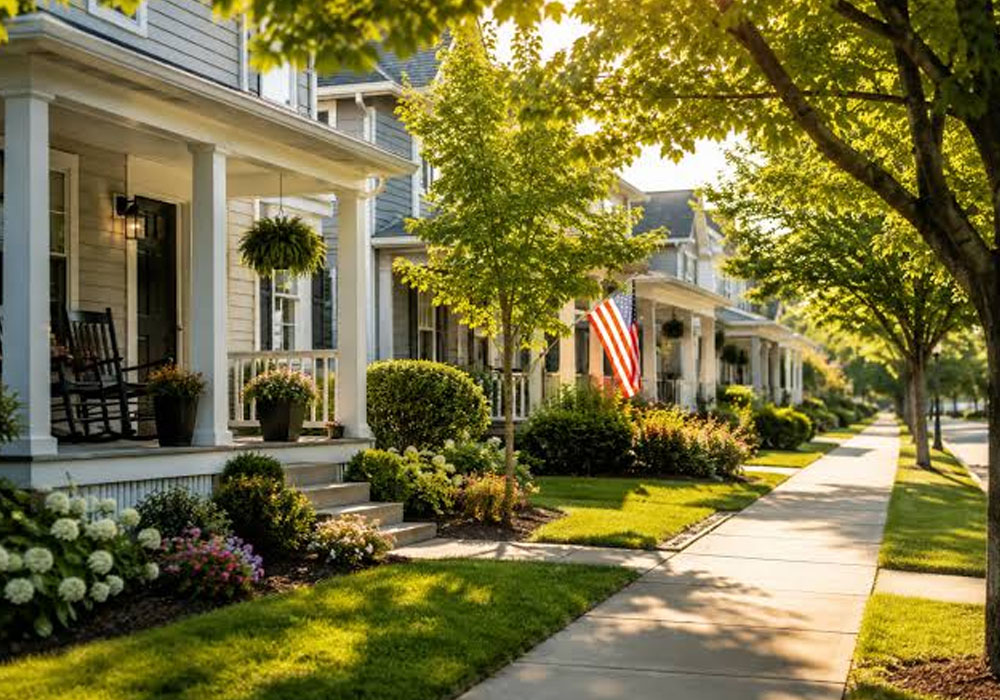
Re-establishing “porch culture” is one of the fastest ways to make a street feel friendly. A front porch equipped with comfortable chairs, a swing, or a small bistro table signals accessibility. It allows residents to relax outdoors while greeting neighbors walking dogs or pushing strollers, transforming strangers into familiar faces over time.
4. Cohesive Curb Appeal Without Cookie-Cutter Uniformity
Quick Answer: High neighborhood curb appeal relies on clean upkeep, clear house numbers, and harmonious architectural proportions while allowing individual personality to shine through.
A neighborhood does not need to look like a perfectly uniform housing tract to be attractive. In fact, streets with diverse architectural character often feel much more charming than identical homes.
The key is balance. Visual harmony comes from shared maintenance standards—such as tidy lawn edges, painted trim, and well-lit entry doors—rather than strict uniformity. Improving overall neighborhood curb appeal creates a collective pride that elevates the entire street.
| Design Element | Cold/Unwelcoming Feel | Inviting/Warm Feel |
| Garages | Dominant “snout” garages facing street | Detached or side-loaded garage entries |
| Fencing | 6-foot solid privacy walls along sidewalk | Low stone walls, pickets, or hedge borders |
| Lighting | Glaring blue-tinted floodlights | Warm-toned, downward-facing accent lights |
| Entryways | Hidden, dark, or recessed front doors | Bold, brightly lit doors with clear house numbers |
5. The Essential Role of “Third Places” and Shared Spaces
Quick Answer: Third places—such as neighborhood parks, pocket gardens, coffee shops, and communal benches—provide neutral gathering grounds where residents interact naturally outside work and home.
Sociologist Ray Oldenburg introduced the concept of “third places”—spaces where people gather outside of the home (the first place) and work (the second place). Neighborhoods that feature accessible third places instantly feel more vibrant and interconnected, supporting green spaces and community health.
Even small-scale additions make a massive difference:
- A corner park bench positioned under a shade tree.
- A community garden plot where neighbors swap planting tips and fresh produce.
- A neighborhood “little free library” box placed near a sidewalk.
These micro-destinations give people a reason to step outside, linger, and engage with their surroundings.
6. Common Mistakes That Make Streets Feel Cold
Quick Answer: Common mistakes include prioritizing large garage doors over front entrances, erecting tall perimeter walls, removing shade trees, and over-relying on security gating.
Sometimes, well-intentioned security or modern aesthetic upgrades backfire, turning a home or street into an impenetrable fortress. Avoid these widespread design traps:
- The “Snout House” Effect: Designing homes where a massive multi-car garage door extends far past the front door creates a blank, unwelcoming facade.
- Fortress Fencing: Enclosing front yards in tall, solid wood or vinyl privacy fences cuts off sightlines and communicates suspicion to passersby.
- Clear-Cutting Trees: Removing mature trees to lower yard maintenance leaves streets feeling exposed, hot, and barren.
- Harsh Security Lighting: Installing motion-activated floodlights with blinding, unshielded bulbs makes evening walks uncomfortable for pedestrians.
7. Frequently Asked Questions About Neighborhood Appeal
How can renters help make a neighborhood feel more inviting?
Renters can add potted flowers to doorsteps, install warm window lighting, keep entry porch areas clean, and actively participate in neighborhood cleanup events or community garden projects.
Does improving neighborhood charm increase home values?
Yes. Real estate studies consistently show that high neighborhood curb appeal, mature tree canopies, and walkable infrastructure boost residential property values significantly compared to isolated homes.
Summary of Key Takeaways
Creating an inviting neighborhood is a collective effort built on human-scale details. By prioritizing street greenery, encouraging walkable sidewalk design, embracing front porch socializing, and developing shared community spaces, neighborhoods transform from mere collections of houses into thriving, supportive communities.
Ultimately, a truly welcoming street is one where physical design encourages human connection, making residents and visitors alike feel safe, comfortable, and at home.