Choosing a metal detector is less about finding the model with the biggest depth claim and more about matching the equipment to the places you will actually search. Before comparing options at this metal detector shop or elsewhere, identify your primary terrain, preferred targets, experience level, and budget.
A detector that works well in a dry city park may become unstable on wet salt sand. At the same time, a powerful gold prospecting machine may be unnecessarily difficult for someone hunting modern coins. The best choice is one that performs reliably in your conditions and feels comfortable enough to use for several hours.
Start With the Hunting Site
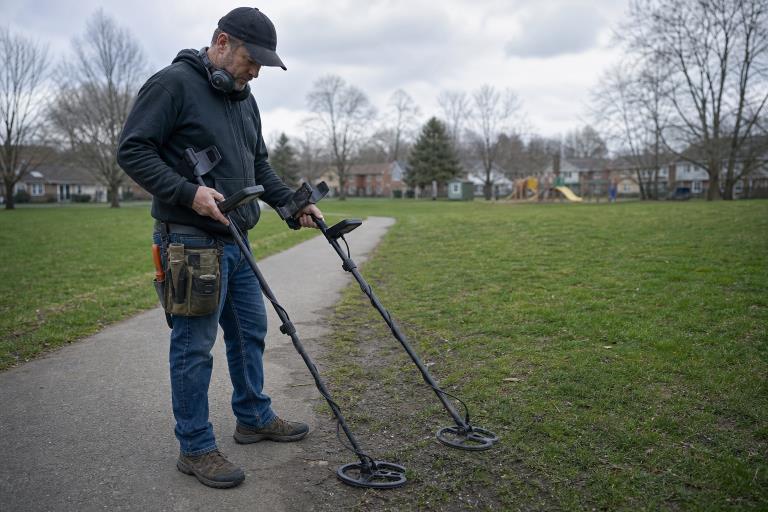
Your regular hunting site should lead the buying decision. Parks and yards usually reward quick target separation, clear target IDs, and effective discrimination for sorting coins and jewelry from nails, foil, and bottle caps. Old fields and home sites often call for adjustable ground balance and solid iron handling. Freshwater beaches benefit from waterproof equipment, while wet salt beaches and goldfields demand better performance in challenging mineralized ground.
Questions to Ask Before Shopping
- Will you mainly hunt parks, fields, freshwater, salt beaches, or goldfields?
- Are you seeking coins, jewelry, relics, or natural gold?
- Will you detect in rain, shallow water, wet sand, or highly mineralized soil?
- How long do you expect a typical detecting session to last?
Match Detector Technology to the Ground
Very low-frequency (VLF) detectors are common all-purpose choices. They generally offer useful discrimination and target identification, making them practical for parks, fields, dry sand, coins, and jewelry. Their limits become more noticeable in severe mineralization and wet salt conditions.
Multi-frequency detectors use multiple frequencies and can provide broader performance across varying soil conditions, busy parks, and beaches. They may cost more and offer additional settings, but that flexibility can be valuable for hunters who hunt on several types of terrain.
Pulse induction, or PI, detectors are often considered for mineralized soil, deep searching, saltwater conditions, and gold prospecting. The trade-off is usually less precise discrimination, which can mean digging more unwanted targets in trash-heavy areas. For a plain-language overview of these categories, read this beginner buying guide.
3. Compare the Features That Matter Most
- Ground balance:Reduces false signals from soil minerals.
- Discrimination and target ID:Help estimate whether a signal is likely iron, aluminum, a coin, or another conductive object. They are guides, not guarantees.
- Sensitivity:Helps locate smaller or deeper targets, although excessive sensitivity can create unstable signals.
- Recovery speed:Helps separate targets that are close together in trashy ground.
- Waterproof rating:Check whether only the coil is water-resistant or whether the full detector can be submerged.
- Weight and balance:A lighter, well-balanced detector can make long hunts far more enjoyable.
- Battery system:Consider runtime, charging options, and ease of carrying spares.
4. Choose the Right Search Coil
Search coil size affects ground coverage, separation, and handling. Small coils are useful around playground equipment, brush, iron-heavy sites, and closely packed targets. Medium coils are a practical general-purpose option for many beginners because they balance coverage and precision. Large coils cover open ground faster and can help on certain deeper targets, but they add weight and may be harder to control in mineralized soil.
5. Set a Realistic Budget
Plan for the complete setup, not just the detector. Entry-level machines are suitable for casual users learning basic tones and recovery techniques. Mid-range options often add better ground handling, waterproofing, and adjustable controls. Advanced and specialized equipment can be worthwhile for difficult beach conditions, prospecting, underwater use, or experienced users who understand how to tune settings.
A lower-priced detector used frequently and confidently can produce better results than an advanced machine that feels confusing or tiring to use. Leave room in the budget for recovery tools and protection.
6. Avoid Common Buying Mistakes
- Buying for depth alone.Depth changes with target size, soil, coil choice, settings, and technique.
- Ignoring the primary location.Dryland equipment may not suit wet, salt-laden sand.
- Choosing too much complexity too soon.Simple controls can speed up learning.
- Overlooking comfort.Shaft length, arm cuff fit, and balance matter.
- Forgetting accessories.A pinpointer, digger, headphones, pouch, and spare power source add real value.
7. Build a Basic Detecting Kit
- A detector matched to your main terrain
- A pinpointer for locating targets in the hole
- A hand digger for soil or a scoop for sand
- Headphones, gloves, knee protection, and a fanny pouch
- A coil cover, charging cable, and backup battery or power pack
- A notebook or phone app for recording locations, conditions, and finds
8. Follow Local Rules and Detect Responsibly
Rules vary by landowner, city, county, beach, state, and park agency. Always check the specific property before detecting, because access may be allowed in one area but prohibited nearby. For an example of how public-land policies can differ by activity and location, review the Florida State Parks visitor FAQs.
Get permission for private land, fill every hole neatly, remove modern trash when practical, and avoid graves, protected areas, archaeological sites, and historic structures. If a find appears culturally significant, do not clean or damage it before determining the appropriate reporting process.
9. Use a Simple Buying Checklist
- Choose your main hunting location and target type.
- Select VLF, multi-frequency, or PI technology accordingly.
- Confirm water protection for your planned conditions.
- Pick a coil size that balances coverage and separation.
- Check the detector’s weight, balance, battery system, and controls.
- Include accessories and protective gear in the full budget.
- Read the manual before buying to make sure the settings feel manageable.
Final Thoughts
The right metal detector depends on the ground conditions, targets, experience level, and the time you can devote to the hobby. Start with your likely hunting sites, focus on practical features, and choose a setup you will enjoy using often. A simple detector, used well under the right conditions, can outperform a more expensive machine used in the wrong place.