A small living room can feel welcoming and functional without requiring major renovations or expensive design changes. The challenge often comes from choosing furniture that provides enough comfort without overwhelming the available floor space. Thoughtful selections can make compact interiors feel organized, balanced, and surprisingly spacious.
Limited square footage does not mean homeowners must settle for uncomfortable seating or eliminate personal style. Furniture proportions, visual weight, and practical features influence how a room looks and functions. Understanding these relationships helps homeowners create inviting spaces that accommodate everyday activities without unnecessary crowding.
Shopping at a Furniture Store becomes more productive when homeowners understand their room dimensions and seating priorities. Whats New Furniture offers options worth comparing according to size, design, and household requirements. The following strategies explain how carefully selected furniture can improve comfort while preserving valuable living space.
Choose Furniture That Matches the Room’s Scale
Furniture proportions strongly influence how spacious a living room feels. Oversized pieces can dominate compact interiors, even when they technically fit within the available dimensions.
Measure the Complete Furniture Footprint
Before purchasing a sofa or cabinet, homeowners should measure the room carefully. Doorways, windows, heating vents, and permanent architectural features can affect furniture placement.
Measurements should include the full depth and width of each proposed piece. Reclining mechanisms, extended footrests, and open cabinet doors may require additional clearance.
Accurate planning prevents purchases that restrict movement or make surrounding furniture difficult to use.
Avoid Oversized Seating Designs
Large sofas with substantial arms and deep cushions can consume considerable space. Compact designs with narrower profiles may provide comparable seating without occupying excessive floor area.
Homeowners should compare usable seating dimensions rather than judging furniture solely by exterior measurements.
A well-proportioned sofa often creates greater comfort than an oversized sectional squeezed into an unsuitable room.
Select Sofas That Preserve Visual Openness
The sofa usually establishes the living room’s primary seating arrangement. Its shape and construction can influence whether the space appears crowded or balanced.
Consider Raised Legs and Slim Profiles
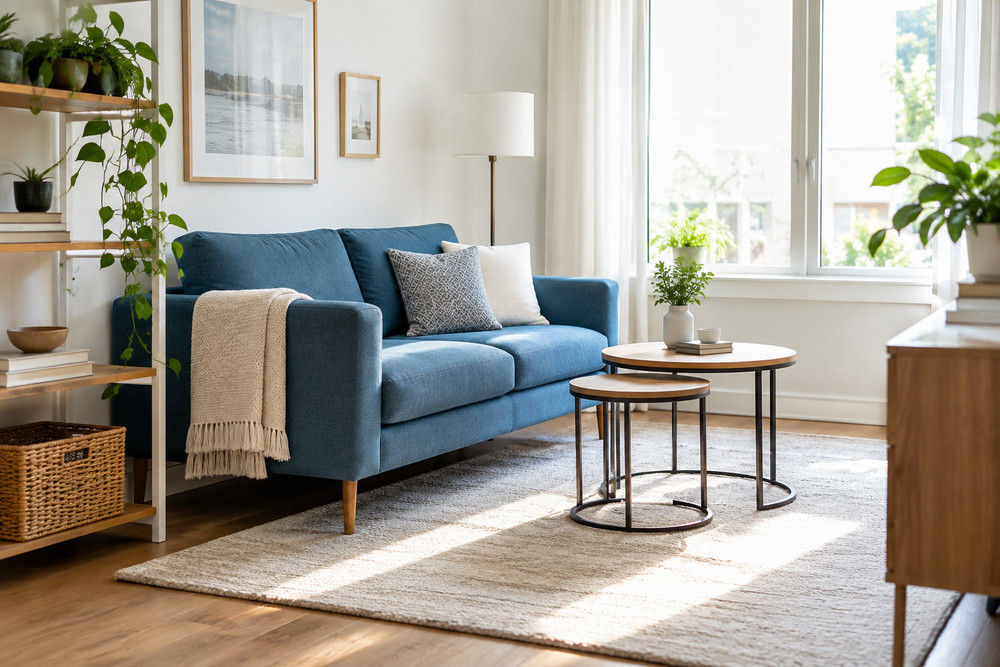
Sofas with visible legs allow portions of the floor to remain visible beneath the frame. This uninterrupted flooring can make the furniture appear visually lighter.
Slim arms and straightforward silhouettes also reduce unnecessary bulk. However, homeowners should evaluate comfort before prioritizing appearance.
A visually compact sofa should still provide appropriate support for regular household use.
Compare Loveseats With Compact Sectionals
Loveseats can work effectively in rooms where a traditional sofa would overwhelm the layout. They provide comfortable seating while leaving space for additional furnishings.
Compact sectionals may suit certain corners or layouts particularly well. Their suitability depends on orientation, doorway access, and surrounding circulation. Visiting a Portland sofa store can give homeowners an opportunity to compare different sofa sizes and configurations before choosing one for a compact living room.
Neither option is universally better. Homeowners should choose according to room geometry and the number of people regularly using the space.
Make Multifunctional Furniture Work Harder
Furniture serving multiple purposes can reduce the number of separate pieces required. This approach is especially useful when storage and seating compete for limited floor space.
Storage Ottomans and Flexible Tables
A storage ottoman may provide a footrest, occasional seating, and concealed storage. Some designs can also accommodate a suitable tray for temporary surface use.
Nesting tables offer another practical alternative. Smaller tables can remain tucked beneath larger ones until additional surfaces become necessary.
Whats New Furniture can be considered when comparing multifunctional pieces that suit different household routines.
Choose Features That Solve Real Problems
Multifunctional furniture should address identifiable needs rather than simply offer numerous features. An elaborate mechanism provides little value if the household rarely uses it.
Homeowners should consider accessibility, maintenance, and ease of operation before purchasing.
Practical versatility makes a small room more adaptable without introducing unnecessary complexity.
Use Coffee Tables That Support Comfortable Movement
Coffee tables provide convenient surfaces, but their dimensions can influence circulation. An oversized table may create narrow pathways between seating and nearby furniture.
Consider Shape and Proportion
Round and oval tables can reduce sharp corners within compact seating arrangements. Rectangular designs may work better beside longer sofas.
The appropriate choice depends on the available space and surrounding furniture.
Homeowners should evaluate how easily people can approach seating and move around the table during normal activities.
Explore Alternative Table Arrangements
Small side tables may replace a central coffee table in particularly narrow rooms. They provide convenient surfaces without occupying the middle of the seating area.
Movable tables can also accommodate changing activities.
The objective is maintaining useful surfaces while avoiding unnecessary obstacles.
Create Storage Without Overcrowding the Room
Small living rooms still require storage for books, electronics, games, and everyday belongings. However, adding multiple cabinets can quickly reduce available space.
Choose Vertical Storage Carefully
Tall shelving units can provide substantial storage without consuming extensive floor area. Their height should complement the room rather than dominate it.
Closed cabinets may help conceal frequently used belongings that create visual clutter.
Homeowners should secure furniture appropriately according to manufacturer instructions, particularly where tipping hazards exist.
Avoid Unnecessary Storage Pieces
Additional storage does not automatically improve organization. Sometimes existing cabinets simply need better internal arrangements.
Before purchasing another unit, homeowners should identify which belongings require accommodation.
A Furniture Store visit can help compare storage capacity against the floor space each piece occupies.
Improve Layout Through Thoughtful Furniture Placement
Even appropriately sized furniture can make a room uncomfortable when arranged poorly. Placement should support conversation, relaxation, and movement.
Keep Main Walkways Clear
Homeowners should identify the routes people regularly follow between entrances, seating, and adjoining rooms. Furniture should not force awkward detours through these areas.
Moving a sofa slightly may improve circulation more than replacing several smaller pieces.
Clear pathways also make compact rooms easier to navigate during gatherings.
Avoid Filling Every Available Corner
Empty space contributes to visual balance and comfortable movement. Filling every corner with tables, cabinets, or chairs can make a room appear unnecessarily crowded.
A carefully selected arrangement often feels more complete than numerous unrelated pieces.
Restraint allows important furniture to remain visually distinct.
Balance Color, Texture, and Furniture Design
Furniture appearance influences how spacious a room feels, although visual techniques cannot change its actual dimensions.
Coordinate Major Furniture Finishes
Related colors and materials can create continuity between seating, tables, and storage. This coordination reduces visual fragmentation without requiring identical furniture collections.
Lighter finishes may create an airy appearance, while darker furniture can provide contrast and character.
The strongest approach balances personal preferences with the room’s existing lighting.
Limit Excessive Decorative Details
Intricate silhouettes and numerous competing patterns may create visual complexity in compact interiors. Simpler furniture profiles can help establish a calmer overall appearance.
However, minimalism is not mandatory for successful small-room design.
A few distinctive pieces can provide personality without overwhelming the arrangement.
Build a Living Room Around Everyday Comfort
A successful compact living room supports actual household activities rather than merely appearing spacious. Seating, storage, tables, and circulation should work together naturally.
Homeowners exploring Whats New Furniture can compare options based on practical dimensions and daily requirements. Selecting fewer, better-suited pieces often produces stronger results than filling the room with matching collections.
Small spaces benefit from deliberate decisions about proportion, versatility, and placement. By prioritizing comfortable seating, flexible furnishings, and clear movement, homeowners can create living rooms that feel inviting without sacrificing essential functionality.