Hardwood and tile look great in a listing photo. To a dog with stiff back legs, that same floor can feel like a skating rink. Plenty of dog parents only notice the problem when a pup starts pausing at the top of the stairs or needs two tries to stand up after a nap.
The hips do a lot of the work every time a dog sits, stands, climbs, or jumps. That makes the house itself part of the healthy hips for dogs conversation. A few changes, most of them cheap and renter-friendly, can make daily movement easier for dogs of any age.
Why Hips Deserve a Closer Look
A common source of hip trouble in dogs is canine hip dysplasia. The Cornell Riney Canine Health Center describes it as a common inherited orthopedic condition in which the hip joint forms incorrectly and becomes loose. That looseness can contribute to arthritis, pain, and discomfort over time. You can read Cornell’s full overview of canine hip dysplasia for the details on screening and treatment.
Genes set the stage, but they aren’t the whole story. Cornell notes that nutrition and growth rate can influence the condition, and that overfeeding and rapid growth in puppies can make it worse in dogs already predisposed.
Signs Cornell lists include:
- Difficulty getting up from lying down
- “Bunny-hopping” when running
- Reduced activity, or an unwillingness to jump
None of these signs confirms a diagnosis by itself. A dog that shows them belongs in front of a veterinarian, who can examine the hips and take X-rays if needed.
Room-by-Room Changes That Make Moving Easier
Most homes weren’t designed with a dog’s joints in mind. The good news is that the fixes tend to be small, and many of them blend right into your existing decor.
Living room and hallways: cover the slick spots
The American Kennel Club points out that senior dogs can have a hard time walking on or getting up from hardwood floors. Its suggestion is low-cost: lay non-slip area rugs or yoga mats in the places your dog walks most.
Dogs tend to follow the same routes every day, from bed to water bowl to back door. Cover those paths before worrying about the rest of the room. If you already have area rugs, a rug pad underneath keeps them from sliding when your dog steps on the edge.
Stairs: add grip or block access
Bare wooden stairs can be tough going for a dog with sore hips. Textured, dog-friendly stair treads give paws something to hold on to, indoors and out.
For dogs that struggle more, AKC suggests using baby gates to restrict access to stairs to avoid the risk of falls. A gate at the bottom of the staircase is a small price for peace of mind when nobody is home to supervise.
Bedroom and couch: cut down on jumping
Hopping onto a bed or couch looks effortless, but the climb up and the landing on the way down can both be hard on sore hips. Pet steps or a ramp give your dog a gentler route.
AKC’s checklist is easy to remember. For steps, look for deep treads, an anti-skid surface like carpet or textured rubber, and rounded edges. For ramps, look for a gentle slope and a non-slip surface. Some ramps are even built to look like furniture, so they don’t clash with the room. AKC’s guide to making your home more accessible for a senior dog covers more ideas, including footwear options for dogs that tolerate them.
The dog bed: support over looks
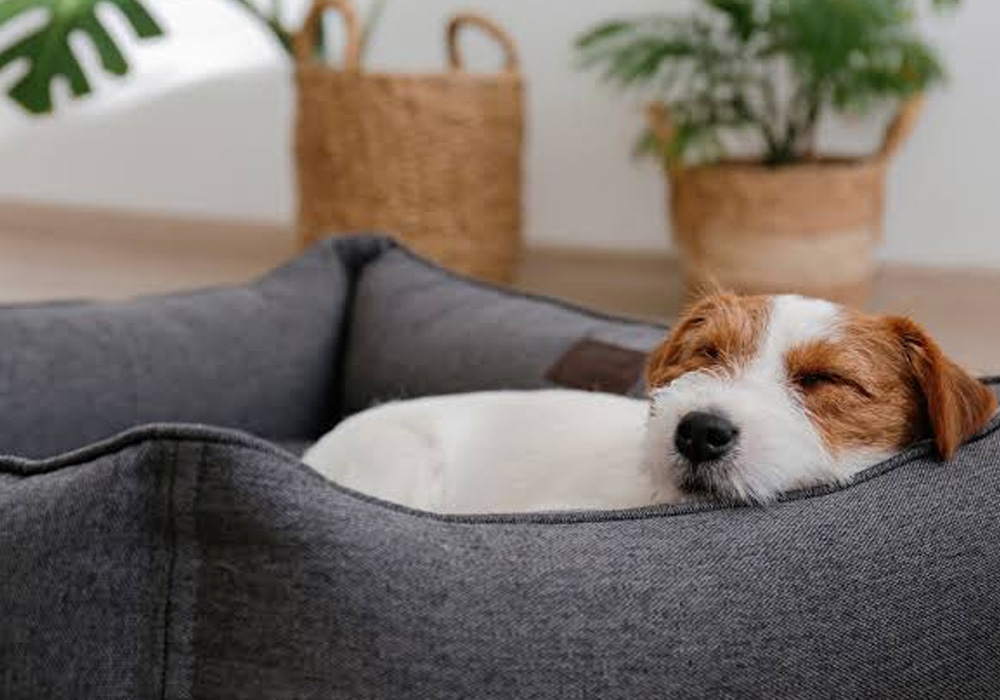
A thin pad on a hard floor may not provide enough cushioning or support for a dog with stiff joints. AKC recommends orthopedic beds and crate pads made from a thick, solid piece of polyurethane foam or memory foam. A washable cover keeps it fresh without having to replace the whole bed.
Placement matters too. A bed in a quiet corner of the main living area means your dog doesn’t have to climb stairs just to be near the family.
Entryway and car: the overlooked transitions
Smooth thresholds and wet doorsteps can catch a dog off guard. A non-slip doormat on both sides of the back door gives steady footing on the way in and out.
The car is another daily jump that adds up. A stable, non-slip folding ramp sized for your vehicle spares your dog the leap down onto pavement.
Habits Beyond the House That Support Healthy Hips
Home changes reduce strain, but daily habits shape how hips feel over the long run. Cornell lists maintaining a healthy body weight first among its management options for hip dysplasia. Extra pounds mean extra load on every step, so keeping your dog lean is one of the most practical things you can do.
Exercise belongs on the list too. Cornell recommends regular, low-impact exercise such as walking and swimming. When appropriate for the dog’s mobility and veterinary care plan, steady leash walks are generally gentler on sore hips than short bursts of hard running.
Puppies need their own approach. Cornell advises dog parents to avoid overfeeding, especially fast-growing large breeds, and not to supplement growing puppies with calcium or vitamin D.
Cornell also names cartilage protective supplements and omega-3 fatty acids among the options vets may discuss. Research on joint supplements is still mixed, so it makes sense to talk through choices with your veterinarian before adding anything new. For dog parents who decide a daily chew fits their routine, bernies healthy hips pairs undenatured type-II collagen and green lipped mussel with omega-3 sources such as fish oil and algal oil. A supplement works alongside weight control, exercise, and a safer home, not in place of them.
A Quick Home Checklist
| Area | Common problem | Easy fix |
| Hallways and living room | Slippery hardwood or tile | Non-slip runners, rugs, or yoga mats along daily routes |
| Area rugs | Rugs that slide underfoot | Rug pads underneath |
| Stairs | Bare, slick steps | Textured stair treads or a baby gate |
| Bed and couch | Jumping down | Pet steps or a gentle, non-slip ramp |
| Dog bed | Thin padding on a hard floor | Thick foam or memory foam orthopedic bed |
| Back door | Wet or smooth threshold | Non-slip doormats inside and out |
| Car | Leaping out of a seat or hatch | Folding ramp |
Start With a Week of Watching
You don’t need to redo the whole house in one weekend. Spend a week watching how your dog moves. Note where they hesitate, slip, or take a second try to stand. Those spots are your starting point.
Bring the same notes to your next vet visit. A clear picture of how your dog gets around at home gives your veterinarian useful context, and it helps you decide which changes to make next.
If your dog suddenly struggles to stand, cannot bear weight, or seems to be in significant pain, contact a veterinarian promptly rather than waiting to complete the checklist.