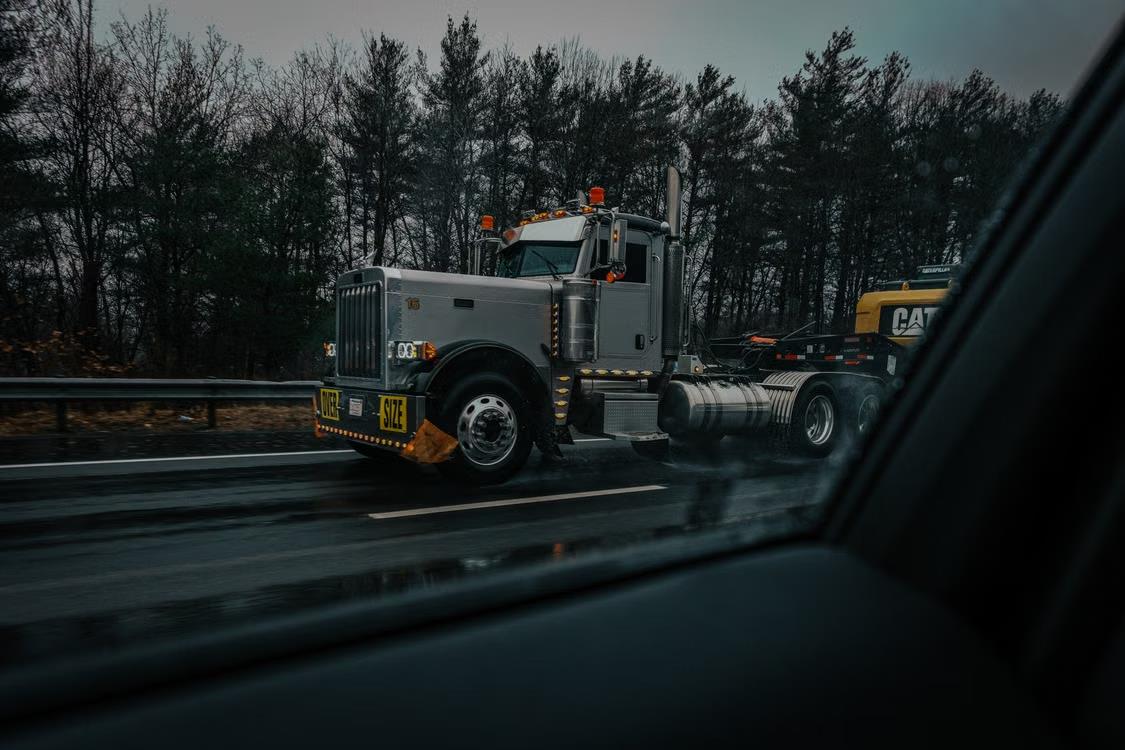
Ever wondered who actually pays when a big rig causes a wreck?
There’s seldom one straightforward answer. Trucking accidents can be complicated… and determining legal responsibility is one of the most complex aspects of any commercial truck insurance claim. It could be the driver. The trucking company. Or both.
Here’s why this matters:
- Truck cases are worth WAY more than regular car accident claims
- The wrong liability call can leave victims with almost nothing
- Insurance policies differ hugely between drivers and employers
In this article you will learn precisely how to distinguish driver liability from employer liability. Read on…
What’s inside this guide:
- Why Truck Liability Gets Messy
- When The Driver Is On The Hook
- When The Employer Pays The Bill
- Vicarious Liability & Independent Contractors
- Filing A Commercial Truck Insurance Claim
Why Truck Liability Gets Messy
Truck accidents aren’t like fender-benders.
There are federal rules, insurance companies and layers upon layers of potentially liable parties. Large trucks can weigh tons… causing catastrophic damage when accidents occur.
The National Safety Council reported that 5,218 large trucks were involved in fatal crashes in 2024. This represents a 30% increase over the past decade.
Most victims hire a trusted semi-truck accident attorney since large amounts of money are typically at stake. When you file a commercial truck insurance claim, it can quickly become complicated with the driver, carrier and numerous insurance companies blaming one another.
Here’s the thing:
Just because there was a crash doesn’t automatically mean the trucking company is responsible for paying. And just because there was a crash doesn’t automatically mean the driver is personally responsible for paying. It all depends on the facts… very much.
When The Driver Is On The Hook
Occasionally the driver is found to be 100% liable. This generally occurs when they are doing something completely unrelated to work.
Common examples include:
- Driving under the influence of alcohol or drugs
- Using the truck for personal errands outside working hours
- Getting into a fight or a road rage incident
- Ignoring direct company policy in a big way
If a driver seriously goes off the deep end — and does something the employer specifically did not authorize — the courts will usually find the driver entirely at fault. This is known as a “frolic and detour.”
The kicker?
Personal auto insurance policies rarely cover someone driving a semi. So victims must pursue the driver’s personal assets… which almost never equals the medical bills from a serious accident.
When The Employer Pays The Bill
Nine times out of ten, the carrier writes the check. And there’s a good reason why.
Federal Motor Carrier Safety Administration research indicates that driver negligence causes approximately 87% of large truck accidents. That’s a lot of accidents…which is why injured victims typically sue the employer instead of the driver.
Trucking companies are held responsible when:
- The driver was working “in the course of employment”
- The company hired an unqualified or unsafe driver
- Maintenance was ignored or skipped
- Federal safety rules were broken
- Hours-of-service regulations were violated
Employer liability falls into a few different buckets. Let’s break them down.
Negligent Hiring
When a trucking company employs a driver who’s been convicted of DUIs, reckless driving, or has a history of crashes — they can be held directly liable for negligent hiring.
Companies must run:
- Background checks
- Drug and alcohol screens
- Medical qualification exams
- Driving history checks
Skip any of these and the company owns the outcome.
Negligent Training
Even a great driver can crash without proper training. Companies must train drivers on:
- Safe braking distances
- Cargo securement
- Hazardous material rules
- Route planning and rest breaks
Negligent Maintenance
Trucks require regular maintenance. Failing brakes, bald tires, broken lights — these are issues for the company to worry about, not the driver. If there was some mechanical failure that led to the wreck, maintenance records will be one of the first things an attorney subpoenas.
Vicarious Liability & Independent Contractors
This is where it gets tricky…
Vicarious liability is a legal concept where an employer can be liable for the acts of their employee — even if the employer themselves were not at fault. If the driver was working when they caused the accident, the employer is typically liable.
But what about independent contractors?
One reason trucking companies like independent contractors is that they believe it absolves them of liability. However, most of the time… courts don’t buy it.
Judges look at:
- Who controls the driver’s schedule
- Who owns the truck
- Whether the driver wears company logos
- How the driver gets paid
- Whether the driver hauls for other carriers
Looks like an employee. Quacks like an employee… Courts often treat them as an employee. That means the trucking company still pays.
Filing A Commercial Truck Insurance Claim
Here’s a fact that shocks most people:
Federal law mandates that interstate trucking companies have no less than $750,000 in liability insurance. Many trucking companies carry $5 million or more. That’s quite a bit of coverage when you consider how low minimums passenger cars have.
A commercial truck insurance claim usually involves:
- The driver’s insurance policy
- The trucking company’s liability policy
- Umbrella policies for extra coverage
- Cargo insurance (in some cases)
- The broker or shipper’s coverage
Given that the average deadly trucking accident costs a staggering $7.2 million, insurance companies will fight tooth and nail. They will attempt to place as much blame on the driver personally as possible.
That’s the whole game.
The deep pocket employer policy escapes liability if they can show the driver was acting on his own (outside the scope of employment). That leaves the victim attempting to recover damages from an uninsured driver.
However, if the employer can be linked to the wreck through negligent hiring, inadequate maintenance, or vicarious liability, the victim may have a stronger claim for compensation. Medical records from accident doctors can also help document the nature and extent of the injuries when establishing the damages caused by the crash.
Bringing It All Together
Determining liability in a trucking case centers around a single issue.
Did the driver work for the company when the accident occurred?
If YES, then most likely the employer gets sued. If NO, then the victim is on their own against the driver. However, even that “simple” question has DOZENS of factors to consider… hence why these cases rarely settle without extensive discovery.
Quick recap:
- Driver responsibility exists when they were off-duty, violated company policy, or outside the scope of their employment
- Employer liable if driver was working OR employer was negligent
- Vicarious liability makes companies pay for on-the-job driver mistakes
- Independent contractor status won’t always save trucking companies from a payout
- A commercial truck insurance claim often involves multiple insurers and layered policies
The rules can be complicated — but they are there for a reason, to protect victims. Understanding which door to knock on can mean the difference between obtaining full compensation or walking away with nothing.