For Chicago homeowners, a sudden basement water problem can turn a passing thunderstorm into a stressful cleanup-and-repair decision. Whether you live in a brick bungalow on the Northwest Side, a two-flat near Logan Square, or an older home on the South Side, knowing the difference between groundwater and a sewer backup can help you act safely. When drains overflow or several fixtures slow down at once, a sewer repair plumber in Chicago can help identify whether the issue is a blockage, a damaged private sewer lateral, or another drainage problem.
Chicago’s dense streets, older underground infrastructure, flat lots, paved alleys, and intense summer rainfall can all contribute to basement water concerns. The right response is not to guess at a major repair. It is to document what happened, avoid electrical and contamination hazards, and let the evidence guide the next step.
Why Heavy Rain Can Cause Sewer and Basement Problems in Chicago
Heavy rain adds a large amount of water to streets, catch basins, soil, and sewer infrastructure in a short period. In many parts of Chicagoland, stormwater and household wastewater can place pressure on the same overall system. A sewer surcharge occurs when the system is carrying so much water that flow slows or pushes back toward lower points, including basement drains.
Rain does not necessarily break a healthy sewer pipe. More often, it exposes a preexisting weakness, such as root intrusion, a cracked clay pipe, a joint separation, grease buildup, or a sagging section of the line. During major storms, residents may also be asked to limit water use. The Metropolitan Water Reclamation District has issued an Overflow Action alert encouraging people to delay showers, laundry, and dishwasher use when rainfall places extra strain on the regional sewer system.
How to Tell Where the Water Came From
You do not need to diagnose the problem yourself, but the location and appearance of water can provide useful clues for the professional you call.
- Dirty water rising from a floor drain, toilet, or shower:This may indicate a main sewer or drain backup. Stop using all plumbing fixtures.
- Clear water seeping through wall cracks or the floor edge:This more often indicates groundwater, poor grading, gutter overflow, or foundation drainage issues.
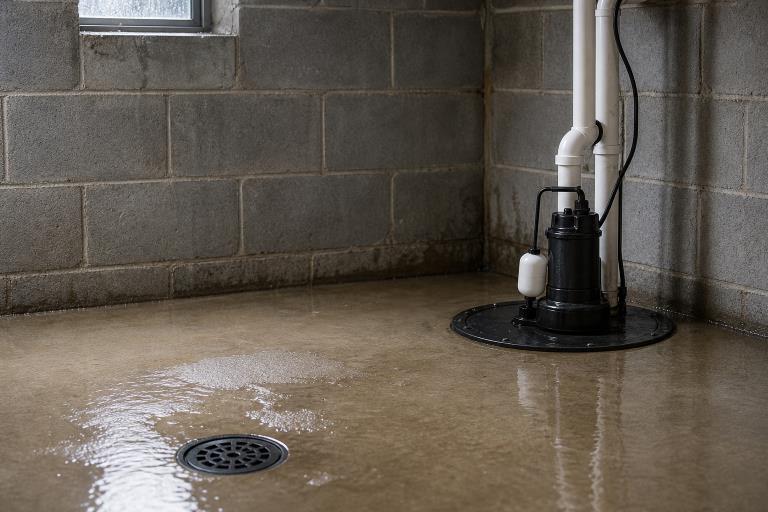
- A sump pit that stays full while the pump runs:The pump, float switch, check valve, discharge pipe, or power supply may have failed.
- Gurgling or slow drains throughout the home:Several affected fixtures can signal a restriction in the main line rather than a simple sink clog.
- One slow sink or tub:A local fixture blockage may be the cause, especially if other drains work normally.
Warning Signs Chicago Homeowners Should Not Ignore
A one-time puddle may be tied to a unique storm, but recurring symptoms deserve investigation. Watch for repeated backups after rain, sewer odors that remain after cleanup, toilets that gurgle, multiple slow drains, wet soil above the sewer route, or a sump pump that runs continuously. Water damage that reappears after the basement seems dry can also indicate moisture trapped behind finished walls, under flooring, or inside stored materials.
What to Do During an Active Backup
- Keep children and pets out of the affected area.
- Stop using toilets, sinks, showers, washing machines, and dishwashers.
- Do not step into water near electrical equipment or attempt to unplug wet appliances.
- Move dry belongings only if you can do so without entering contaminated water or an unsafe area.
- Take photos and video before cleanup begins for insurance and repair documentation.
- Report street flooding or public drainage concerns through Chicago’s non-emergency service request system when appropriate.
- Contact a licensed plumbing professional and, when sewage is involved, a qualified remediation company.
Sewage-contaminated water can carry harmful microorganisms, and even apparently clear water can conceal electrical hazards. Avoid opening sewer cleanouts, using powered drain machines, or removing electrical covers unless you are trained and properly equipped.
What You Can Check Safely
From a dry location, check whether a breaker has tripped and whether the sump pump appears to have power. Outside, look for a blocked or frozen discharge outlet and confirm that downspouts are not releasing roof water next to the foundation. Write down when the water appeared, whether it smelled like sewage, which fixtures were affected, and whether the problem started during rainfall or hours later. These details can make a diagnosis faster and more accurate.
When a Sewer Camera Inspection Makes Sense
A camera inspection is especially useful after repeated backups, widespread slow drainage, or a blockage that returns after cleaning. A waterproof camera can reveal roots, cracks, corrosion, standing water, separated joints, offsets, and collapsed sections. Before approving substantial work, ask whether electronic locating is included, request a copy of the footage, and get a written explanation of the findings. Sometimes the inspection shows that thorough cleaning is enough, which can prevent unnecessary replacement.
Cleaning, Repair, Replacement, or Sump Pump Service?
When Drain Cleaning May Be Enough
Cleaning may restore flow when grease, wipes, sludge, debris, or minor root growth is blocking an otherwise sound line. It does not fix a cracked or collapsed pipe.
When a Spot Repair May Fit
A limited crack, failed joint, or damaged segment may be repaired without replacing the entire sewer lateral. Access, pipe depth, nearby trees, sidewalks, and landscaping all affect the method.
When Replacement Is More Appropriate
Replacement is often considered when camera footage shows widespread deterioration, repeated failures, severe root damage, or a line that cannot reliably carry wastewater.
When the Sump Pump Is the Main Issue
A failed float switch, a worn motor, a blocked discharge, a bad check valve, or an outage can leave groundwater with nowhere to go. A sump pump helps manage groundwater, but it cannot prevent sewage from backing up through a blocked main drain.
How to Reduce Risk Before the Next Storm
- Clean gutters and extend downspouts away from the foundation.
- Maintain soil grading so surface water moves away from the home.
- Test the sump pump before storm season and consider battery backup power.
- Store valuables on shelves rather than directly on the basement floor.
- Ask a qualified professional whether a backwater valve suits your plumbing layout.
- During an overflow alert, reduce indoor water use until the storm passes.
Questions to Ask Before Approving Major Work
Ask what the camera showed, where the defect is located, whether cleaning is a reasonable first step, and whether a targeted repair is possible. Also, confirm permit requirements, utility locating, surface restoration, warranty terms, and maintenance steps that may help prevent another storm-related problem.
Conclusion: Let Evidence Guide the Repair
Basement water after a Chicago storm can come from several sources, and the correct repair depends on the actual cause. By staying safe, documenting the event, limiting water use during severe weather, and requesting a careful inspection, homeowners can make a more confident decision and better prepare their property for the next round of heavy rain.