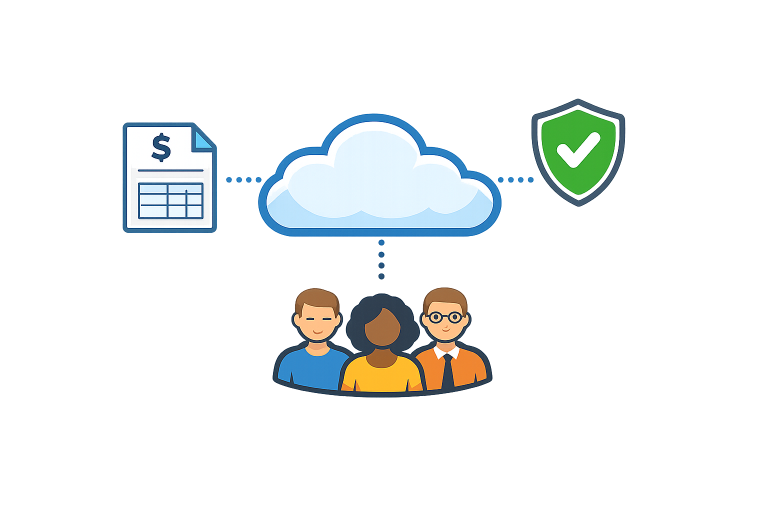
In today’s dynamic business landscape, organizations of all sizes are embracing new technologies to improve efficiency and maintain a competitive edge. One key area undergoing rapid modernization is payroll management. Powered by cloud computing, payroll systems are evolving to help companies simplify processes, achieve accurate results, and support their workforce in new, flexible ways. In fact, more businesses are looking to schedule an ADP payroll demo and discover firsthand how cloud payroll solutions can improve their operations and employee experience.
With cloud-based payroll, the benefits extend far beyond automation. These platforms allow teams to access critical payroll functions anywhere, anytime. They boost security and compliance by deploying the latest protection standards and direct integration with HR and finance platforms. As organizations evaluate their digital strategies, cloud payroll solutions have proven instrumental in enhancing operational agility and sustainability.
Whether enabling remote work or minimizing costly compliance mistakes, the adoption of cloud payroll is transforming routine processes into strategic strengths. Below, we explore the main advantages of cloud payroll platforms, share real-world business examples, and offer advice for selecting the right provider and leveraging advanced technologies like AI in payroll operations.
Benefits of Cloud-Based Payroll Systems
Transitioning payroll operations to the cloud introduces a wide array of benefits that support both organizational goals and employee needs. Organizations experience significant cost savings as cloud-based systems eliminate the extensive maintenance costs of on-premises infrastructure. By moving to the cloud, companies can shift from expensive upfront capital expenditures to predictable, subscription-based pricing models. This cost-efficiency is especially valuable for businesses navigating uncertain markets or scaling operations quickly.
Cloud payroll solutions are also highly accessible, empowering payroll teams to log in securely from any internet-connected location. This flexibility facilitates a remote or hybrid workforce by ensuring that payroll processing and approvals are not tied to office-bound systems. Additionally, cloud payroll platforms are built for scalability, allowing organizations to add new users and easily adapt as their workforce grows or shifts.
Another major benefit of these platforms is integration. Cloud payroll seamlessly connects to other business-critical systems such as human resources management, benefits administration, and financial software. Automated data transfers between these platforms eliminate manual entry errors and provide a real-time, unified view of employee and financial records for leaders.
Furthermore, modern cloud payroll solutions are typically equipped with self-service features for employees, such as viewing payslips, updating personal details, and accessing tax forms independently. This not only saves time for HR administrators but also enhances employee satisfaction and engagement. For more information on how cloud technologies are shaping business practices.
Enhancing Data Security and Compliance
Security is a critical concern in payroll management, given the volume of sensitive personal and financial information processed every pay cycle. Leading cloud payroll solutions deploy advanced encryption technologies, continuous security monitoring, and frequent vulnerability assessments to protect against data breaches and unauthorized access. Many providers are also certified for industry standards such as SOC 2, ISO 27001, and GDPR compliance, offering assurance to organizations entrusted with employee data.
Another key advantage is how cloud payroll platforms automate updates to align with evolving local, state, and federal regulations. Cloud-based systems receive these changes in real time, helping businesses stay compliant and avoid expensive penalties for non-compliance. This is particularly important for companies operating across multiple jurisdictions with varied tax or labor laws. Legal and regulatory updates are applied automatically, which reduces risk and administrative burden.
Real-World Examples of Cloud Payroll Adoption
Many organizations worldwide have realized substantial improvements in productivity, accuracy, and employee experience by adopting cloud payroll platforms. For example, the Department of Health and Human Services (HHS) opted to upgrade from a legacy COBOL-based payroll system to a modern cloud-based solution. This move drastically reduced manual administrative tasks, improved service delivery, and enabled payroll tasks that once took several hours to be completed in just minutes, as reported by Nextgov.
Tata Consultancy Services (TCS) undertook a global payroll transformation by migrating to a unified, cloud-based environment. This project resulted in a 40 percent acceleration in payroll processing worldwide, achieved higher consistency, and bolstered operational resilience for the company’s extensive and diverse workforce. The transformation enabled TCS to set a new standard for global payroll management with scalable, reliable technology, as detailed in Express Computer.
Integrating AI and Analytics in Payroll
The infusion of artificial intelligence (AI) and analytics is fundamentally reimagining payroll processes. AI-driven automation streamlines everything from data validation to anomaly detection, reducing manual work and errors while increasing speed and accuracy. Predictive analytics enable payroll teams to forecast labor costs, identify workforce trends, and provide actionable business insights in real time.
With AI capabilities embedded into cloud payroll platforms, organizations can proactively mitigate compliance risks, optimize compensation strategies, and better manage budgets. This transformation moves payroll from a routine, transactional function to a data-driven strategic resource, helping leaders allocate resources thoughtfully and respond quickly to business changes.
Choosing the Right Cloud Payroll Provider
Finding the ideal cloud payroll partner is essential to realizing the full benefits of modernization. Security should be a top priority; businesses must ensure that their chosen provider adheres to stringent security standards and offers comprehensive data protection measures. Integration capabilities are also crucial; a seamless connection with HR, time tracking, and accounting software ensures data consistency and maximizes efficiency.
It is important to evaluate whether the system is consistently updated to meet changing labor and tax laws, especially for enterprises operating internationally. The platform should be user-friendly with an intuitive interface for both administrators and employees. Lastly, scalability should not be overlooked. The platform should easily expand as the organization grows to accommodate new users and more complex payroll requirements without service disruption.
Conclusion
The shift to cloud-based payroll platforms is fundamentally altering the way organizations manage one of their most critical functions. By delivering increased flexibility, robust compliance support, seamless integrations, and advanced technological capabilities, cloud payroll solutions empower businesses to operate more efficiently and support employees more effectively. Selecting a secure, scalable platform and embracing innovations like AI and analytics can transform payroll from a back-office process to a central pillar of strategic business success.