Your lawn can be mowed perfectly and still look slightly off if the edges are ragged. Crisp borders around walkways, driveways, and garden beds change the whole look fast. If you’re working on curb appeal, home upkeep, or just trying to stop grass from staging a slow-motion escape onto the sidewalk, learning how to edge properly gives you a result that looks far more finished with surprisingly little extra effort.
What lawn edging actually changes in your yard
Mowing cuts the surface. Edging defines the borders.
That difference matters more than most people expect. When grass creeps over concrete, mulch beds blur into turf, and lines lose shape, your yard starts looking messy even if it’s healthy. A clean edge creates visual structure. It gives your property that maintained, intentional look people usually associate with professional landscaping.
There’s a practical side too. Defined edges make trimming easier, help keep mulch and gravel where they belong, and reduce the constant battle of overgrowth along hardscapes. Around driveways and sidewalks, edging also improves safety by removing thick grass lips that can trap moisture and debris.
Think of it as the lawn version of a haircut cleanup. The cut may be good, but the neckline still matters.
Manual tools versus powered options
You can edge a lawn with a basic half-moon edger, a string trimmer used carefully, or a dedicated powered machine. Each option has a place.
Manual edgers work well for small yards, occasional touch-ups, and people who don’t mind a bit of physical effort. They’re affordable, simple to store, and precise in tight areas. The tradeoff is time. If your lawn has long borders or dense soil, manual edging turns into a workout quickly.
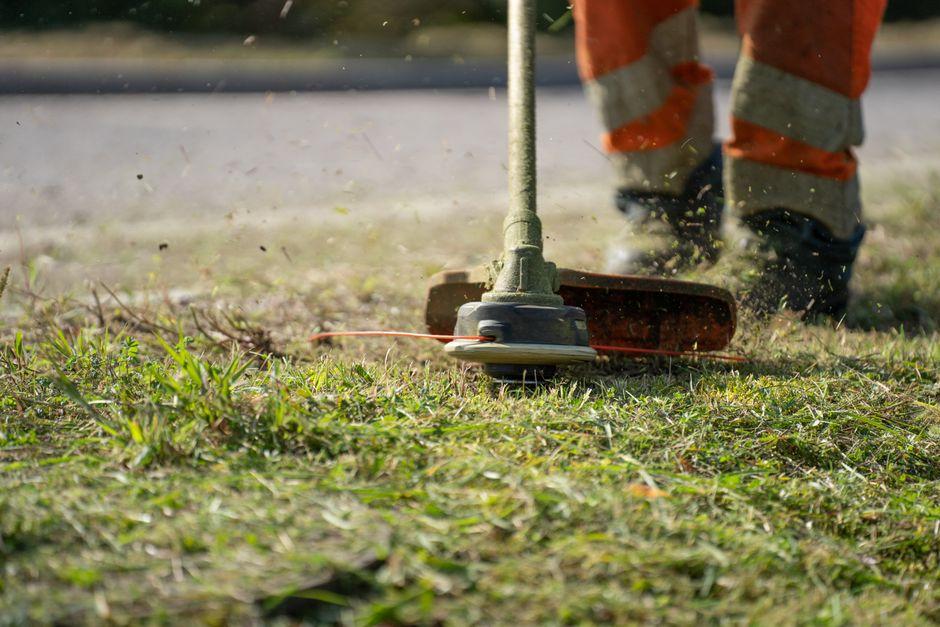
String trimmers are versatile, but they can be inconsistent for beginners. Tilt angle, speed, and hand control all affect the line. One shaky pass and your sidewalk edge starts looking like abstract art.
A dedicated commercial lawn edger makes more sense when you want cleaner cuts, faster results, and repeatable performance. That becomes especially useful on larger properties or if you edge often enough to care about efficiency, not just survival.
Where edging makes the biggest visual impact
Not every part of your yard needs the same level of attention. Some spots deliver a much bigger payoff.
Focus first on areas people notice immediately:
– Sidewalk edges in front of your home
– The border where your driveway meets the lawn
– Garden beds near your entryway
– Patio perimeters
– Mailbox and fence-line edges
– Curved borders around trees and shrubs
Straight runs along concrete usually make the fastest improvement because they create a strong contrast between turf and hard surfaces. Entry paths are another high-value target since they frame the approach to your home.
Curved bed lines need extra care. If they’re uneven, the entire landscape can feel off-balance. If they’re smooth and deliberate, even a simple yard starts looking more polished. A sharp border quietly does a lot of heavy lifting.
How to edge properly without tearing up the lawn
Good edging is mostly about control, not brute force.
Start when the ground is dry enough to cut cleanly but not rock hard. If the soil is soaked, you’ll get clumps and jagged trenches. If it’s baked solid, the tool has to work harder, and the line may wander. Mark curved bed lines first with a hose or rope if you’re reshaping them.
Then follow a few basic rules:
– Walk at a steady pace
– Keep your cutting depth consistent
– Let the tool do the work
– Avoid forcing the blade through thick roots
– Clear debris after each section
– Recut lightly instead of going too deep at once
For sidewalks and driveways, aim for a crisp vertical line. For garden beds, you may want a slight trench to separate turf from mulch. The cleanest results usually come from making maintenance edging a regular habit instead of waiting until the border disappears entirely.
Common edging mistakes that make your yard look worse
Edging helps a lawn only when it’s done with some discipline. A few common mistakes can leave the yard looking rougher than before.
One issue is inconsistent depth. If one section is deeply cut and the next is barely touched, the line looks patchy. Another problem is wandering alignment, especially along straight concrete. That tends to happen when you rush or work with dull equipment.
Watch out for these errors:
– Cutting too deep and exposing roots
– Edging wet soil that smears instead of slicing
– Letting grass overhang build up for months
– Using a trimmer with poor visibility on the edge line
– Ignoring debris cleanup after cutting
– Damaging sprinkler heads hidden near borders
There’s also the overcorrection problem. Some people carve trenches so aggressively that the lawn edge starts looking defensive, like it’s preparing for invasion. Crisp and neat beats dramatic every time.
When a heavier-duty machine is worth the investment
A stronger machine starts making sense when your property size, schedule, or expectations change.
If you’ve got a corner lot, extended walkways, multiple planting beds, or thick turf that grows aggressively, a lightweight solution can become frustrating fast. The same goes if you care about uniform results and don’t want every edging session to feel like a negotiation with the ground.
A more capable unit is often worth considering if you:
– Edge more than twice a month during the growing season
– Maintain a large yard with long borders
– Have compacted or root-heavy soil
– Want faster completion times
– Prefer a cleaner, more defined cut
– Need durability for repeated seasonal use
Home improvement projects usually come down to time, effort, and finish quality. Edging is no different. If the tool saves enough labor while improving the result, the upgrade can be easy to justify.
How edging fits into a smarter yard maintenance routine
Edging works best when it’s part of a system, not a random extra chore you remember after mowing.
A practical routine often looks like this: mow first, edge second, trim around obstacles third, and clean up last. Mowing first helps you see the actual boundary line and prevents tall grass from hiding where work is needed. Cleanup matters too, since clippings and soil along the driveway can erase the visual payoff almost immediately.
Seasonal timing also helps. During peak growth in spring and early summer, you may need edging every one to two weeks. In slower periods, less often is fine. Keep an eye on aggressive spread near concrete and bed borders.
When the lines stay consistent, the whole yard starts requiring less correction. That means less time undoing overgrowth and more time enjoying a space that looks finished, sharp, and under control.