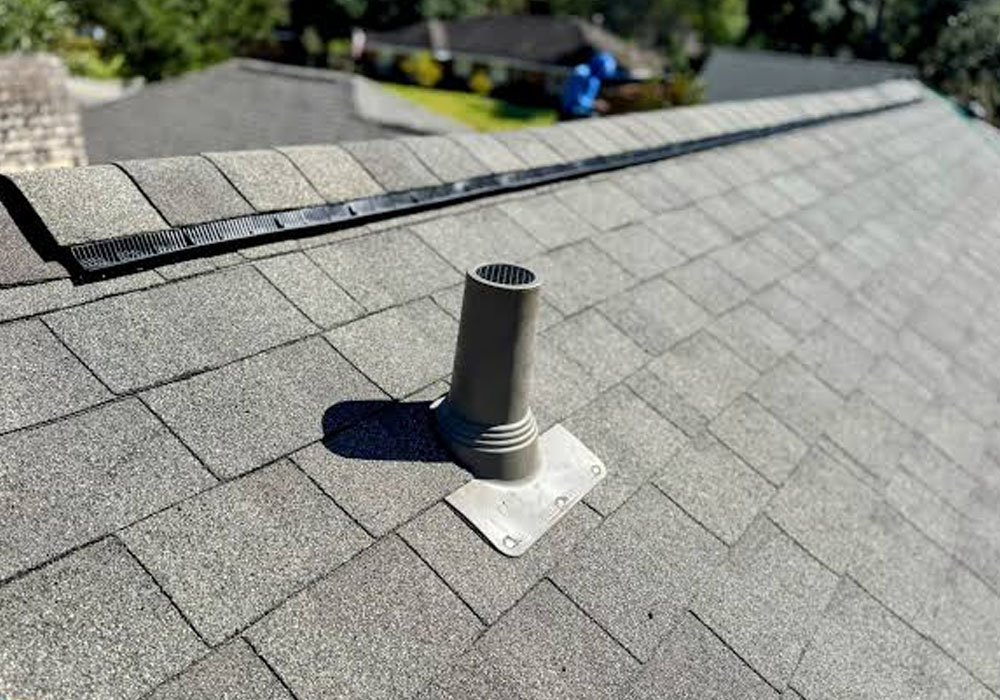
When a roof develops a mystery leak, the shingles usually get blamed first. But a disproportionate share of residential roof leaks trace back to a component most homeowners couldn’t identify from the ground: the pipe boot, also called a vent boot, that seals the spot where a plumbing vent stack or exhaust pipe passes through the roof deck. It’s a small part doing a job the rest of the roof can’t do on its own, sealing around a round pipe penetrating a flat plane, and it fails on a predictable schedule that most homeowners never see coming until water shows up on a ceiling.
What a Pipe Boot Actually Does
A pipe boot has two parts working together: a flat base flashing that integrates under and over the surrounding shingles the same way any roof flashing does, and a flexible collar, usually rubber or thermoplastic, that wraps tightly around the vertical pipe itself. The base handles the flat-surface waterproofing that shingles are good at. The collar handles the much harder problem: sealing around a cylindrical object that the surrounding shingle system cannot shed water around on its own. That collar is almost always the part that fails first, because it’s the part doing the least conventional job.
The Predictable Failure Timeline
Rubber and plastic pipe boot collars have a service life shorter than the shingles around them, generally in the 10-to-15-year range depending on climate and sun exposure, which means a roof can be structurally fine while its pipe boots are already past their functional life. UV exposure is the primary driver of deterioration: constant sun dries out the rubber collar over years, and it gradually becomes brittle, cracks, and eventually splits open around the pipe. Because this happens gradually and the shingles around it look completely normal, it’s easy to miss during a casual roof inspection, and it’s also one of the most common issues that shows up on a home inspection report for houses in the 10-to-20-year range.
Boot material has a direct and significant impact on service life, as different rubbers and silicones withstand varying levels of exposure. For example, pipe boots made out of silicone rather than standard rubber compounds, such as EPDM or neoprene, hold up significantly better under exposure to high UV, extreme weather, and harsh temperatures.
Installation Details That Determine How Long a Boot Lasts
Not every pipe boot failure is simply age catching up with the material. A meaningful share trace back to installation shortcuts that shorten the boot’s effective life well below its rated range.
- Leaving insufficient clearance between the boot base and the surrounding shingles lets debris, leaves, granules, and small twigs accumulate right at the transition point, forming a small dam that holds water against the boot during hard rain instead of letting it shed cleanly.
- Boots fastened with exposed or uncoated fasteners rather than sealed screws cause a more aggressive failure: the exposed fastener rusts, gradually backs out as the metal corrodes, and leaves a direct puncture point straight into the roof deck, often within just two to five years after installation.
Snow and Slow Melt Cycles Make It Worse
In colder climates, snow tends to accumulate specifically around roof penetrations like pipe boots, since the pipe itself disrupts snow’s ability to slide off cleanly the way it does on an open roof plane. That accumulated snow holds moisture directly against the collar for extended periods, well beyond a normal rain event, and as it melts slowly rather than running off quickly, water gets the time it needs to work into hairline cracks that wouldn’t leak during a fast summer downpour. This is part of why pipe boot failures often show up as leaks that seem to appear specifically in late winter or early spring, even though the underlying crack in the collar may have been developing for a season or more.
Why the Leak Shows Up Somewhere Else
One reason pipe boot leaks are hard to diagnose is that the water rarely drips straight down from the actual breach. Once water gets past a failed collar, it runs down the outside of the pipe and along the rafters or roof decking, sometimes traveling ten to fifteen feet before it finally drips into the attic or through a ceiling. A stain on a bedroom ceiling can trace back to a pipe boot on the opposite side of the roof from where the pipe actually penetrates the interior wall, which is exactly why chasing a leak by looking straight up from the stain is often misleading.
What to Actually Check
A practical inspection routine, whether you’re doing it yourself or briefing a roofer, covers a short list: look for visible cracking, splitting, or brittleness in the rubber collar around each vent pipe, check for any exposed nail heads at the boot’s base rather than nails tucked under the shingle course above, confirm there’s enough clearance around the boot base that debris isn’t accumulating and damming water, and note the age of the roof relative to the boot’s typical 10-to-15-year service window even if nothing looks obviously wrong yet. Because the collar material ages faster than the shingles, some roofers now recommend replacing pipe boots proactively around the ten-year mark on an otherwise sound roof, rather than waiting for a leak to force the issue.
None of this requires a full roof replacement to fix. A pipe boot is a relatively small, inexpensive component, and the labor to swap one is minor compared to interior water damage from a slow leak that’s gone unnoticed for a season. For anyone stocking roofing components for repair work, pipe boots and related flashing are part of the standard lineup at Jake Sales, alongside the roofing screws and fasteners the rest of the job typically calls for.