Half of all plumbing disaster calls start the same way: “I watched a YouTube video and figured it would be simple.” And sometimes it is. But sometimes a $12 toilet flapper repair turns into a flooded bathroom, stripped threads, and a bill that wipes out three weekends of grocery savings. Knowing which side of that line you’re standing on before you pick up a wrench is the whole game.
This isn’t an argument against DIY. Done right, tackling small plumbing jobs saves real money and gives you a feel for your home’s systems that no inspection report ever will. The point is the word “right.” A bad plumbing repair doesn’t always show itself immediately. It can hide inside a wall for months, quietly soaking framing and drywall, before you find the damage.
Here’s an honest breakdown of what most homeowners can safely handle, what they absolutely shouldn’t touch, and how to make that call quickly without guessing.
The DIY Plumbing Jobs That Are Actually Fine
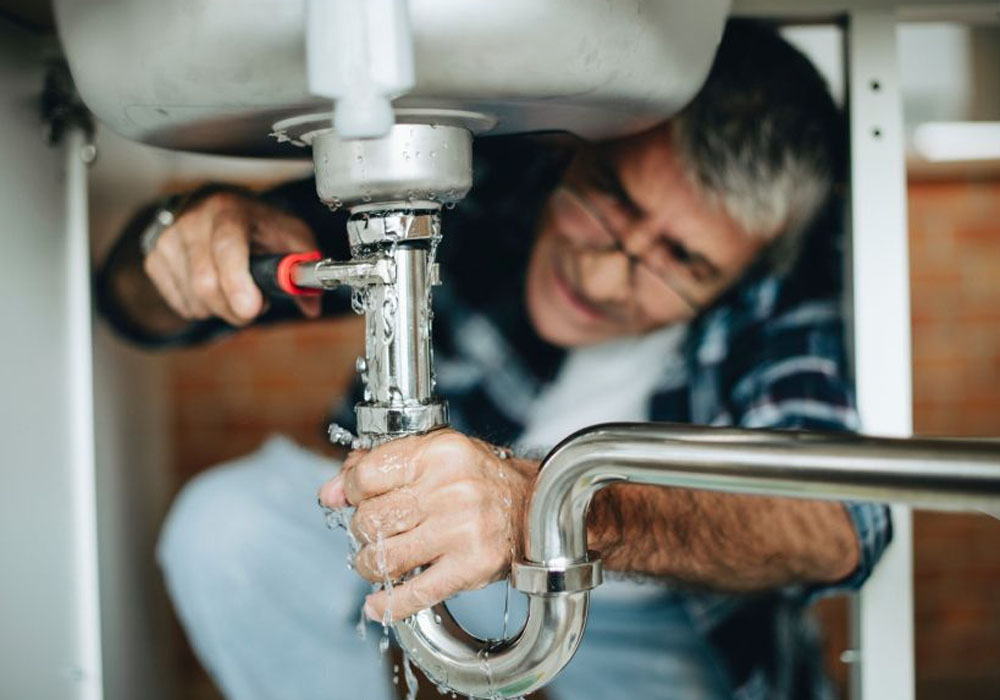
A few jobs sit comfortably in weekend-warrior territory. Swapping a showerhead is the clearest example: turn off the water, unscrew the old one, wrap the threads in Teflon tape, thread on the new one. Twenty minutes. No professional judgment required. Replacing a toilet flapper is equally forgiving, and so is tightening a supply line that’s dripping where it meets the shutoff valve.
Running toilets fall into this category too, most of the time. The fill valve and flapper are the usual culprits, both parts cost under $20 at any hardware store, and the tank instructions on most replacement kits are genuinely clear. Unclogging a sink with a hand auger or a plunger is also fair game, provided the blockage is in the trap or the first few feet of drain line.
The pattern: visible components, low water pressure involved, and a clear shutoff valve you can reach before you start. If your job fits all three criteria, you’re probably fine. If it doesn’t fit even one, read the next section carefully.
The Numbers That Should Make You Pause
Before deciding that a plumbing problem is “minor,” it’s worth understanding how fast minor becomes major. According to the EPA, the average household loses nearly 10,000 gallons of water annually to leaks. That’s not burst pipes or dramatic failures. That’s the slow stuff: a dripping faucet nobody fixed, a supply line connection that wasn’t quite snug, a wax ring seated slightly off. The EPA also estimates that fixing easily correctable household leaks saves homeowners an average of 10 percent on water bills.
Those numbers come from the EPA’s WaterSense program, which tracks residential water waste nationally. The savings are real, but so is the flip side: a homeowner who patches a connection incorrectly and walks away thinking the job is done may never notice the small persistent drip until the drywall caves.
The insurance picture reinforces this. According to a 2025 report from the Insurance Information Institute, water damage and freezing accounted for 22.6% of all home insurance claims based on 2023 data. From 2019 through 2023, one in every 67 insured homeowners filed a water damage or freezing claim each year, with an average claim amount of $15,400. Most of those losses weren’t from hurricanes or burst mains. They were from plumbing systems that failed quietly and without warning.
Jobs That Look Simple But Aren’t
This is where the real danger lives. These jobs look approachable because the component you’re touching is visible. But the consequences of getting it wrong extend well beyond what you can see.
Water heater replacement. The unit itself isn’t complicated to disconnect. But the gas line work, the venting, the pressure relief valve configuration, and the code requirements around seismic strapping and clearances absolutely are. A water heater installed without a properly set pressure relief valve is a genuine safety hazard. This is a licensed-professional job in every state, and for good reason.
Any work involving supply lines inside walls. Cutting into a wall to reach a supply line means you need to know exactly what’s in that wall: insulation type, pipe material, the age of the soldering or crimping on adjacent connections, and where the nearest shutoff sits. A homeowner who finds a pinhole leak in copper pipe and tries to patch it with a compression coupling isn’t wrong in concept. But if the adjacent pipe has pitting from years of mineral buildup, that compression coupling is going to fail within a year.
Sewer line repairs. Here’s a concrete scenario worth picturing. A homeowner in an older house notices slow drains throughout the house, not just one fixture. They run a drain snake down the main clean-out and clear what feels like a clog. The drain moves freely for three weeks. Then it backs up again, worse than before. What looked like a clog was root intrusion in a deteriorating clay lateral. Snaking cleared the path temporarily but did nothing about the root mass or the cracked pipe wall. By the time a camera inspection gets run, water has been seeping into the surrounding soil for months, and the repair scope has expanded significantly. A report from the Insurance Information Institute reinforces how quickly these unchecked plumbing failures translate into insurance territory. Sewer line work requires camera inspection, permits in most jurisdictions, and licensed hands. Period.
Gas line connections to water heaters or appliances. No amount of YouTube confidence makes this safe for an unlicensed homeowner. Gas line work requires permits, pressure testing, and a professional sign-off. Full stop.
A Simple Green-Yellow-Red Framework for the Decision
Rather than memorizing a list, use this three-tier decision structure before you start any plumbing job.
| Tier | Characteristics | Examples | Verdict
|
| Green | Visible component, dedicated shutoff, no pipe cutting, no gas | Showerhead swap, flapper, supply line tighten | DIY is reasonable |
| Yellow | Requires cutting into a wall or floor, near multiple systems, older home | Faucet cartridge in an older fixture, drain trap replacement | DIY if experienced; get a quote first |
| Red | Gas lines, sewer lateral, water heater install, inside-wall pipe work, permits required | Water heater swap, sewer repair, repiping | Call a licensed plumber |
The Yellow tier deserves more respect than it usually gets. Homeowners who’ve successfully done Green jobs sometimes underestimate what Yellow jobs actually involve. Getting a professional quote on a Yellow job takes 20 minutes and tells you exactly what the professional would do differently from your plan. That information alone is often worth the call.
What to Look for When You Do Need a Pro
License, insurance, and a willingness to explain the diagnosis before asking you to approve the repair. Those three filters cut out most of the bad actors quickly.
Response time matters too, particularly for anything involving active leaking or sewer backup. A company that can get a technician to you the same day, explains the root cause clearly, and doesn’t push repairs you didn’t ask about is worth keeping in your contacts. If you’re anywhere in central New Jersey, finding a reliable plumber in cranbury who covers your area and offers transparent pricing should be the goal, not just whoever answers the phone first.
According to the U.S. Census Bureau American Housing Survey, American homeowners poured $827 billion into home improvement projects during the two-year period ending in 2023, an increase of more than $200 billion compared to the prior survey period. A meaningful share of that spending went toward fixing problems that could have been addressed earlier, cheaper, or more correctly the first time. The homes that come out ahead aren’t the ones where owners do everything themselves or where owners call a pro for every dripping faucet. They’re the ones where the decision is made deliberately, based on actual job characteristics, not just confidence or cost anxiety.
“A small mistake can lead to significant damage and costly repairs,” note plumbing professionals who regularly respond to DIY jobs gone wrong. The underlying principle: the risk multiplier in plumbing is almost always hidden from view until it isn’t.
So before you reach for the wrench, run through the framework. Green means go. Red means call. Yellow means think for 60 more seconds than you planned to. That one extra minute of honest assessment has saved more homeowners more money than any DIY video ever will.