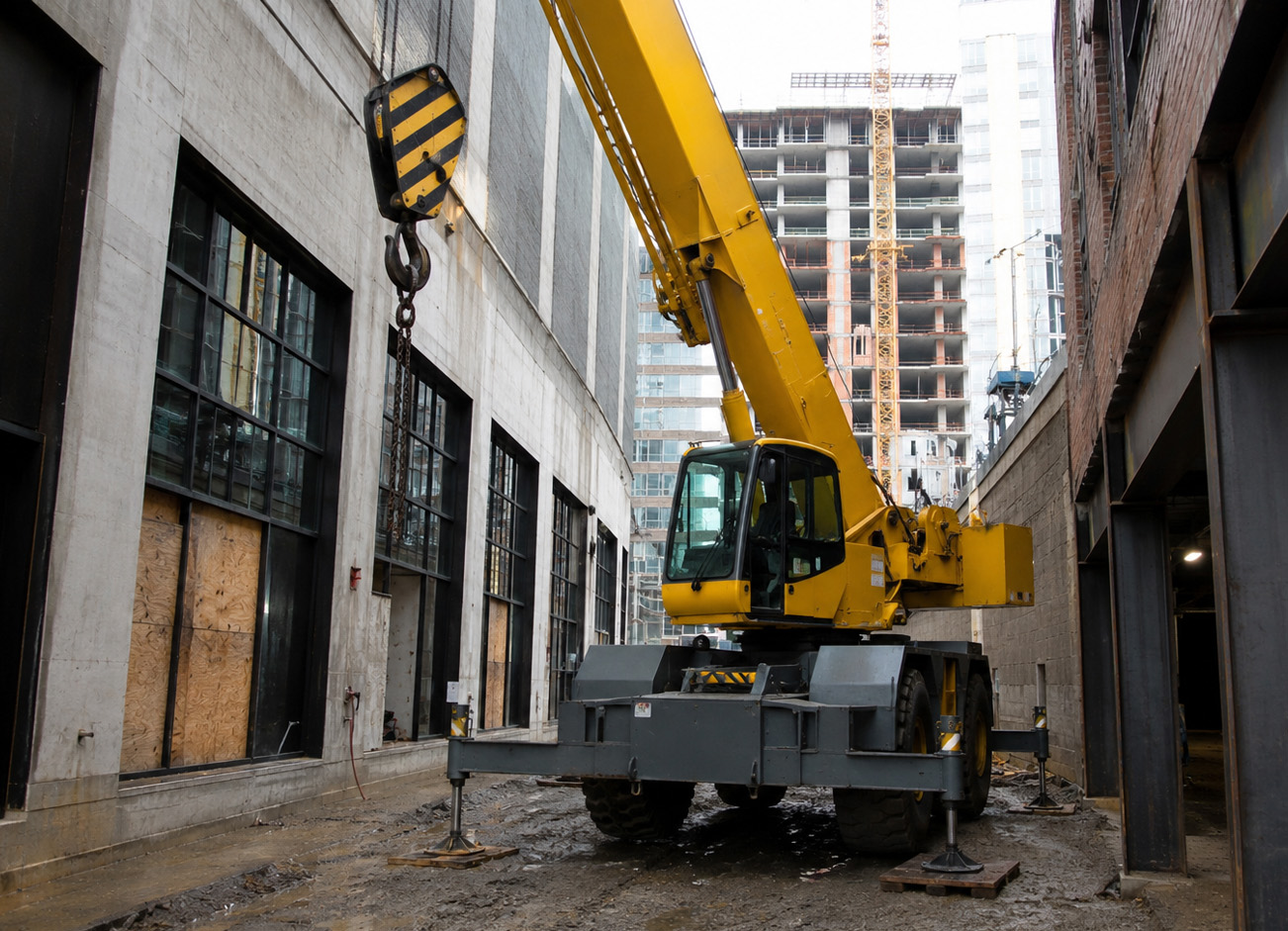
Crane work in compact locations requires careful planning, precise equipment choices, and skilled handling. A restricted site can include narrow paths, limited space, nearby structures, or active work zones. Each detail matters when a lifting task needs accuracy and smooth coordination.
A proper equipment choice helps teams rent a crane for construction projects that match site conditions and lifting needs. The right crane size, setup plan, and operator experience can support efficient work in challenging areas. These factors help create a reliable lifting plan for confined locations. The following points explain what teams should consider before arranging crane services for tight work areas.
Assess The Available Space Before Choosing Equipment
Site measurements provide essential details before any crane arrives. The team should check ground conditions, access routes, overhead clearance, and nearby obstacles. These details help determine the crane type and placement area.
A compact work zone may require equipment with flexible movement and precise controls. Smaller cranes, specialized lifting units, or models with adjustable features can serve specific site needs. A detailed site review creates a clear plan for proper crane placement.
Select A Crane That Matches The Task
Each lifting job has different requirements related to load size, reach, and height. A crane selected for a construction project should handle the required materials while working within the available space. Proper matching supports steady operations and reduces unnecessary adjustments.
The crane model, lifting capacity, and working range should align with the project details. Experienced teams review these factors before scheduling equipment delivery. This approach helps create a smoother process from setup to completion.
Plan Access Routes And Crane Placement
Tight work areas require careful attention to how equipment reaches the site. Delivery paths, turning space, and surface strength all influence crane placement. A clear route helps prevent delays during arrival and setup.
The crane position also affects lifting accuracy and worker coordination. A suitable location gives the operator a better view of the work area. Proper placement supports organized movement around the site.
Consider Operator Skills And Site Experience
A skilled crane operator plays an important role in confined spaces. Experience with similar locations helps the operator manage limited room and precise lifting tasks. Good communication between the crew and operator keeps the work organized.
The rental process should include trained professionals who understand equipment controls and site requirements. Their knowledge helps address site conditions during setup and operation. This support adds value to crane rental planning.
Review Safety Features And Project Requirements
Safety checks should be part of every crane rental plan. Teams should review equipment condition, inspection records, and required site guidelines before work begins. These steps help create a secure environment for workers and materials.
Tight areas require extra attention because space limitations can affect movement. Clear signals, proper load handling, and organized work zones support safe lifting activities. A detailed review helps the project move according to the planned schedule.
Prepare A Clear Rental And Work Schedule
A well-organized rental schedule helps coordinate crane delivery, setup, and removal. The project team should share details about timing, location, and lifting requirements with the rental provider. Clear information helps avoid confusion during the work period.
The schedule should also include preparation time for the site and equipment checks. A planned approach allows workers to manage tasks in the correct order. Good coordination supports steady progress throughout the project.
Choosing the right equipment is an important step when planning a lifting task in a restricted work area. Teams that rent a crane for construction projects should consider the site layout, load requirements, and available working space before making a decision. Proper equipment selection, skilled operation, and clear scheduling help create a smoother lifting process. Careful planning allows construction teams to complete crane-related tasks with better control and efficiency.