I’ve had my 2021 Chevrolet Silverado 1500 Crew Cab for a while now, and honestly, I bought it for pretty ordinary reasons. I needed something that could handle a truck bed full of tools and materials, survive a daily commute, and still be comfortable enough for running errands on the weekend. Nothing fancy. Just a reliable work truck that could also function as a family vehicle.
What I didn’t expect was how much my relationship with the truck would change once I started using it for more than just work and errands. Southern Utah has a way of pulling you outdoors. Between camping trips, fishing spots that are only reachable by dirt road, and hiking trailheads tucked behind miles of gravel, I found myself putting the Silverado into situations it wasn’t originally “meant” for, at least not in my mind when I bought it.
That’s when I started noticing something small but annoying: getting in and out of my own truck wasn’t always as easy as it used to be.
Why Getting Out of a Silverado Is Different Off the Pavement
On a flat parking lot or a paved driveway, the height of a Crew Cab Silverado isn’t really a problem. You step down, your foot lands on solid, level ground, and that’s that. I never gave it a second thought for the first year or so of ownership.
But camping sites aren’t flat parking lots. Neither are gravel pull-offs next to a trailhead, or the shoulder of a dirt road where you stop to check a map or let the dog out. Once you add slope, loose gravel, sand, or uneven dirt into the equation, that same step down from the cab suddenly feels a lot less predictable.
I started noticing it most when we’d pull into a campsite after dark, or when I was hopping out to grab gear from the back seat while parked on a slight incline. It wasn’t dangerous, exactly, but it wasn’t graceful either. My wife mentioned it too — she’s shorter than me, and for her, the drop from the cab to uneven ground was more noticeable than it was for me.
That’s really where this whole research process started. Not because something broke or failed, but because I kept noticing the same minor inconvenience popping up on outdoor trips.
What Running Boards Are Actually Designed For
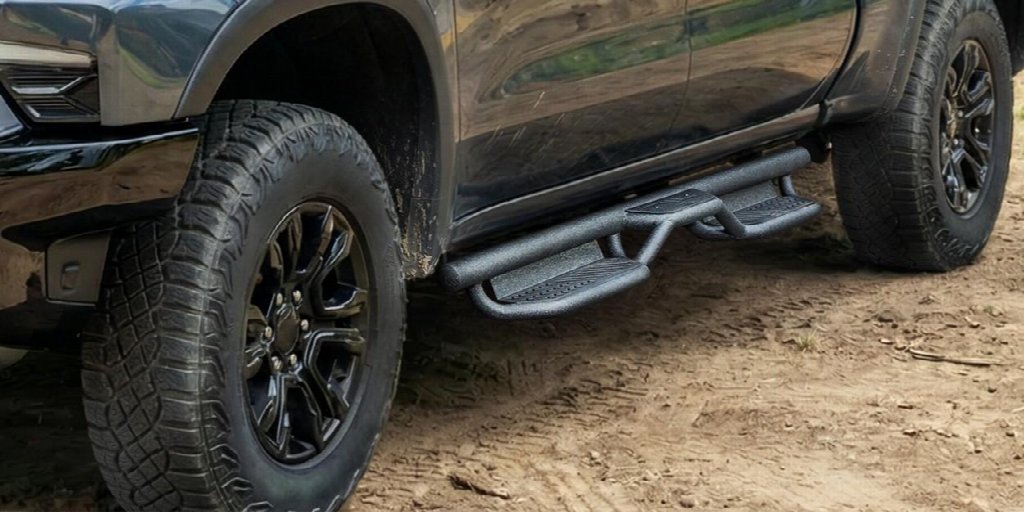
Once I started looking into solutions, running boards were the first thing that came up, and for good reason. From what I found, their main job is pretty simple: they give you a stable, intermediate step between the ground and the truck’s cabin.
They’re not meant to be armor. They’re not built to survive scraping against boulders. Their whole purpose is making entry and exit easier and more consistent, especially on a taller truck like a Crew Cab pickup. For passengers who don’t want to hoist themselves up into the cab, or for anyone dealing with uneven terrain, that little bit of extra step height makes a real difference.
That lined up with exactly what I was dealing with. I wasn’t trying to solve a rock-crawling problem. I was trying to solve a “getting in and out of my truck without thinking about it” problem.
What Rock Sliders Are Designed For
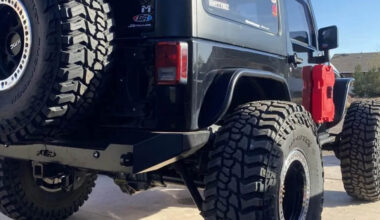
Rock sliders, on the other hand, are built for a completely different job. As I dug deeper, it became clear that their main purpose is protecting the rocker panels and lower body of the truck during serious off-road driving — the kind where you’re navigating over rocks, ledges, and terrain that could otherwise scrape or dent the underside of the vehicle.
They’re typically built heavier and mounted more rigidly than running boards, since they’re meant to take real impact, not just support body weight for stepping. For people who regularly drive technical trails, wheel over rock ledges, or take their trucks into terrain where side-panel damage is a genuine risk, rock sliders make a lot of sense.
But that’s not really my situation. I get off pavement plenty, but I’m not rock crawling. I’m not scraping the sides of my truck against boulders on a weekend basis. My “off-road” is more accurately described as gravel roads, dirt access roads, and light trails — not technical rock terrain.
Running Boards vs. Rock Sliders: The Practical Differences
Once I laid it out side by side, the differences became a lot clearer.
| Category | Running Boards | Rock Sliders |
| Primary purpose | Easier entry and exit | Rocker panel protection |
| Daily driving | Well suited | Overkill for most daily use |
| Passenger access | Improved, especially for shorter passengers | Not really a factor |
| Camping | Helpful on uneven ground | Not the main benefit |
| Light off-road use | Generally sufficient | Also works, but more than needed |
| Serious rock crawling | Not designed for this | Built for this |
| Step function | Primary purpose | Secondary, if present at all |
| Protection | Minimal | Significant |
Seeing it laid out that way made my decision feel a lot less complicated. Rock sliders are answering a question I wasn’t really asking. Running boards were answering the question I actually had.
Why I Started Looking at Running Boards for My Silverado
Once I recognized that running boards fit the way I actually use my truck — daily driving, camping trips, fishing access roads, the occasional light trail — I started comparing options more seriously.
There are a lot of running boards out there for the Silverado, and a lot of them look pretty similar in photos. I spent some time comparing step width, mounting style, and material construction, since those seemed like the details that would actually matter in daily use rather than just how something looked from a distance.
During that research, I came across Joytutus running boards built specifically for Crew Cab Silverado and Sierra trucks. What stood out to me was that they weren’t a generic “fits everything” product — they’re made for specific fitments, including the Chevrolet Silverado 1500 (2019–2026 Crew Cab) and the Silverado 2500HD/3500HD (2020–2026 Crew Cab), along with the equivalent GMC Sierra models. They’re rated for 550 pounds, have a textured step surface, and are listed as a bolt-on installation.
I hadn’t installed them at the time I was comparing options, so I can’t speak to how they perform once mounted. But as one option among several I found while researching running boards for my truck, the fitment specificity and step rating were the kind of details that made sense to pay attention to, regardless of which brand someone ends up choosing.
If you want to see how they’re presented in more detail or you own other brands’ trucks, you can see Joytutus official website and compare the specs against whatever else you’re considering.
What I Would Consider Before Choosing Running Boards
Based on what I learned while comparing options, here’s what actually seems to matter when picking running boards, at least for a truck like mine:
- Exact vehicle fitment. Crew Cab, Double Cab, and Regular Cab versions of the same truck often need different board lengths and mounting points. A board made for a different cab configuration probably won’t mount correctly, so confirming the exact match matters more than it might seem.
- Step width and step height. Not every board sits at the same height off the ground, and not every board offers the same amount of usable step surface. For someone dealing with uneven outdoor terrain, a wider, more stable step surface seems like it would matter more than it does on pavement.
- Ground clearance impact. Anything mounted low on the truck has the potential to reduce clearance somewhat. For light trail use, that’s probably a minor factor, but it’s still worth thinking about rather than ignoring.
- Construction and load rating. Since running boards support actual body weight — sometimes more than one passenger’s worth at a time — the load rating and overall build quality seem like they’d matter for peace of mind over time.
- Installation method. Bolt-on installation, as opposed to something requiring drilling or permanent modification, seemed like a more practical option for someone doing this themselves rather than through a shop.
- None of this is meant to point toward one specific product being the obvious answer. These are just the categories that seemed relevant once I actually thought through how I’d be using the boards.
So, Do I Need Running Boards or Rock Sliders?
After going through all of this, I don’t think there’s a universal right answer between running boards and rock sliders. It really depends on what someone is actually doing with their truck.
If a Silverado is spending real time on technical trails, rock ledges, or terrain where the lower body panels are at genuine risk, rock sliders make sense. That’s what they’re built for, and running boards wouldn’t offer the same protection in that situation.
For me, though, that’s not really an accurate description of how I use my truck. My Silverado is mostly a daily driver and a work vehicle that happens to spend weekends on gravel roads, campsite access roads, and the occasional light trail. The problem I was actually trying to solve wasn’t rock protection — it was making it easier and more consistent to get in and out of the truck once I’m off pavement and on uneven ground.
So for how I actually use my truck, running boards make more sense than rock sliders. That might be a different answer for someone whose weekends look different than mine. But for a Silverado that spends most of its life commuting, hauling gear, and occasionally heading out to camp or fish, running boards seem like the more relevant fit — at least based on everything I found while working through this decision.