How a Windshield Changed the Polaris Ranger Driving Experience
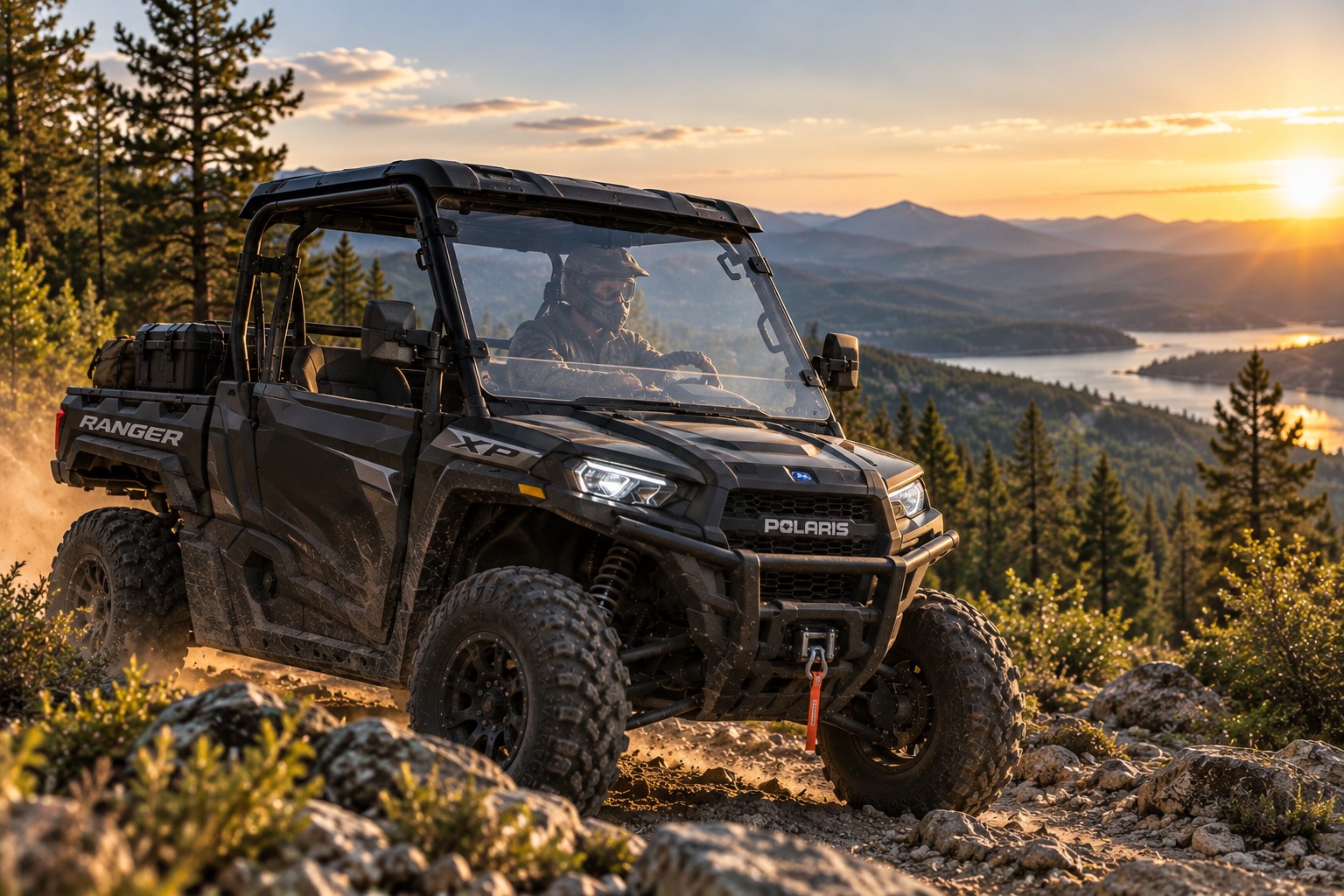
When I bought my Polaris Ranger a few years ago, a windshield was near the bottom of my accessory list. I put money into a roof, a winch, and some storage first, because those felt like the parts that would actually get work done. A windshield seemed like something for people who wanted their UTV to look nice, not something that changed how the machine worked. That opinion held up fine for the first season or two. It stopped holding up once I started putting real hours on the Ranger, in real weather, on real trails.
What changed my mind wasn’t one dramatic ride. It was a string of smaller moments that added up: a cold morning that left my hands stiff by the time I got to the property line, a dusty trail that coated everything in the cab, a rainstorm that caught me halfway through a loop I’d ridden a dozen times without thinking twice. None of those things were emergencies. They were just uncomfortable, and after enough of them, comfort started to matter more than I expected it to.
What Riding Without Enough Wind Protection Taught Me
Before I get into what a windshield actually fixed, it’s worth describing what riding without one is like, because that’s the part most new owners underestimate.
Cold air is the one that surprised me most. On a Ranger, you’re sitting fully exposed to whatever the front of the cab lets through, and at low speeds on a trail that doesn’t feel like much. Push the speed up on an open stretch, or ride for an hour instead of fifteen minutes, and that wind starts to wear on you. It’s not painful; it’s just tiring in a way that sneaks up on you. I’d get back to the barn after a longer ride and realize my shoulders were tense from bracing against the air the whole time.
Dust was the second lesson, and it’s a different kind of annoying. On dry trails, every vehicle ahead of you kicks up a cloud, and with nothing in front of the cab, that dust has a straight path to your face, your gear, and the inside of the dash. Small debris, gravel kicked up from the tires ahead, the occasional bug at speed-all of it comes straight at you too.
Rain and mud added a third problem. Water and spray don’t just get you wet, they get into places you don’t want them, like the seat and the storage bins. A short rain shower on an open Ranger turns a five-minute ride home into a genuinely unpleasant one.
None of these are dealbreakers on their own. But stack them together over a season of property work, weekend trail rides, and the occasional longer trip, and they start to define how much you enjoy being in the machine.
What Changed After Adding a Windshield
The first windshield I put on was a straightforward front piece, and the difference was noticeable almost immediately. Wind that used to hit me straight in the chest and face was redirected up and over the cab instead. Longer rides stopped leaving me stiff and tired in the same way. Dust that used to blow straight in now had to work around the windshield first, which cut down on how much ended up on my clothes and gear, even if it didn’t eliminate it.
Visibility was better than I expected, too. A clear windshield doesn’t block your view of the trail the way I assumed it might, and it actually helped in situations with mud spray or light rain, since the debris hit the windshield instead of my face.
What didn’t improve, and what I want to be honest about, is that a windshield doesn’t fix everything. Dust that gets pulled around the sides and into the back of the cab is still there. On dustier trails, I noticed dust settling in the rear seating area more than I had before, since airflow that used to move more freely through the open front was now getting redirected differently. It wasn’t a huge issue, but it was a trade-off I hadn’t thought about ahead of time. A full windshield also changes how much air moves through the cab overall, which is great in cold weather and less great once summer shows up.
Full Protection Is Not Always Better
This is the part of the story that took me the longest to understand. My instinct after that first windshield was that more coverage would just mean more comfort. More glass, more protection, fewer problems. That’s not really how it works.
In cold or wet conditions, a full front windshield is genuinely useful. It blocks wind, keeps spray off you, and makes the cab feel like a much more enclosed, controlled space. But once summer trail riding starts, that same enclosure works against you. Airflow through the cab drops, and on a hot day, a fully enclosed front section can make the ride feel stuffier than riding with no windshield at all. I noticed this most on slow, technical trail sections in warm weather, where there wasn’t enough forward speed to push air through the cab, and the windshield was mostly just blocking whatever breeze there was.
This is where flip windshields and other adjustable setups start to make sense. Rather than committing to one level of coverage year-round, a flip design lets you run it closed for cold or wet rides and open for warm-weather trail days when you want more airflow than protection. It’s not a perfect solution either, since it adds another moving part and another thing to check and maintain, but it does address the seasonal mismatch that a fixed full windshield can’t.
The Details I Pay Attention to Now
After going through a full windshield, dealing with the airflow trade-offs, and eventually looking at flip and rear options, I started paying attention to details I would have skipped over entirely a few years ago.
Model and year fitment is the first one, and it matters more than people expect. Ranger windshields are generally built for specific model and year ranges, like Ranger 1000, XP 1000, and Crew variants versus midsize 500/570 models, and a part built for one doesn’t necessarily bolt onto another cleanly. When I was researching different setups for my own Ranger, I ended up comparing a few configurations side by side on a page like the Polaris Ranger windshield collection just to get a sense of how front, rear, flip, and soft options differed from each other before deciding what actually fit my rig and my riding style.
Roof and mirror compatibility is the next thing I check now. Adding a windshield after you already have a roof, or mirrors mounted in a particular spot, can create clearance issues that aren’t obvious until you’re trying to install the thing. Wiper compatibility matters too, especially if you’re considering a windshield with a wiper setup for wetter climates, since not every windshield is built with a wiper mount in mind.
Cleaning and maintenance is a smaller detail, but it adds up over a season. A windshield that collects mud and dust needs regular cleaning to stay clear, and depending on the material, that cleaning routine looks different. Rear coverage versus front-only coverage is also something I think about differently now, since a lot of the airflow and dust issues I ran into were more about the back of the cab than the front.
Mistakes I Would Avoid With My Next Windshield
Looking back, there are a few things I’d do differently if I were starting over.
- Buying based on general appeal before actually confirming fitment for my Ranger’s specific model and year.
- Assuming maximum coverage was automatically the right call, without thinking through how it would feel on a hot trail day.
- Overlooking how a new windshield would interact with the roof and mirrors I already had installed.
- Focusing entirely on front protection while ignoring how rear airflow and dust circulation would change.
None of these were expensive mistakes, but they were avoidable ones, and they’re the kind of thing that’s easy to skip when a windshield still feels like a minor accessory decision.
What I Would Choose Based on How the Ranger Is Used
There isn’t one setup that works best across every condition, which is part of why I’ve landed on thinking about this in terms of use case rather than a single “right” answer.
| Riding Situation | Windshield Setup to Consider | Main Benefit | Main Trade-Off |
| Cold-weather riding | Full front windshield | Better wind protection | Reduced cabin airflow |
| Mixed-season use | Flip windshield | Airflow flexibility between open and closed | Added moving hardware to maintain |
| Dusty trail riding | Front and rear windshield combination | Better overall cabin dust management | More components to install and clean |
| Occasional weather protection | Soft windshield | Lightweight, easy to add or remove | Different durability expectations than rigid options |
| Wet-climate riding | Windshield paired with a wiper option | Helps maintain visibility in rain | More installation complexity |
If I only rode in one climate, one type of terrain, this table would be a lot shorter. Since most owners deal with some mix of seasons and conditions, it’s worth thinking through where your riding actually falls before committing to one setup.
Conclusion
A windshield didn’t change what my Ranger is capable of. It still hauls the same loads, climbs the same trails, and handles the same property work it always did. What it changed is how tiring, dusty, or uncomfortable a given ride feels, and that’s a bigger deal than I originally gave it credit for.
If you’re riding mostly in cold or wet conditions, a full front windshield is worth serious consideration. If your riding spans hot summer trail days and cold mornings in the same season, a flip setup or a front-and-rear combination is worth looking into instead. Either way, checking fitment for your specific Ranger model and year, and thinking about how a windshield will interact with your roof, mirrors, and wipers, will save you some frustration down the line. If I’m adding anything else to my own Ranger next, it’ll probably start with taking a closer look at what a KEMIMOTO windshield setup could add for the kind of mixed-season riding I actually do, rather than assuming one fixed configuration will cover everything.