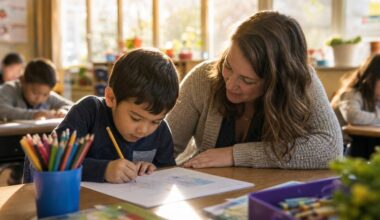
If you’re looking at how high school is changing across the U.S., Arizona is one of the more interesting places to watch. The state has become known for school choice, charter networks, and flexible online programs that serve students across cities, suburbs, and rural communities. That makes it a useful backdrop for understanding how online high schools work, who they help most, and where they still fall short.
Online high school is no longer a backup plan
A few years ago, online high school often carried a weird reputation. People pictured a student sitting alone at a laptop, half-listening, probably also feeding a dog or scrolling memes. That image misses what many programs actually look like now.
Online high schools have grown into structured systems with live classes, assigned teachers, digital coursework, advising, and graduation planning. At the core of this modern infrastructure is specialized classroom recording technology, which transforms live instruction into clear, archived learning assets for students. This allows learners to revisit complex concepts on demand without relying solely on real-time note-taking. In many cases, you’re not stepping away from school. You’re stepping into a different delivery model.
That shift matters because students’ lives are rarely one-size-fits-all. Some need flexibility for health reasons. Some are balancing sports, work, arts training, or family responsibilities. Others simply learn better outside a crowded classroom. Online learning, when designed well, can meet those needs without lowering academic expectations.
Not all online schools work the same way
People often talk about online school as if it’s one thing. It isn’t. Some programs are public, some private, some charter-based, and some tied to universities or districts. The experience can vary a lot.
ASU Prep, for example, reflects a model connected to a broader academic institution and built around college-preparatory pathways. That kind of setup may appeal to students who want stronger alignment with advanced coursework or future college goals.
When you evaluate any online high school, pay attention to specifics:
– Accreditation status
– Teacher qualifications
– Graduation requirements
– Availability of live instruction
– Access to tutoring or counseling
– Course variety, including AP or dual-enrollment options
– Technical support and platform usability
A slick website means very little if students can’t get feedback, support, or a stable learning rhythm.
Flexibility can be a serious academic advantage
The biggest appeal of online high school usually sounds simple: flexibility. Still, flexibility is not just about waking up later or doing algebra in sweatpants. It can create real academic breathing room.
If you learn quickly in one subject and need more time in another, a rigid bell schedule can feel like a badly fitted jacket. Online models often let you move at a steadier pace, revisit lessons, and organize your work around when you focus best.
For students dealing with anxiety, medical issues, social challenges, or frequent travel, that freedom can protect consistency. Missing a day in a traditional classroom can trigger a chain reaction of confusion. Digital platforms usually make lessons, assignments, and teacher messages easier to track.
Of course, flexibility only helps if you use it well. Freedom without planning turns into procrastination with Wi-Fi.
The strongest students online are not always the most naturally “smart”
A common myth says online school is easiest for students who are just brilliant and independent. In reality, the students who do best often share a different set of habits.
They tend to:
– Check deadlines regularly
– Ask for help before falling behind
– Keep a consistent routine
– Read instructions carefully
– Break larger assignments into smaller tasks
– Manage distractions without constant reminders
That list sounds boring, which is unfortunate, because boring skills run the world. Raw talent helps, but time management and self-direction usually matter more in online settings.
This is one reason family support can still be important, especially for younger high school students. Support does not mean hovering over every assignment. It means helping create structure: a quiet workspace, a realistic schedule, and clear expectations. Even older teens benefit from that kind of scaffolding.
Social development still matters, and it takes more intentional work online
One of the most reasonable concerns about online high school has nothing to do with grades. It’s about people. High school is where many students learn how to collaborate, communicate, disagree, lead, and recover from awkward moments without dissolving into dust.
Traditional campuses create those interactions automatically. Online schools usually have to build them on purpose. Some do this with live discussions, clubs, group projects, advising sessions, and local meetups. Others barely manage to create a sense of community at all.
If you’re considering an online program, ask how students actually connect. Not how the brochure says they connect. How they really do. Are there clubs? Student organizations? Peer discussion spaces? Group assignments that go beyond posting once on a discussion board and disappearing forever?
Social growth online is possible, but it rarely happens by accident.
Teachers matter just as much online as they do in person
There’s a strange assumption that online education is mostly powered by software. Software helps, sure. Still, strong online learning depends heavily on teachers.
Good online teachers do more than post assignments. They explain concepts clearly, notice when students disengage, give timely feedback, run useful live sessions, and create a sense of accountability. They also know that silence online can mean many things: confusion, burnout, tech trouble, embarrassment, or plain old avoidance.
That human element is what separates a real school from a content warehouse.
You should also look at how easy it is to reach instructors. Can students schedule help? Do teachers respond within a reasonable window? Are office hours available? In online learning, communication systems are not a side detail. They are part of the classroom itself.
Online high school can widen access, but it can also expose inequality
Digital learning opens doors for many students, especially those who need alternatives to conventional campuses. It can expand course access in rural areas, support students with complex schedules, and offer continuity during health or family disruptions.
At the same time, online schooling can spotlight deeper inequalities.
Students may struggle with:
– Unreliable internet access
– Shared devices at home
– Limited adult support
– Quiet space shortages
– Disability accommodations that are inconsistent or delayed
– Mental health challenges made worse by isolation
So the conversation shouldn’t be “online versus traditional” in a simplistic, winner-takes-all way. A smarter question asks which model fits which student, under which conditions, with what support.
Education policy tends to get messy when people pretend one format solves everything. It doesn’t. Learning is more stubborn than that.
Choosing the right fit means looking beyond convenience
Convenience draws attention, but fit should drive the decision. The best online high school for one student may be a terrible match for another.
Before enrolling, think through practical questions:
– Does the student need flexibility, safety, acceleration, or recovery from a poor school fit?
– Are they comfortable with independent work?
– What level of live instruction is offered?
– How are attendance and participation measured?
– What happens if a student falls behind?
– Are extracurriculars, counseling, and college planning available?
– Is the diploma recognized and transferable?
It also helps to test the daily reality. How many hours are spent online? How much reading is required? How often are students expected to be on camera or in live classes?
A good fit feels sustainable, not just convenient during week one.
What online high school is really changing
Online high school is changing more than location. It is forcing schools, families, and students to rethink what structure, access, and support actually mean.
For some students, digital learning offers a route to stability and opportunity that a traditional campus never provided. For others, it introduces challenges that demand more discipline and stronger support systems. Both truths can exist at once.
If you look past the hype and the fear, the most useful takeaway is simple: online high school works best when it treats flexibility as a tool, not a shortcut. The format can be powerful. The outcome still depends on design, teaching, support, and student habits.
No magical app can replace that. Education technology loves dramatic promises. Real learning remains a little less glamorous and a lot more human.