California fencing has to stand up to more than occasional rain. Long stretches of hot sun, dry air, dust, irrigation overspray, temperature changes, and seasonal storms can all affect how a fence looks and performs over time.
For homeowners comparing materials in the Central Valley, privacy fence company Fresno, CA Kerb Appeal Fenceworks provides a useful local reference. The Fresno-based contractor handles residential, commercial, and public works projects, including wood, vinyl, chain link, ornamental iron, gates, pool fencing, gate operators, and fence weatherization throughout Fresno and the surrounding Central Valley. That breadth of hands-on experience matters when a fence must balance privacy, appearance, durability, and climate exposure.
1. Why California’s Climate Matters
Climate does not make one fence material the right answer for every property. It changes how that material should be selected, installed, and maintained. Heat can dry and shrink wood, contribute to movement in some synthetic panels, and place added stress on gate hardware. Wind, uneven soil moisture, and standing water near posts can create problems from the ground up.
Landscaping deserves equal attention. Homeowners choosing drought-conscious plants can use the University of California’s water-wise gardening guidance to think through irrigation, mature plant size, drainage, and sun exposure before planting near a fence line.
2. How Common Fence Materials Handle Heat and Sun
- Wood:Warm, versatile, and easy to customize, but it can fade, dry, split, or require sealing.
- Vinyl:A low-maintenance option for privacy, provided the product quality, color, spacing, and reinforcement suit the site.
- Chain link:Practical and cost-conscious, where airflow and visibility are priorities. Slats, screens, or planting can add privacy.
- Steel or ornamental iron:Strong and visually open, though damaged coatings should be repaired before corrosion spreads.
- Composite:A lower-maintenance alternative that should be evaluated for heat, UV exposure, color retention, and warranty coverage.
3. When Wood Fencing Makes Sense
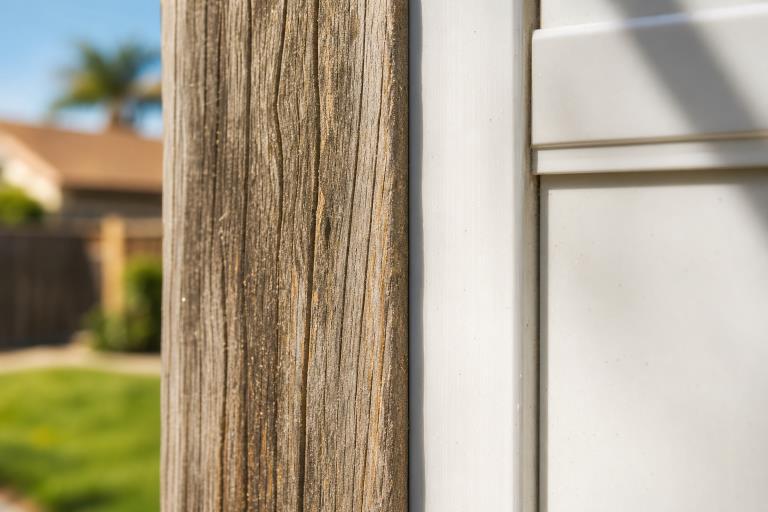
Wood remains a popular California choice because it works with traditional homes, contemporary yards, and garden-focused designs. Redwood and cedar can create a refined appearance, and individual boards are often easier to repair than an entire panel system. However, attractive wood is not automatically low maintenance.
Wood Fence Planning Priorities
- Use durable posts and corrosion-resistant fasteners.
- Limit constant soil contact and avoid trapping wet mulch against boards.
- Allow gates and sections enough room for normal seasonal movement.
- Inspect post bottoms, shaded areas, hinges, and latches regularly.
- Decide before installation whether natural graying is acceptable or whether staining and sealing will be part of the maintenance plan.
4. Where Vinyl Fencing Fits Best
Vinyl can be a strong fit for side yards, backyards, and privacy-focused spaces where homeowners want to avoid routine painting or staining. Still, “maintenance-free” should not mean ignored. Occasional washing, plant trimming, and post-storm checks help preserve the fence’s appearance and identify impact damage early.
Before choosing vinyl, ask whether individual components can be replaced, whether the color suits intense afternoon sun, how the design handles wind, and what the manufacturer’s warranty actually covers. A well-designed vinyl fence should match the property’s exposure and not simply its preferred color.
5. The Strengths of Metal Fencing
Metal fencing can work particularly well for front yards, pool enclosures, driveway gates, commercial sites, and properties that need security without a solid visual barrier. Steel generally emphasizes strength, while aluminum can be appealing where reduced rust concerns are a priority. Ornamental iron offers a classic look but needs attention when its protective finish is chipped or worn.
A mixed-material approach can also make sense. A solid backyard fence may provide privacy, while an open metal fence near the entry preserves sightlines. Looking at front-yard landscaping ideas can help homeowners coordinate fencing, pathways, planting beds, and curb appeal.
6. Why Posts, Hardware, and Drainage Matter
A fence can fail even when its visible panels are high quality. Posts must be properly placed for soil conditions, aligned correctly, and protected from chronic water exposure. Fasteners, hinges, latches, and gate frames should be selected for the weight and frequency of use they will handle.
Pay close attention to post depth, footing size, compaction, drainage, wind exposure, panel spacing, and utility marking before digging. Gates deserve additional planning because heavy or frequently used gates can shift when posts and foundations are undersized.
7. Planning Around Plants and Water
Landscaping can protect a fence or shorten its life. Direct sprinkler spray can repeatedly wet wood and metal. Dense vines may trap moisture and interfere with hinges. Large roots can shift posts or crack nearby hardscape.
- Point irrigation heads away from fence surfaces.
- Leave room to trim plants on both sides of the fence when possible.
- Select plants by mature size, not their size at purchase.
- Watch for runoff that drains toward post bases.
- Keep vines clear of gates, latches, and automated equipment.
8. Questions to Ask Before Choosing a Fence
- What is the main goal: privacy, security, containment, appearance, safety, or noise reduction?
- How much maintenance is realistic each year?
- Which fence runs receive the strongest afternoon sun and wind?
- Will irrigation, soil conditions, or nearby trees affect posts?
- How often will gates be opened, and will they be automated?
- Are there HOA, city, pool-safety, property-line, or permit requirements?
- Does the written estimate specify materials, removal, cleanup, warranties, and repair options?
9. When Local Experience Helps
Local installation experience can be valuable when evaluating common lot layouts, soil conditions, weather exposure, access limitations, and regional code requirements. Compare contractors by reviewing licensing, insurance, product specifications, installation methods, communication practices, cleanup standards, and warranty terms. The lowest initial quote is not always the lowest long-term cost.
10. Final Planning Checklist
- Identify the fence’s primary purpose.
- Document sun, wind, soil, drainage, and irrigation conditions.
- Compare two or three material options instead of choosing by price alone.
- Review gate dimensions, hardware, and expected daily traffic.
- Confirm boundaries and applicable local rules before construction.
- Request a detailed written estimate.
- Create a simple maintenance plan before approving the project.
A successful California fence balances climate performance, appearance, upkeep, budget, and sound installation. Choosing materials with the site in mind can reduce early repairs and create a boundary that works with the property for years to come.