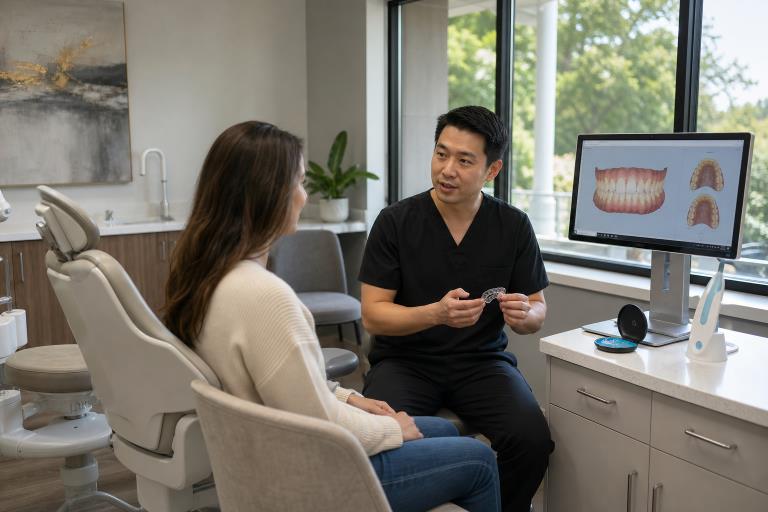
Clear aligners can fit comfortably into busy routines, but successful treatment involves much more than changing trays on schedule. Understanding your clear aligner treatment options, daily responsibilities, and follow-up needs can help you make confident decisions from the first consultation through long-term retention.
Because aligners are removable and less noticeable than traditional braces, they can be appealing for adults and teens. Still, they require consistency. Wear time, oral hygiene, meal planning, and professional guidance all affect how smoothly treatment progresses.
How Clear Aligners Work
Clear aligners are custom-made plastic trays that apply controlled pressure to selected teeth. Digital scans, photographs, X-rays when appropriate, and an examination help a dental professional plan the movements. A series of trays is worn in a specific order, with each new aligner designed to continue the next small step in treatment.
Who May Benefit From Clear Aligners?
Clear aligners may help address mild to moderate crowding, spacing, and certain bite concerns. They can also be useful for people whose teeth have shifted after previous braces. As a general overview of how clear aligners are used to adjust teeth, it is helpful to remember that not every movement is equally predictable with removable trays.
A personalized evaluation is the best way to determine whether aligners are appropriate. At North Orange Family Dentistry, a treatment discussion can consider the position of the teeth, how the bite functions, and whether other dental needs should be addressed before orthodontic movement begins.
When Another Approach May Be Better
Age alone does not determine candidacy. However, untreated cavities, gum disease, significant bone loss, missing teeth, severe bite discrepancies, or complex tooth movements may call for restorative treatment, braces, specialist care, or a combined approach instead.
What Happens Before Treatment Begins?
A well-designed plan starts with more than an impression or scan. Before trays are made, the dental team should review oral health, previous treatment, tooth sensitivity, bite alignment, and the goals that matter most to the patient.
- Health review:Cavities, gum inflammation, and other active issues are identified and addressed.
- Smile and bite assessment:The way the upper and lower teeth meet is evaluated alongside appearance concerns.
- Digital records:Scans and images create the information needed for a customized plan.
- Plan discussion:The provider explains likely treatment steps, possible attachments, wear expectations, and limitations.
- Retention planning:Retainer options should be discussed before active treatment is complete.
Building a Simple Daily Routine
The most effective aligner routine is one you can follow at home, work, school, or while traveling. Most patients are instructed to wear aligners for most of the day and night, removing them only when needed for meals and oral hygiene.
- Morning:Remove the trays, brush and floss, then rinse and clean the aligners before reinserting them.
- After meals:Rinse your mouth and trays. Brush before putting them back in whenever possible.
- During the day:Put aligners in their protective case, not a napkin or pocket, when they are out.
- Before changing trays:Check for full seating, unusual looseness, rough edges, or persistent discomfort.
Missing significant wear time can make the next tray feel overly tight and may alter the planned timeline. Follow the schedule provided by your dental professional rather than making changes on your own.
Eating and Drinking With Aligners
Most aligners should be removed before eating meals or snacks. This lowers the chance of cracking, warping, or staining the plastic and helps prevent food from being held against the teeth. Plain water is generally the safest beverage while trays are in place.
Frequent snacking can make it harder to balance wear time with oral hygiene. Keeping a travel toothbrush, floss, and aligner case nearby makes it easier to clean up and return the trays promptly. Avoid hot water, which can change the shape of plastic aligners.
Cleaning Teeth and Aligners
Clean trays do not replace brushing and flossing. Since aligners cover the teeth for much of the day, placing them over food residue or plaque can contribute to odor, irritation, and a less pleasant fit. Research into the bacterial ecosystem around clear aligners also reinforces why steady hygiene habits matter.
- Rinse aligners with cool or lukewarm water after removal.
- Brush them gently with a soft toothbrush and products recommended by your provider.
- Brush teeth and clean between them before reinserting the trays.
- Store trays in a clean case whenever they are not being worn.
Common Challenges and Simple Solutions
- Mild pressure:A new tray can feel snug for a short time. Persistent or severe pain should be reported.
- Speech changes:A temporary lisp may occur as the tongue adapts. Consistent wear and speaking practice often help.
- Cloudy trays:Improve rinsing and cleaning, and avoid exposing aligners to heat.
- Loose or poorly fitting trays:Contact the dental office for guidance rather than advancing to another tray.
- Sharp edges:Ask whether the tray needs a professional adjustment if it rubs the cheeks or tongue.
Why Follow-Up Visits Matter
Follow-up appointments confirm that teeth are tracking as expected and that the bite remains on course. They also provide an opportunity to review hygiene, evaluate attachments, replace lost trays, and discuss refinements if the original plan needs adjustment. Digital previews are useful planning tools, but they cannot guarantee an identical result because biology and daily wear habits vary.
Keeping Teeth in Their New Positions
Active treatment ends when the aligner series is complete, but retention continues. Teeth can shift over time, particularly when retainers are not worn as directed. Clean the retainer regularly, keep it in a case, watch for cracks or warping, and schedule a visit if it feels painful or no longer fits.
Questions to Ask Before Choosing Treatment
- What concerns will aligners address in my case?
- Are my teeth and gums healthy enough to begin?
- How will progress and bite changes be monitored?
- What happens if a tray does not fit or is lost?
- Are refinements included if additional trays are needed?
- What retainer will I need, and how often should I wear it?
Conclusion
Clear aligners can be a convenient option for improving tooth position, but convenience still requires commitment. A complete plan includes diagnosis, consistent wear, careful cleaning, regular follow-up visits, and long-term retainer use. With realistic expectations and dependable daily habits, patients can make the treatment process easier to manage from the first tray onward.