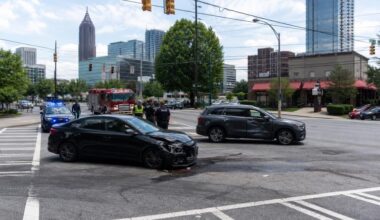
According to the NHTSA, 39,254 people died on roads in the United States in 2024. Not every fatal accident leads to criminal charges under the law. Whether charges are filed depends on the driver’s actions, the evidence, and state law.
In negligent homicide cases, the jury must determine whether the victim’s death was the result of criminal neglect. It could be considered an unfortunate and unpredictable accident.
Here are the common defenses used against negligent homicide charges.
Where These Charges Arise
The FBI categorizes negligent manslaughter separately from murder and non-negligent manslaughter. It defines negligent manslaughter as the killing of someone due to negligence. Its previous reporting methods excluded accidental traffic fatalities.
Negligent manslaughter cases include death resulting from impaired, reckless, or distracted driving. And these are now recorded by the FBI’s incident-based system. The shifting boundaries of the categories show that what constitutes an accident or crime is closely related to the activities that cause a death.
Motor vehicle collisions, construction-related injuries, premises injuries, and shooting incidents due to poor firearm handling can all lead to negligent homicide cases. The breadth of settings that can result in such negligence homicide cases is immense.
Who Defends These Cases
Defending a negligent homicide charge usually starts with the attorney investigating the case. They will analyze evidence collection, potentially leading to challenging evidence and negotiation. In addition to looking at police reports and analyzing evidence, they may also speak with witnesses and hire experts to reconstruct the accident.
Most charges in a criminal defense case of negligent homicide depend heavily on local criminal law. That is why it’s beneficial to hire local counsel.
Defense lawyers in every state take on homicide allegations of this kind, including attorneys at the John D. & Eric G. Johnson Law Firm, LLC, which handles violent crime, murder, and manslaughter matters in North Louisiana.
What Prosecutors Must Prove
In New York, the prosecution must prove two things beyond a reasonable doubt for criminally negligent homicide. One, it must be proven that the defendant caused someone’s death. The other aspect is proving that the defendant committed criminal negligence.
To meet this criterion, criminal negligence means failing to notice a substantial and unjustifiable risk of death, where the failure grossly deviates from the standard of care a reasonable person would observe. It sets the standard well above ordinary carelessness.
Criminally negligent homicide in New York State is categorized as a Class E felony and is punishable by up to four years in prison. Many other states call it something else. It may be classified as involuntary manslaughter, vehicular manslaughter, or vehicular homicide. The exact term used, the prison sentence length, and other requirements are state-specific.
Where Defenses Focus
Many negligent homicide cases can be addressed on at least one of these two grounds. On the issue of causation, defense lawyers can present an alternative theory regarding the cause of death. They may argue that the evidence linking the accused’s actions to the cause of death is insufficient. These examples include a mechanical issue, some dangerous situation on the road, another driver’s actions, or some health concern, any of which could be considered the true reason why a person died. It is up to the courts to decide whether the behavior of interest was the primary cause of death or whether some unexpected events occurred that prevented that behavior from causing the death.
At the level of negligence, a defense can state that the behavior was just an ordinary error and did not significantly depart from a standard of care. Both the FBI’s guidance and New York’s jury instructions note this boundary.
A driver’s unexplained failure to perceive another vehicle has been held by New York’s highest court to be insufficient, without further evidence, to warrant a criminally negligent homicide conviction. State appellate courts have ruled that failing to see a hazard when driving slightly over the speed limit is insufficient evidence. Testimony and evidence relating to the defendant’s perception of the circumstances, the actual circumstances themselves, and the likely perception of an ordinary reasonable person have the most impact on the decision.
Records, testimony, and experts contribute significantly to these claims. Reconstruction of the event, vehicle information, maintenance records, and training and medical logs can indicate whether the danger was visible to the defendant and what they believed they could do to stop it.
Each state creates its own line, and a death’s specific details determine which side of the line a case belongs on. With these distinctions, the exact statutory wording for a particular state is available through that state’s court system.