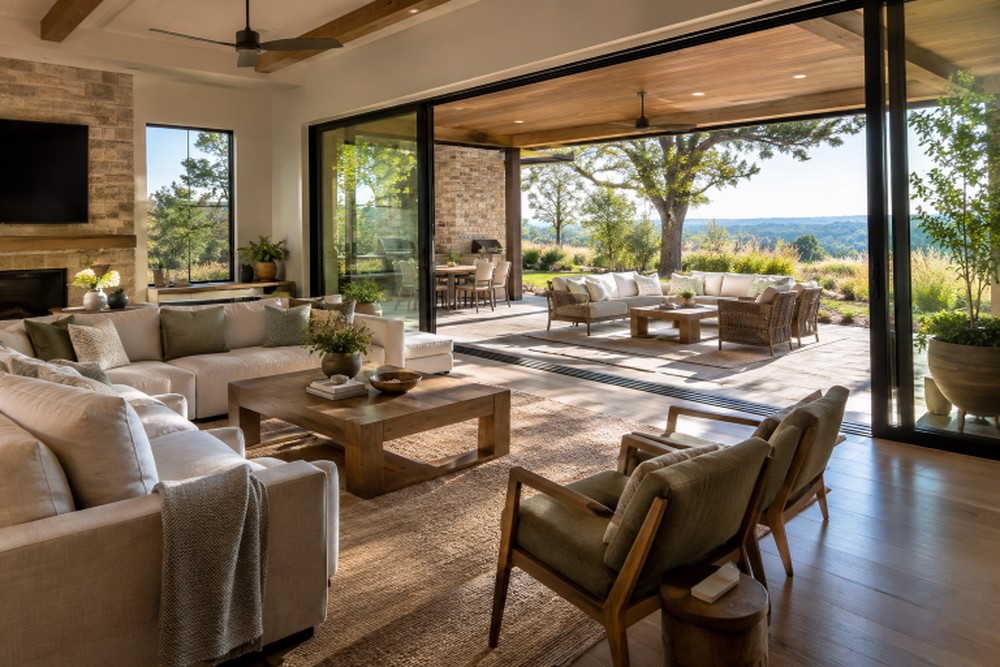
In Austin, TX, a well-planned indoor-outdoor living room can make everyday life feel more relaxed, whether the doors are open for a weekend gathering or the patio is simply an extension of a quiet family room. Choosing patio furniture in Austin, TX, is easier when the layout, shade, traffic flow, and practical needs of the household are considered before individual pieces are selected.
The most successful spaces do not treat the patio, porch, deck, or courtyard as an afterthought. They create a natural connection between indoor comfort and outdoor use, with seating, colors, lighting, and materials that feel at home on both sides of the threshold. That approach suits Austin homes, where shaded outdoor areas can become useful settings for morning coffee, casual meals, and evenings with friends. In a city known for its warm climate and outdoor lifestyle, managing heat and glare becomes essential to creating spaces where families and guests want to spend time year-round.
Start With the Way the Space Will Be Used
Before moving a sofa or buying a new outdoor chair, list what happens in the area most often. A household that hosts backyard dinners needs a clearer route to the kitchen than one that mainly uses the patio for reading and conversation. Families with children or pets may prioritize sturdy surfaces, rounded edges, and storage for games, blankets, or cushions.
Ask a few practical questions: How many people use the space on a typical day? Is outdoor dining important? Where will drinks, books, or serving dishes go? Does anyone need a shaded spot at certain times of day? Answers to these questions help prevent a room from becoming crowded with pieces that look appealing but do not support daily routines.
When comparing styles and scale, visiting furniture shops in Austin, TX, can help homeowners see how seating groups, rugs, accent tables, and dining pieces relate to one another in a complete setting. Bring room measurements, photos of the doors and windows, and a simple sketch of the outdoor area to keep decisions grounded in the actual space.
Build a Clear Indoor-Outdoor Flow
Movement is the foundation of a comfortable indoor-outdoor room. Leave a direct path from the main door to the primary seating area, dining zone, grill area, or yard. Avoid placing a chair, oversized planter, or low table where it forces people to squeeze past one another, especially near sliding or folding doors.
Arrange seating so guests can enjoy both the indoor room and the outdoor view. For example, a living-room sofa can face a fireplace or media wall while two swivel chairs angle toward the patio doors. Outside, a loveseat and chairs can form a conversation group without turning their backs completely on the house. Similar floor tones, coordinating rugs, or repeated wood and metal finishes can make the transition feel intentional.
Choose Materials That Handle Austin Conditions
Outdoor furnishings must cope with Austin’s intense sun, heat, afternoon thunderstorms, dust, and frequent use. Look for performance fabrics intended for outdoor exposure, powder-coated metal, sealed or weather-appropriate wood, and surfaces that can be cleaned without complicated care. Read care instructions before choosing cushions, rugs, and upholstery, since the right maintenance routine varies by material.
Durability does not require an austere look. Woven textures, warm-toned woods, tailored cushions, and textured pillows can bring softness to a patio while still serving a practical purpose. Indoors, choose fabrics and finishes that can tolerate the extra activity that often comes with an open door, wet shoes, pets, and frequent trips outside.
Use Shade, Windows, and Airflow to Improve Comfort
Study the patio and adjacent room in the morning, afternoon, and early evening before settling on a permanent furniture layout. A pergola, roof extension, umbrella, exterior shade, or existing tree canopy can make a dramatic difference in how usable a sitting area feels in Austin’s climate. The EPA notes that outdoor awnings and louvers can reduce the heat that enters a home, which is especially useful near large glass doors and sunny windows during Texas summers.
Inside, use light-filtering shades where you want daylight without harsh glare, and add more substantial privacy treatments where needed. Window direction matters when placing televisions, artwork, and upholstery. Thoughtful window placement can protect against glare and overheating while still bringing natural light into the room. Test seating at different times of day before committing to its final location.
Create a Furniture Plan That Feels Relaxed
- Measure the indoor room, outdoor area, door openings, and main walking paths.
- Mark fixed features such as columns, ceiling fans, fireplaces, steps, outlets, and drainage areas.
- Place the largest seating piece first, then add chairs or benches around it.
- Give every seat a useful view, either toward people, a garden, a fire feature, or an indoor focal point.
- Add side tables within easy reach for drinks, phones, books, and small plates.
- Use an outdoor rug and coffee table or ottoman to establish a true gathering area.
Connect Both Areas With Color and Texture
Choose two or three shared colors rather than trying to match everything exactly. Warm neutrals, muted blues, soft greens, charcoal, and natural wood tones can work across both spaces. Repeat one or two materials, such as woven fiber, stone, ceramic, wood, or black metal, then let pillows, planters, and artwork provide personality.
Keep large pieces relatively calm and use smaller accessories for seasonal changes. An indoor throw color can reappear in outdoor cushions. A planter finish on the patio can echo a lamp base or side table inside. This creates continuity without making the rooms look overly coordinated.
Finish With Lighting, Storage, and Simple Maintenance
Layer lighting for different tasks. Use overhead fixtures near doors and dining areas, low-level lighting for steps and paths, and portable lanterns for a softer evening atmosphere. Select outdoor-rated fixtures, keep cords protected from weather, and make sure doors and walkways remain clearly visible after dark.
Storage should be part of the original plan, not a last-minute fix. A covered bench can hold cushions and outdoor games, while indoor baskets can collect remotes and throws near the door. For a quick weekend refresh, clear blocked walkways, clean windows and patio surfaces, reposition seating toward the best shade or view, and test the space during daylight and after sunset. With thoughtful planning, an Austin indoor-outdoor living room can feel comfortable, flexible, and ready for everyday use.