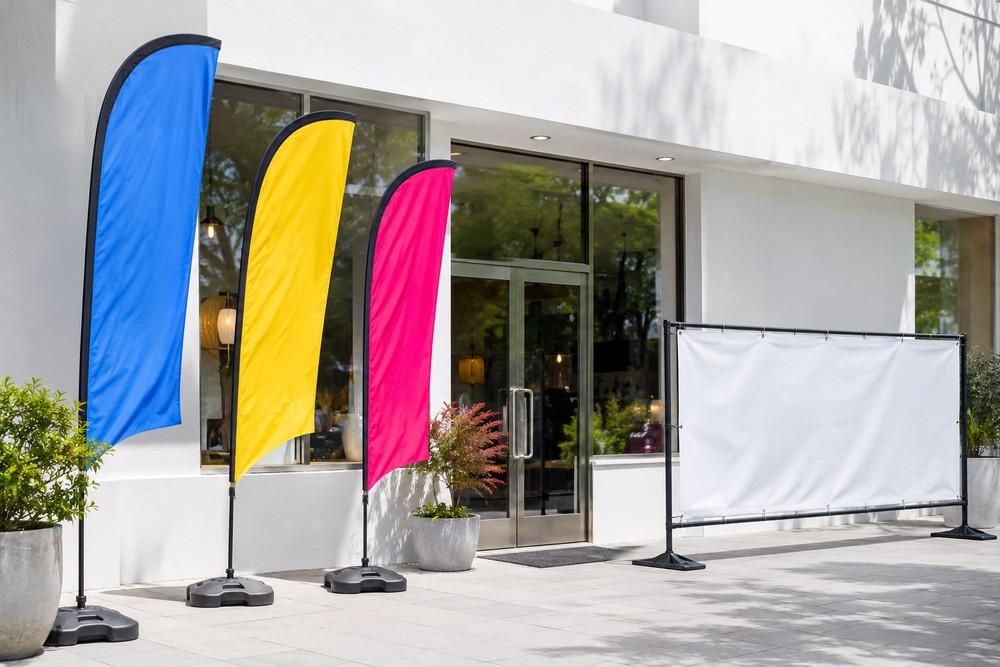
Outdoor advertising remains a powerful tool for businesses seeking to increase brand visibility and attract potential customers. Among the various methods available, promotional flags and banners serve as dynamic, eye-catching solutions that can significantly enhance a company’s marketing efforts. Utilising these promotional tools effectively requires understanding their advantages, design considerations, placement strategies, and material options. This article explores best practices for deploying promotional flags and banners in outdoor advertising campaigns.
The Role of Promotional Flags and Banners in Outdoor Advertising
Promotional flags and banners are versatile marketing aids designed to capture attention in public spaces. Their ability to move with the wind and change appearance depending on viewing angles makes them particularly effective for outdoor environments. By incorporating vivid graphics and concise messaging, they can communicate brand identity and promotional offers clearly to passersby.
Many businesses use these flags and banners in settings such as storefronts, trade shows, festivals, sports events, and roadside locations. Each environment offers unique opportunities to maximise exposure and engagement with target audiences.
Advantages of Using Promotional Flags and Banners
There are several key advantages associated with promotional flags and banners when used in outdoor advertising. Firstly, they are highly visible due to their height and movement. This visibility helps to draw attention even in crowded or busy settings.
Secondly, they are relatively cost-effective compared to other forms of outdoor advertising such as large billboards. This affordability allows businesses of various sizes to incorporate them into their marketing mix.
Additionally, promotional flags and banners are mobile and easy to install. This portability enables businesses to reposition them as needed to optimise impact at different events or locations. They also come in various sizes and styles, providing flexibility in design and application.
Design Considerations for Promotional Flags and Banners
Effective design is critical to the success of promotional flags and banners. Key considerations include colour choice, typography, imagery, and messaging.
A high-contrast colour scheme enhances readability from a distance. Businesses should select colours that align with their brand identity while ensuring the text and graphics stand out clearly against the background.
Typography should be bold and legible, utilising clear fonts that remain easily readable at varying distances. Simplicity is vital; too much text can overwhelm and reduce overall impact.
Imagery should be relevant and visually appealing without cluttering the design. Brands often include logos or promotional messages that succinctly convey the intended marketing purpose.
Material Selection and Durability
Due to continuous exposure to weather conditions, the material used for promotional flags and banners must be durable and weather-resistant. Common materials include polyester, nylon, and vinyl, each offering advantages in terms of strength and print quality.
Polyester is popular for its durability and vibrant colour retention. Nylon is lightweight and dries quickly after rain, making it suitable for windy or rainy weather. Vinyl banners are robust and weatherproof, often preferred for large-scale applications.
Choosing the right material not only extends the lifespan of the promotional flags and banners but also maintains aesthetic quality throughout their use.
Placement Strategies for Maximum Impact
Where promotional flags and banners are positioned has a direct bearing on their effectiveness. Location selection should consider factors such as foot traffic, vehicle visibility, and proximity to the business.
An ideal placement is where the flags or banners are visible to the highest number of potential customers. For retail businesses, this often means beyond the storefront to capture attention from passersby on surrounding streets or parking areas.
At events or festivals, placing promotional flags along main pathways or entrances ensures maximum exposure amongst attendees. For roadside advertising, flags positioned near intersections or traffic lights can capture the attention of drivers waiting in traffic.
Legal and Safety Considerations
Before installing promotional flags and banners, businesses should verify local regulations regarding outdoor advertising. Certain areas may have restrictions on size, height, or illumination to ensure public safety and maintain urban aesthetics.
Additionally, secure mounting is essential to prevent accidents caused by flags or banners being blown away or collapsing. Using stable bases or fixed installations reduces the risk of hazards.
Combining Promotional Flags and Banners with Other Marketing Efforts
To maximise their effectiveness, promotional flags and banners should be integrated thoughtfully with other marketing channels. For example, including website URLs or social media handles on banners can encourage further engagement beyond the immediate visual impression.
These outdoor visuals can complement digital advertising campaigns, in-store promotions, or print marketing materials by reinforcing brand messaging consistently across platforms.
Seasonal and Event-Specific Promotions
Using promotional flags and banners for seasonal or event-specific advertising is an excellent strategy. For instance, flags can announce sales, new product launches, or participation in local events, attracting targeted interest during critical periods.
The flexibility to update or replace promotional flags and banners also supports agile marketing. Businesses can respond to market trends or competitive pressures by quickly changing their outdoor advertising.
Cost-Efficiency and Return on Investment
Compared with permanent signage or large-scale billboards, promotional flags and banners represent a relatively low-cost advertising option. Their reusability and durability further contribute to long-term cost efficiency.
Businesses seeking to maximise return on investment should focus on high-traffic locations and impactful designs that encourage immediate customer action. Measuring the success of outdoor advertising campaigns can be done through tracking foot traffic, sales conversions, or unique promotional codes featured on the flags and banners.
Where to Source High-Quality Promotional Flags and Banners
For businesses interested in acquiring durable and effective promotional flags and banners, sourcing from reputable suppliers is essential. Professional vendors provide custom design options and high-grade materials that cater specifically to outdoor advertising needs.
A recommended resource for purchasing these marketing assets is promotional flags and banners. This supplier offers a wide range of flying flags that can be tailored to suit various marketing objectives and environments.
Conclusion
Promotional flags and banners are impactful tools for outdoor advertising, combining visibility, flexibility, and affordability. By paying careful attention to design, material selection, strategic placement, and legal aspects, businesses can leverage these aids to enhance brand awareness and customer engagement effectively. Integrated with other marketing initiatives, promotional flags and banners contribute significantly to successful outdoor advertising campaigns.