Why a Sloped Site Deserves More Respect
Sloped blocks are typically viewed as awkward cousins at family barbecues. Everyone observes it, nobody knows what to say, and at least one person says it would be simpler if it were flat. That thinking is wrong. Land with a significant inclination or plunge is not always difficult. It often offers a home individuality, presence, and a more dynamic arrangement than a rectangle on a pancake-flat site.
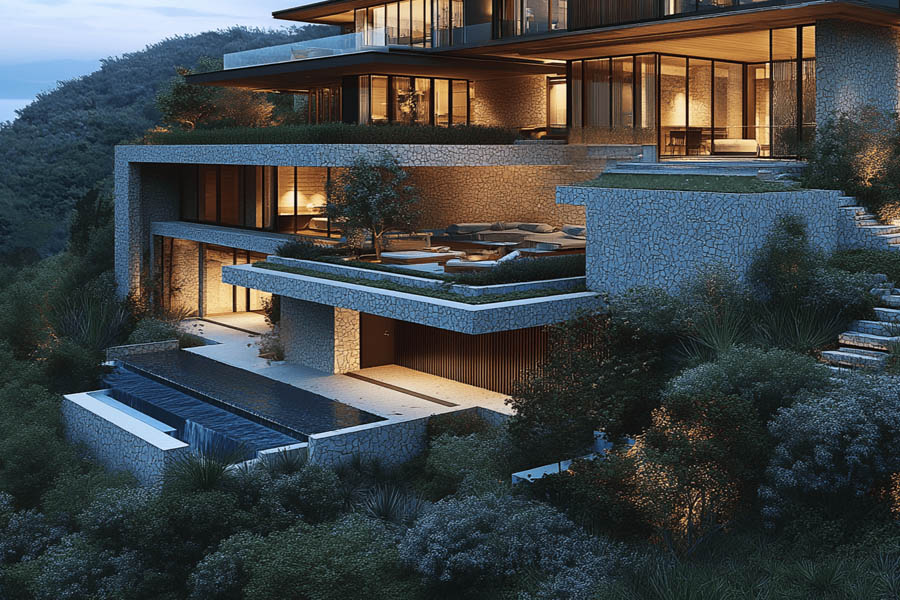
Flat-site homes rarely seem customized like a well-designed sloped home. Instead of dominating, it may move with the ground. Rooms may open at different levels, ceilings can soar when the site allows, and daily rooms can become theatrical. Walking around such a house is like reading a terrific story. The tale improves with each turn.
The Land Can Tell the House Where to Go
On flat land, homes often follow a familiar formula because they can. The front door lands in the expected spot. The garage behaves itself. The backyard sits politely at the back. A sloping site is less obedient, which is precisely what makes it interesting.
Land might advise where to put the entry, garage, and elevated elements of the home. Smart designs use the site as cues rather than demanding a traditional arrangement. The roadway may slope downward, inviting a dramatic top entry with residential rooms below. An uphill slope may be ideal for a secluded refuge situated above the road like it knows something the neighbors don’t.
This kind of responsiveness often produces homes that feel more intentional. They are not simply placed on the land. They appear to have grown there, as if the block and the building struck a secret deal.
Split Levels Can Make Daily Life Smoother
People sometimes hear the words split level and immediately imagine endless stairs, odd corners, and the ghost of questionable seventies decorating choices. That reputation is a bit unfair. A modern split-level home can be wonderfully efficient.
A home may divide loud and peaceful areas without interminable hallways or doors by changing sections across modest level changes. Up a few stairs can separate beds from a busy kitchen. A few steps down may create a cozy media room, home office, or guest area that doesn’t seem crowded, explains Imperial Asset Management.
This configuration also alters home motion. There is rhythm, not a continuous, flat parade of rooms. A pause. Discoveries occur. You’re more aware of where you are and what each room is for. Architecture with timing, not simply space.
Elevated Living Can Deliver Better Sunlight and Bigger Views
Height is one of the great luxuries of a sloping site. Even a modest incline can give a home access to outlooks that would be impossible on level ground. Rooftops fall away. Trees become companions rather than obstacles. The horizon suddenly gets involved.
Views go beyond great landscapes, but that helps. Sometimes wins are subtle. A breakfast nook above the garden may get morning light. A bedroom window may capture jacarandas instead of a neighbor’s fence. Positioned out of shadow, a living room may seem light and open much of the day.
Sunlight-responsive layouts make the residence more than remarkable. Becoming more comfy. Cooler months offer warmth. We can handle harsh western exposure. Instead of being stuck like visitors, breezes may flow through the home. Good slope design isn’t only pretty. Very practical.
Privacy Often Improves in Clever Ways
One of the quiet superpowers of a sloping block is how it can help a home guard its privacy without feeling defensive. Different floor heights create opportunities to direct windows where they should go and avoid peering into places where they should not.
Living rooms can be elevated yet remain connected to the street. Courtyards may become hidden outdoor rooms. Quieter bedrooms might be removed from noise and foot traffic. Bathrooms can have natural light without blinds, frosted glass, or mild paranoia.
This layered arrangement often makes the home feel more composed. Instead of relying on heavy screening or closed-off facades, the design uses the terrain itself as a buffer. The slope does some of the work, which is rather generous of it.
Outdoor Areas Can Become More Than One Big Lawn
A flat backyard has its charms, but let us be honest. It often becomes a large rectangle of grass that demands mowing and offers the emotional richness of a waiting room. Sloping land invites a more imaginative approach to outdoor living.
Terrasses can divide moods and uses. One level might include a kitchen-side outside eating space. Another may be a campfire nook, play grass, plunge pool deck, or secret garden seat. Steps between these locations might make the landscape feel like a trip rather than a patch around the home.
When managed properly, retaining walls are more than structural. They delineate paths, frame planting areas, and organize the landscape. This is typically more fascinating than a single big yard since each section has a function. Outside becomes rooms, not just fenced space.
Storage Parking and Utility Spaces Often Fit More Naturally
Homes on slopes can gracefully accommodate practical purposes. In the basement part of the home, a garage, workshop, laundry, mudroom, or storage area can fit without taking up valuable living space. The slope becomes a stagehand, clearing the debris while the stars play upstairs.
This can be especially useful for households with changing needs. A lower-ground level might later become a studio, a teen retreat, a guest suite, or a work-from-home base with a separate entrance. The house gains flexibility not because it is oversized, but because the layout is strategic.
On a flatter block, these support spaces can swallow valuable frontage or interrupt the flow of key rooms. On a slope, they can be woven into the form of the house in a way that feels almost suspiciously neat.
Good Planning Prevents the Expensive Headaches
This does not imply sloping sites should be tackled with great hope and a receipt drawing. They need discipline early. Understand drainage, access, structural support, excavation demands, and how water behaves during heavy rain when gravity is keen.
Ignoring these facts turns lovely concepts into costly building tantrums. A gorgeous design that battles the block might easily drain your funds. Most clever designs address technological issues early on, making the final home feel seamless.
Coordination matters most here. The home shape, excavation, retaining technique, stormwater design, and driveway or walkway location all effect each other. Together, such parts make the design clearer and the build more efficient. Hidden intricacy in the house is undetectable when managed effectively. Like fine tailoring, it just fits.
Custom Design Usually Wins on Uneven Ground
Standard plans are like that guest who sits in the same chair at every house. They’re comfy at home yet uncomfortable outside. Generic designs on uneven soil frequently result in forced floor levels, difficult internal steps, limited garage access, and separated outdoor areas.
A site-specific design can match the land’s form and behavior. It may install windows for view. It can form circulation around the natural entrance. It may choose which rooms need height, seclusion, or garden access. It leverages the irregularity to make something richer rather than overcoming the obstacle.
That specificity is often what makes a hillside home memorable. Not because it is flashy, but because it fits. It makes sense. Every level change, opening, and transition feels deliberate.
Character Comes More Easily When the Site Has Personality
Some homes need a great deal of decorative effort to feel distinctive. Fancy finishes, oversized light fittings, dramatic furniture. A home on a sloping site often starts with an advantage because the architecture already has movement and variation built into it.
Natural character comes from stepped shapes, layered volumes, framed views, and varied interior heights. When the home is deep and shaped, basic materials seem more sophisticated. The block adds tension and energy to the design, making it more alive.
That is one of the great joys of building on uneven land. The home does not have to manufacture interest. The site brings some of it to the party from day one.
FAQ
Are sloping blocks always more expensive to build on
Not always. Costs can rise when excavation, retaining, and structural work become substantial, but a well-planned design can control those expenses. The final price depends on the steepness of the land, soil conditions, access, and how intelligently the layout works with the slope.
Is a split-level home harder to live in
It depends on the design and the household. Short level changes can improve privacy and zoning, making a home feel more functional. The key is ensuring circulation feels natural and that the stairs are purposeful rather than randomly sprinkled around like architectural confetti.
Can outdoor living still work well on a steep site
Yes, and often brilliantly. Terraces, decks, stepped gardens, and carefully placed platforms can create multiple outdoor zones with stronger character than a single flat yard. The most successful designs treat the landscape as part of the home rather than whatever is left after the walls go up.
Do sloping homes get better views
They often do, especially when key rooms are positioned to take advantage of elevation. Even a gentle rise can improve outlook, light, and openness. Better views are not guaranteed, though. They come from thoughtful placement of rooms, windows, and outdoor areas.
Are standard house plans suitable for sloping land
They can work on some mild slopes, but they often struggle on more complex sites. A standard plan may lead to awkward floor levels, poor access, and inefficient site works. A custom response usually produces a better fit and a more comfortable result.
Does building on a slope affect privacy
In many cases, yes, and often in a positive way. Different floor heights can help living areas capture light and views while limiting direct overlooking. The terrain can create natural separation from the street and neighboring homes, which gives the house a calmer and more protected feel.