A bathroom remodel should solve the problems that show up every day, such as poor storage, lingering humidity, difficult cleaning, weak lighting, or a layout that feels cramped. In Webster, Texas, homeowners also benefit from planning for Gulf Coast heat, humid air, heavy rain, and the possibility of water intrusion before selecting tile or fixtures.
For homeowners who want professional help coordinating those decisions, bathroom remodeling Webster, TX services from Republic Home Building and Renovations focus on complete, custom bathroom upgrades in the Webster and Clear Lake area. The company’s bathroom remodeling service highlights practical reconfiguration, storage, ventilation, efficient fixtures, and planning support, making it a useful local option for households that need a remodel to improve both appearance and everyday function.
Why Webster Homeowners Need a Thoughtful Bathroom Plan
Bathrooms face more moisture than nearly any other room in a house. A small leak at a toilet seal, vanity supply line, shower valve, or tub edge can damage nearby finishes if it goes unnoticed. In a warm, humid environment, slow-drying surfaces can also make maintenance harder.
Webster homes vary by age, floor plan, and repair history. A compact hall bathroom may need better storage and lighting, while a primary bathroom may need a more comfortable shower entry or improved ventilation. Homes near Clear Creek or in areas with prior drainage concerns may also warrant extra attention to water damage, records, and repair decisions. The best remodel balances comfort, safety, cleaning, water use, and a realistic budget.
Start With a Room-by-Room Condition Check
Before browsing vanities or paint colors, inspect the room as it exists. This early review helps distinguish a cosmetic refresh from a renovation that requires repair work behind the finished surfaces.
- Look for soft flooring, cracked or loose tile, stained grout, peeling paint, and musty odors.
- Check the toilet base, shower corners, tub surround, vanity cabinet, and visible supply lines for signs of moisture.
- Run the exhaust fan and note whether it seems noisy, weak, or ineffective at clearing steam.
- Measure wall lengths, ceiling height, door swing, windows, plumbing locations, and usable storage space.
- Take photographs of stains, cracks, damaged caulk, and other concerns before meeting a contractor.
Hidden moisture can affect subflooring, wall framing, insulation, and cabinetry. A careful inspection provides a clearer starting point and helps homeowners reserve decorative choices until the underlying room is sound.
Choose Materials That Suit Humidity and Daily Use
Material selection matters because bathrooms experience splashes, steam, frequent cleaning, and changing temperatures. Porcelain and ceramic tile are common choices for shower walls and floors because they are durable and available in many styles. In wet areas, use an appropriate backer board and a waterproofing system designed for the installation.
For flooring, consider traction as carefully as color. A glossy polished tile can look striking in a showroom, but it may feel slippery under wet feet. Textured or matte-finish tile can be a more practical choice for a busy Webster household, especially where children, older adults, or guests will use the space.
Cabinets should have well-finished edges and surfaces that tolerate routine bathroom humidity. Quality caulk, grout, and sealants also matter because they help create cleanable transitions around tubs, showers, backsplashes, and countertops.
Improve Ventilation Before Adding Decorative Features
Ventilation deserves attention before decorative upgrades. An exhaust fan should move humid air outdoors, not into an attic or wall cavity. A properly selected fan, installed with suitable ducting, can help reduce lingering steam and protect paint, trim, cabinetry, and grout.
Choose a fan that suits the room size and is quiet enough that household members will actually use it. Run it during bathing and for a period afterward, following the manufacturer’s guidance. An operable window can provide helpful fresh air when weather permits, but it is not a substitute for dependable mechanical ventilation.
Add Water-Saving Features That Fit the Remodel
Efficiency upgrades can be practical without making a bathroom feel stripped down. Before replacing fixtures, correct slow leaks and make sure shutoff valves are accessible. Then compare toilets, faucets, and showerheads that carry the WaterSense label, which helps homeowners identify products designed to use water efficiently.
- Select fixtures that fit the household’s water-use habits and pressure expectations.
- Consider a thermostatic shower valve for more consistent temperature control.
- Use LED lighting for general, vanity, and night lighting.
- Consider occupancy or vacancy controls where they suit the family’s routine.
Plan for Safety, Storage, and Everyday Use
A smart remodel considers how the room will work years from now. Adding blocking behind shower walls before tile installation makes future grab-bar installation easier. A low-threshold shower, where the structure and layout allow, can make entry more comfortable. Brighter layered lighting around the mirror, shower, and floor can also improve daily usability.
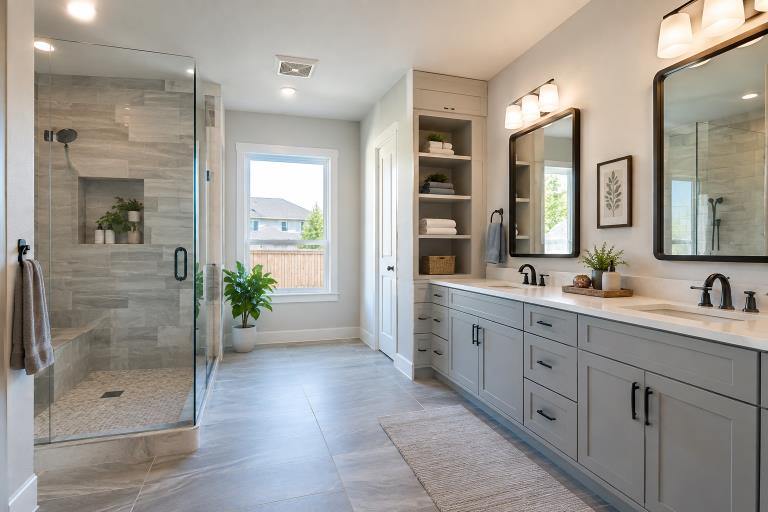
Storage should be planned rather than added as an afterthought. Vanity drawers, recessed medicine cabinets, linen storage, and niches can keep frequently used items within reach without crowding the counter. Electrical outlets, switches, and lighting should be located and installed in accordance with applicable code requirements.
Check Permits and Flood-Related Requirements
Projects that change plumbing, electrical systems, ventilation, or structural elements may require permits and inspections. Before demolition begins, determine who will submit applications, schedule inspections, and retain the final records. The City of Webster’s Building Division information lists adopted codes, permit applications, and inspection resources that homeowners can review before construction.
For a property with previous flood or leak damage, document conditions before rebuilding and avoid covering wet materials without proper evaluation. Keep permits, inspection records, product information, warranties, and photographs together for future maintenance or insurance needs.
Build a Clear Budget Before Selecting Finishes
Set the budget by project category rather than choosing products one at a time. A useful planning list includes:
- Design, inspection, and demolition.
- Plumbing, electrical, and ventilation work.
- Waterproofing, wall repair, and surface preparation.
- Tile, cabinets, countertops, fixtures, lighting, and hardware.
- Permits, inspections, cleanup, and a contingency reserve.
A contingency is especially important when renovating an older bathroom. Demolition can reveal damaged subfloors, corroded valves, outdated wiring, or earlier repairs that need correction before new finishes are installed.
Common Questions From Webster Homeowners
How long does a bathroom remodel take?
A straightforward fixture and finish update can move faster than a full renovation. Layout changes, custom orders, permits, inspections, and concealed damage can extend the schedule.
Should the layout stay the same?
Keeping major plumbing in place can reduce cost and disruption. Moving fixtures may be worthwhile when the existing room wastes space, limits storage, or creates access issues.
What should happen after a major leak or flood?
Stop the water source when it is safe to do so, document visible damage, and seek qualified assessment before enclosing damp materials. Rebuilding should begin only after the affected area has been properly evaluated and repaired.
Make the Bathroom Work Harder
A successful Webster bathroom remodel does more than provide a fresh look. It manages moisture, supports efficient water use, improves safety, creates useful storage, and fits the household’s long-term needs. With a measured condition check, durable materials, effective ventilation, verified permit requirements, and a realistic contingency, homeowners can build a bathroom that remains comfortable through humid weather, heavy rain, and busy daily life.