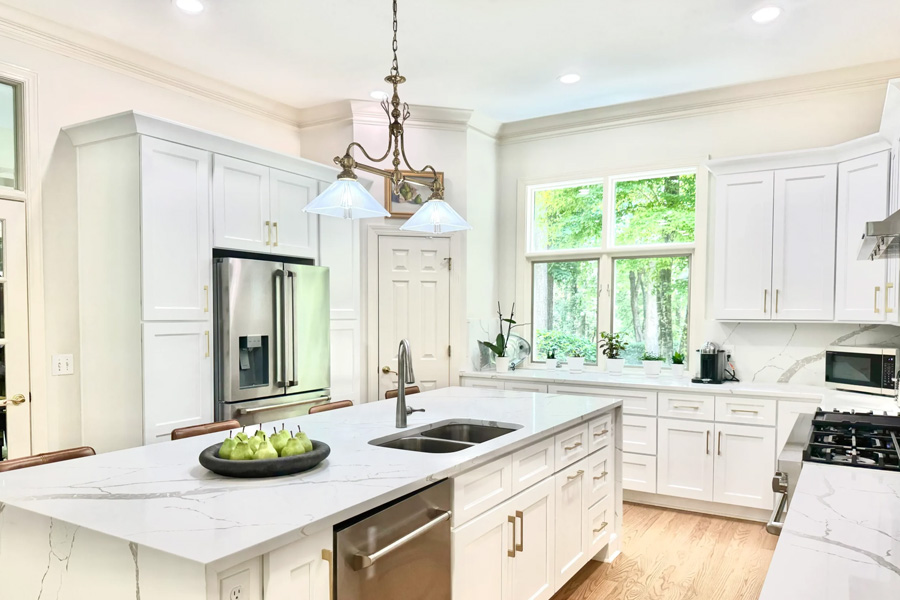
A custom home remodel can give Chapel Hill homeowners the opportunity to improve how their homes function without giving up a property, neighborhood, or location they already value. Rather than adapting to the limitations of an existing floor plan, a custom renovation can reshape a home around the way its owners actually live.
The tradeoff is that custom remodeling requires more planning, coordination, and decision-making than a basic renovation. Structural conditions, project scope, design choices, and unforeseen issues can all influence the final result.
For homeowners considering a custom home remodel in Chapel Hill, NC, understanding both the advantages and potential challenges can make it easier to determine whether remodeling is the right long-term investment.
What Is Considered a Custom Home Remodel?
A custom home remodel goes beyond simply replacing finishes or updating fixtures. The project is designed around the homeowner’s property, priorities, and lifestyle.
Depending on the home, remodeling could include:
- Reconfiguring an outdated floor plan
- Remodeling kitchens and primary bathrooms
- Creating larger gathering and entertaining spaces
- Adding home offices or flexible-use rooms
- Developing a more functional primary suite
- Updating flooring, cabinetry, lighting, and finishes
- Improving connections between indoor and outdoor spaces
- Renovating several areas as part of a whole-home remodel
- Modernizing older electrical, plumbing, or mechanical systems
The defining characteristic is that the project is tailored to the existing home and the people living in it rather than relying on a standardized remodeling package.
Pro: You Can Keep the Location You Already Love
One of the strongest reasons to remodel is that homeowners don’t necessarily need to move in order to get a home that better fits their needs.
Chapel Hill offers established neighborhoods, mature landscaping, convenient access to community amenities, and homes with architectural character that may be difficult to reproduce elsewhere.
If the primary frustration is the house rather than the property itself, remodeling can allow homeowners to preserve the aspects of their location they value while addressing the home’s weaknesses.
This can be especially important for families who are already established within a neighborhood, school community, or daily routine.
Pro: Remodeling Can Solve Problems Specific to Your Lifestyle
Existing homes were designed around the expectations of previous owners or lifestyles from another era.
A custom remodel allows you to reconsider those assumptions.
A kitchen might be opened to create better interaction between cooking and gathering areas. An underused formal room could become an office or flexible family space. Storage can be integrated where it is actually needed.
Instead of simply making a home newer, thoughtful remodeling makes it more useful.
This distinction matters because some of the most successful projects aren’t necessarily the largest. They are the ones that eliminate small frustrations that homeowners experience every day.
Pro: You Can Preserve the Character of an Existing Home
Older Chapel Hill homes may contain architectural characteristics that homeowners want to retain even if the interior no longer functions well.
Custom remodeling provides an opportunity to preserve those elements while thoughtfully updating the house.
Original proportions, millwork, masonry, exterior details, or other architectural features may become part of the new design rather than being removed simply because the home is being modernized.
A careful design approach considers where preservation adds character and where modification will meaningfully improve everyday living.
Pro: You Can Control Where You Invest
Custom remodeling allows homeowners to prioritize the parts of the house that matter most.
Some homeowners may place greater value on a high-functioning kitchen, while others want better entertaining areas, a more private primary suite, or dedicated space for working from home.
Instead of purchasing another house that includes both desirable and undesirable features, remodeling allows the available investment to be concentrated around specific priorities.
That doesn’t necessarily mean every design decision needs to be extravagant. In many cases, thoughtful allocation of the remodeling budget is more important than simply selecting expensive materials.
Pro: A Well-Planned Remodel May Support Property Value
Remodeling can potentially strengthen a home’s appeal and market position, particularly when the improvements address functional shortcomings.
Updated kitchens and bathrooms, improved floor plans, better storage, enhanced primary suites, and additional usable living space may all make a property more attractive to future buyers.
However, homeowners should be cautious about viewing remodeling exclusively as a financial calculation.
Not every dollar spent on a custom renovation will automatically be recovered during a future sale. The strongest projects balance resale considerations with the practical value homeowners will receive while living in the house.
Con: Custom Remodeling Requires More Decisions
Customization is valuable, but it also creates responsibility.
Homeowners may need to make decisions regarding:
- Floor plans
- Cabinetry
- Flooring
- Lighting
- Plumbing fixtures
- Appliances
- Hardware
- Paint
- Trim
- Tile
- Countertops
- Storage
- Exterior materials
These decisions are interconnected. Changing one element can affect several others.
A strong design-build process can reduce decision fatigue by establishing priorities, sequencing selections appropriately, and helping homeowners understand how individual choices contribute to the larger design.
Con: Existing Homes Can Contain Surprises
New construction begins with a known structure. Remodeling involves working with a structure that already exists.
Once walls, ceilings, or floors are opened, builders may encounter conditions that weren’t fully visible during the initial planning process.
Potential discoveries can include outdated electrical systems, plumbing issues, moisture damage, structural concerns, previous renovations, or construction techniques that no longer meet current expectations.
Not every project will encounter significant surprises, but homeowners should recognize that remodeling inherently contains more uncertainty than building on an entirely open site.
Con: Living Through Construction Can Be Disruptive
A substantial remodel can temporarily change everyday routines.
Certain areas of the home may become unavailable. Noise, dust, tradespeople, material deliveries, and temporary access restrictions can become part of daily life.
For major renovations, homeowners may need to consider whether remaining in the house throughout construction is practical.
This is particularly important with kitchen renovations, primary-suite projects, and whole-home remodeling where essential portions of the house could be affected for extended periods.
Con: Scope Can Grow Quickly
One remodeling decision frequently leads to another.
A homeowner may initially want to remodel a kitchen, only to realize that opening a wall affects flooring in the adjoining room. New cabinetry may highlight outdated lighting. Updated finishes may make nearby spaces feel disconnected.
This doesn’t necessarily mean the original project was poorly planned. It simply demonstrates how interconnected homes are.
Before construction begins, homeowners should think carefully about where the project logically starts and stops.
What Should You Consider Before Remodeling a Chapel Hill Home?
The most productive question isn’t simply, “What do we want to remodel?”
Instead, consider what you want the home to accomplish over the next several years.
How Long Do You Expect to Live in the Home?
Your expected timeline can influence design decisions.
A homeowner planning to remain in the property for decades may prioritize long-term comfort, accessibility, durable materials, and adaptable spaces.
Someone who may sell sooner might place greater emphasis on improvements with broader buyer appeal.
Neither approach is automatically better. The important thing is designing according to a realistic long-term plan.
Are You Solving the Right Problem?
Sometimes homeowners focus on a particular room when the underlying problem is actually the home’s overall layout.
For example, a kitchen may feel too small because adjacent rooms are poorly configured rather than because the home lacks sufficient square footage.
Before committing to construction, evaluate the house as a complete system.
A thoughtful remodeling partner should help determine whether the proposed solution addresses the actual problem rather than immediately proceeding with the first idea presented.
What Is Your True Project Scope?
Develop a clear distinction between necessities, priorities, and optional upgrades.
Necessities might include structural repairs or outdated systems. Priorities could include improving the kitchen or primary bathroom. Optional features may include premium finishes or additional built-ins.
Establishing this hierarchy early can help protect the overall design when decisions need to be made later.
Does the Remodeling Team Understand Both Design and Construction?
The relationship between design and construction becomes particularly important in custom remodeling.
A visually appealing plan still needs to be structurally achievable, appropriate for the home’s architecture, and practical to build.
Homeowners should look for a remodeling partner that asks detailed questions before construction begins, explains potential constraints, develops a comprehensive scope, and communicates how design decisions will affect construction.
Custom Remodeling Should Begin With a Long-Term Plan
A custom home remodel in Chapel Hill can be an effective way to create a home that better reflects how you want to live while preserving the property and community you already appreciate.
The benefits can be substantial: better functionality, greater personalization, preserved architectural character, and potentially stronger long-term property appeal.
The challenges are equally important to understand. Remodeling requires careful decisions, realistic expectations, thoughtful budgeting, and a willingness to work with the conditions of an existing home.
Before beginning construction, homeowners should spend significant time defining their priorities and evaluating the house as a whole. The best remodeling projects don’t simply replace what is old. They create a clear connection between the existing home, the new design, and the homeowner’s long-term plans.