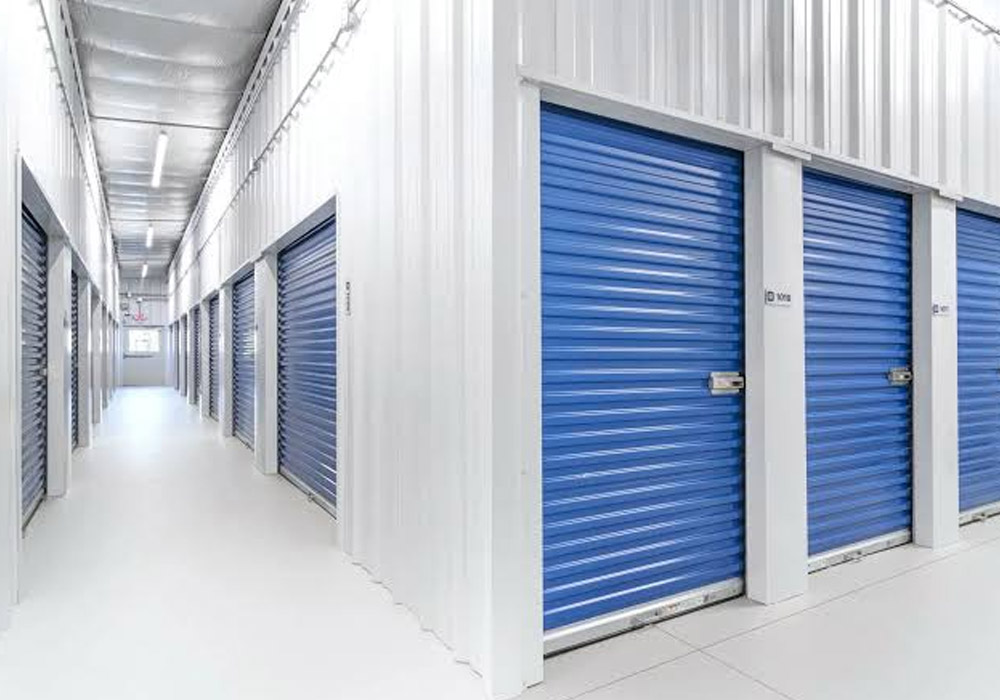
If you have ever stared at a garage packed floor to ceiling, or a basement you can no longer walk through, you have probably considered renting a self-storage unit. It seems like the quick fix. Drive your stuff over, drop it off, pay a monthly fee, and your house is yours again.
But there is a question most people never stop to ask: what does that monthly fee actually cost you over five or ten years?
For many buyers, the answer is surprising. A self-storage unit can quietly become one of the most expensive ways to store your belongings. A storage building on your own property, by contrast, is a one-time purchase that keeps working for you year after year with no monthly invoice attached, observes Real Property Management Partners, a trusted provider of property management in Grand Rapids MI.
This is why more people are now comparing the two options side by side. When you look at affordable sheds and self-storage units through the same lens, the long-term math often points in a direction most buyers do not expect.
Let us break down what each option really costs, where the value sits, and which one makes more sense for your situation.
The Hidden Math of Self-Storage
Self-storage is sold on convenience. You sign a lease, you get a unit, and you move your things in. The appeal is obvious for someone in a pinch, between moves, or dealing with a short-term life event.
The problem is that short-term thinking rarely stays short-term.
The average self-storage unit in the Midwest runs somewhere between $100 and $200 per month, depending on size and climate control. That sounds manageable in isolation. But stretch it across five years and the picture changes fast.
At $150 per month, you are paying $1,800 per year. Over five years, that is $9,000. Over ten years, it is $18,000. And that assumes the rate never goes up, which is not how the self-storage industry works. Most facilities raise rates annually, sometimes by 5 to 10 percent. Some markets have seen increases far steeper than that in recent years.
Here is the part that catches people off guard. After paying all that money, you do not own anything. The unit is not yours. The building is not yours. If you stop paying, your belongings can be auctioned off. You are essentially renting space indefinitely, with nothing to show for it at the end.
For someone who needs storage for two months during a move, that is a fair trade. For someone who needs storage for years, it is a slow drain on your budget.
What a Storage Building Actually Costs
A storage building on your property is a different financial animal. You pay once, the building is delivered and set up, and from that point forward it belongs to you.
Prices vary based on size, siding, roofing, and customization. A solid mid-size building might run a few thousand dollars. A larger barn with premium features will cost more. But here is the key difference: that is a one-time cost. There is no monthly lease. There is no annual rate increase. There is no facility manager deciding to raise your rent next January.
When you spread that one-time purchase across the same five or ten year window, the per-month cost of owning a storage building drops dramatically. A building that costs $6,000 and lasts you 15 years works out to about $33 per month. A building that costs $9,000 and lasts 20 years works out to about $37 per month.
Compare that to the $150 per month self-storage rate, and the gap becomes hard to ignore. Over the same 20 years, the self-storage unit would cost you $36,000 or more, assuming no rate increases. The storage building is already paid for and still sitting on your property, still doing its job.
The Convenience Factor Works Both Ways
Self-storage companies market convenience as their main advantage. You do not have to prepare a site. You do not have to maintain a building. You just drop off your things.
But convenience cuts both ways. Every time you need something from a self-storage unit, you have to drive there. You have to work around their access hours. You have to load and unload in a parking lot, often in weather that is not cooperative. If you need a tool on a Saturday morning, that is a 30-minute round trip, assuming the facility is open.
A storage building on your property puts everything within walking distance. Your lawn equipment, your seasonal decorations, your kids’ sports gear, all of it is right there when you need it. No drive. No gate code. No waiting for the office to open.
For people who use their storage regularly, that convenience is not a small thing. It is the difference between actually using what you own and forgetting what you even have in storage.
What About Maintenance and Upkeep?
A fair comparison has to account for maintenance. Self-storage units require nothing from you on that front. The facility handles the building.
A storage building on your property is yours, which means you are responsible for keeping it in good shape. That said, a well-built storage building does not ask for much. A quality roof, properly treated wood, and solid construction will hold up for years with minimal attention.
The buildings that tend to need frequent maintenance are the ones built with lower-grade materials or poor craftsmanship. That is why it pays to ask questions before you buy. Look for things like pressure-treated exposed wood, hurricane straps in the roof, engineer-certified construction, and a real warranty on craftsmanship and materials. Those features exist to keep the building standing and looking good with very little effort from you.
Even accounting for occasional upkeep, the cost of maintaining a storage building is a fraction of what you would pay in monthly self-storage fees. A new coat of finish every several years, if your siding even calls for it, does not come close to $1,800 annually.
Resale and Portability: Two Things Self-Storage Cannot Offer
Here is a point most cost comparisons miss entirely. A storage building is an asset. It has resale value. It can move with you. It can even stay with the property and add to its appeal when you sell.
None of that is true of a self-storage unit. When you stop paying, you walk away with nothing. There is no equity. There is no asset to list. There is no way to recover any of the money you put in.
For buyers who move every few years, portability matters. A well-built storage building can be relocated to a new property. That is not something every building allows, but many do. Try moving your self-storage unit to a new town.
For buyers who stay put, the building becomes part of the property. It adds function, it adds curb appeal when chosen well, and it gives the next buyer one less thing to figure out when they move in.
When Self-Storage Actually Makes Sense
This is not a one-sided argument. Self-storage has real use cases where it is the better choice.
If you are between homes and need a place to park your belongings for 60 to 90 days, self-storage is the right tool. If you are renovating and need temporary space for furniture, self-storage makes sense. If you are storing items you genuinely never access and have no room on your property, a small unit may be the only realistic option.
The trouble starts when temporary becomes permanent. Many people intend to use a unit for a few months and end up paying for five years because life got busy and they never went back to clean it out. That is the scenario where self-storage becomes a financial trap.
How to Decide Which Option Fits Your Situation
The decision really comes down to three questions.
First, how long do you need the storage? If the answer is months, self-storage is reasonable. If the answer is years, a storage building almost always wins on cost.
Second, how often will you access what you are storing? If you need things regularly, having them on your property saves you time and fuel every week. If you truly never touch the items, distance is less of a factor.
Third, do you have space on your property for a building? If yes, the math leans strongly toward owning. If no, self-storage may be your only realistic option, though it is worth checking whether a smaller building or a different placement on your land could work.
The Bottom Line
Self-storage is a service. You pay for it the same way you pay for a gym membership or a streaming subscription. It is useful while you need it but builds no equity and owns you nothing at the end.
A storage building is a purchase. You pay once, you own it, and it keeps delivering value for years. When you run the numbers across a realistic time horizon, the building almost always comes out ahead for anyone who needs storage for more than a season.
The smart move is to do the math before you sign a lease. Figure out your real timeline, estimate your real monthly cost, and compare it honestly to the one-time cost of a building on your property. Most people who run that comparison end up surprised at how quickly self-storage adds up, and how much a storage building can save them over the long run.
If your storage need is anything more than temporary, owning tends to beat renting. The numbers do not lie, and neither does the receipt at the end of the year.