When cracks, stains, soft areas, or musty odors appear around stucco walls, homeowners need more than a quick patch. A qualified stucco repair contractor should evaluate whether the visible defect is isolated or whether moisture has moved behind the exterior finish. Five Star Contractors helps homeowners in Philadelphia, Southeastern Pennsylvania, and Northern Delaware investigate the wall system and develop a practical repair or remediation plan.
What Does a Stucco Repair Contractor Request Usually Mean?
A homeowner may search for stucco repair after noticing a narrow crack, a discolored wall, deteriorating trim, or moisture around a window. Sometimes the repair can be limited to a localized condition. In other cases, the visible issue is only the outward sign of water entering through transitions, sealant joints, roof intersections, windows, doors, or other openings in the exterior assembly. Five Star Contractors approaches stucco concerns as building-envelope questions, not simply finish problems. The goal is to determine whether the existing wall is managing water properly and whether repairs can be focused on a small area or should address broader damage behind the stucco.
Warning Signs That Deserve a Professional Inspection
Individual symptoms do not automatically prove extensive damage. Still, an inspection is especially important when homeowners notice persistent dark stains, cracks near windows or doors, bulging surfaces, soft or spongy areas, mildew, water-damaged interior finishes, or musty odors near an exterior wall. Repeated patching in the same location is another sign that the source of water entry may not have been resolved. Stucco is an exterior cladding, not an absolute water barrier. Building-science guidance explains that exterior claddings can allow some rainwater to pass beyond the outer surface, which is why drainage planes and flashing systems are designed to direct water down and out of the wall assembly. When those details are missing, damaged, or poorly integrated, moisture can remain where it should not.
How Five Star Contractors Evaluates Stucco Problems
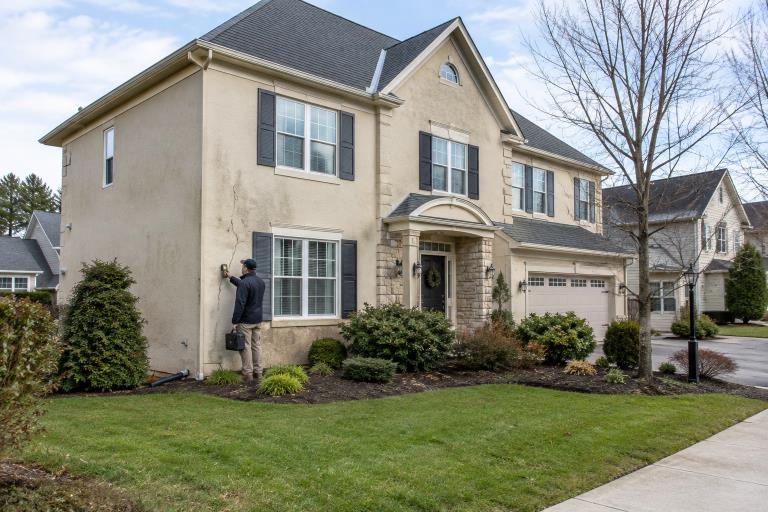
An inspection gives the homeowner a starting point for deciding between repair and remediation. Five Star Contractors reviews the visible condition of the stucco and adjoining exterior surfaces, including windows, doors, trim, rooflines, penetrations, sealants, and transitions between materials.
- Document visible symptoms. Cracks, staining, bulges, failed sealants, and uneven surfaces can help identify areas that need closer review.
- Review likely water-entry paths. Window openings, roof-wall intersections, trim details, and flashing are considered part of the larger assembly.
- Develop an appropriate scope. The recommendation may involve a targeted repair or a more complete remediation plan, depending on the conditions found.
- Assess concealed materials when removal is necessary. Once failed stucco is removed, damaged sheathing, insulation, or framing can be identified and addressed as needed.
When Is Stucco Repair Enough?
Repair may be appropriate when the damage is small, isolated, and connected to a known condition that can be corrected without disturbing a larger portion of the wall. For example, a limited finish defect may not require a complete exterior rebuild if the surrounding materials, drainage details, and wall assembly are performing properly. Remediation may be the better option when moisture has spread behind the stucco, when soft or deteriorated materials are found, when problems recur after previous repairs, or when the existing assembly does not provide reliable moisture management. The responsible choice depends on the home’s construction, exposure, age, and inspection findings.
What Is Included in a Stucco Remediation Project?
Inspection and Project Consultation
Five Star Contractors begins by discussing the homeowner’s concerns, reviewing visible symptoms, and establishing a project scope based on the property’s needs.
Removal of Failed Stucco and Damaged Materials
When full remediation is warranted, the failed stucco system is removed to allow evaluation of the underlying wall. Compromised materials can then be repaired or replaced before the exterior is rebuilt.
Moisture-Management Details
A remediation plan may include weather-resistant barriers, flashing, drainage features, and ventilation details that help manage water behind the cladding. These components must work together, especially around windows, doors, roof intersections, and other transitions.
Replacement Cladding and Finishing
Once the wall assembly is repaired and protected, homeowners can select replacement exterior materials based on durability, appearance, maintenance preferences, and the home’s design. Five Star Contractors offers options that include fiber cement siding and other exterior cladding solutions.
Why a Whole-System Exterior Approach Matters
Stucco does not perform independently from the rest of the home. Water can travel through a failed detail near a window, a roof connection, a trim board, or a penetration, then affect materials in another area. Looking at the full exterior system helps prevent a narrow repair from overlooking a nearby source of moisture. That same approach can help homeowners coordinate related exterior projects. Depending on the condition of the property, stucco remediation may be paired with window replacement, exterior trim work, siding installation, door upgrades, or roofing repairs. A coordinated plan can make the scope clearer before work begins.
How Long Does Stucco Remediation Take?
Five Star Contractors states that many stucco remediation projects take about two to six weeks from start to finish. The actual timeline depends on the size of the home, weather, access, permitting, material availability, and the amount of concealed damage uncovered during removal. Typical stages include consultation, preparation, removal, repairs, installation of moisture-control components, replacement cladding, finishing, and required inspections. Homeowners should request a written schedule and ask about any conditions that could affect the projected completion date.
Where Five Star Contractors Serves Homeowners
Five Star Contractors serves Philadelphia, Southeastern Pennsylvania, and Northern Delaware. Its stucco remediation work includes communities such as Malvern, King of Prussia, Glen Mills, Wayne, Chester Springs, Kennett Square, Wilmington, and Newark. Homeowners outside these areas can contact the company to confirm current availability.
Questions to Ask Before Hiring a Stucco Contractor
- Will the contractor inspect the wall assembly instead of only patching visible cracks?
- How will the contractor identify likely moisture-entry points?
- What happens if concealed damage is discovered after stucco removal?
- Which flashing, drainage, barrier, and ventilation details are included in the scope?
- Which replacement cladding options are available?
- Who will handle permits and required inspections?
- What artistry and product warranties apply?
- Will the contractor provide a detailed written scope of work?
Start With an Informed Stucco Evaluation
Before requesting work, take dated photos of cracks, stains, soft areas, and interior symptoms. Note when the issue appeared, whether it follows heavy rain, and whether prior repairs, window replacements, or exterior painting occurred nearby. This information can help guide the initial consultation. A timely inspection can help clarify whether the home needs a focused stucco repair or complete remediation. Five Star Contractors gives Philadelphia-area homeowners a documented path from visible exterior concerns to an exterior restoration plan designed around the conditions of the home.
Conclusion
Stucco problems should be evaluated based on more than what is visible on the surface. Cracks, stains, soft areas, recurring leaks, and musty odors can indicate that moisture is reaching the materials behind the exterior finish. A professional evaluation can help determine whether a localized repair is appropriate or whether broader remediation is needed. Five Star Contractors approaches these projects by considering the stucco, flashing, drainage details, weather-resistant barriers, windows, doors, and other components of the exterior assembly as a whole. Homeowners should request a clear written scope, understand how concealed damage will be handled, and ask about project timing, permits, and warranties before work begins. Addressing the underlying condition rather than repeatedly patching the same symptom can help protect the home’s exterior and support more durable repairs.