Basic Information
| Field | Detail |
|---|---|
| Full Name | Tatsuya Suda |
| Origin | Japan |
| Nationality | Japanese |
| Education | Ph.D., Kyoto University (1982), Faculty of Engineering |
| Academic Posts | University of California (notably UC Irvine), assistant → associate → full professor; program leadership roles including a term as a U.S. federal research program director |
| Fields | Computer science; computer networks; telecommunications; molecular/biologically inspired communication |
| Honors | IEEE Fellow (for contributions to high-speed networks) |
| Publications | Hundreds of academic papers; multiple patents and patent applications |
| Industry | President of a consulting/technology group (training, research support, translation, advisory services) |
| Notable Relationship | Rita Coolidge (widely reported spouse; timelines vary) |
| Reported Family | Parents: Tatsuo Suda and Toshiko Suda (reported in biographical listings); Children: Kentaro Suda and Shotaro Suda (reported) |
| Legal Matters | 2014 felony conflict-of-interest plea; probation and court-ordered restitution/costs |
Early Life and Education
Born and raised in Japan, Tatsuya Suda emerged from Kyoto University’s Faculty of Engineering with a Ph.D. in 1982, already pointed toward the high-velocity frontier of computer networking. His academic compass soon tilted westward. Early-career research in the United States included work at Columbia University, a formative stop that set the tone for a career balancing theory, systems-building, and cross-border collaboration. The engineering rigor of Kyoto and the research dynamism of American labs gave Suda a dual lens: precise, methodical foundations paired with a taste for ambitious, high-impact problems.
Academic Career and Research Impact
Suda’s academic trajectory followed the classic arc from junior faculty to tenured professor within the University of California system, settling most prominently at UC Irvine. Over decades, he built a laboratory culture that chased speed and efficiency in data movement—first in high-speed networks and later in novel paradigms such as molecular or biologically inspired communications. In bibliometric terms, his footprint is large: hundreds of publications across journals, conferences, and edited volumes; multiple patents; and citation counts that place him in the well-known tier of networking researchers.
Recognition arrived in the form of an IEEE Fellowship for contributions to high-speed networks, a marker reserved for those whose work reshapes the discipline’s contours. He also served in competitive national roles, including a term directing a U.S. research program, an experience that deepened his perspective on funding ecosystems, technology transfer, and the public value of academic inquiry.
A career like Suda’s moves in pulses—grant cycles, project milestones, program reviews—and across these pulses his work helped normalize once-aspirational speeds, protocols, and architectures. As networks accelerated, his group traced the practical seams between theory and deployment, focusing on architectures that could carry tomorrow’s load without breaking today’s systems.
Selected Career Milestones
| Year | Milestone |
|---|---|
| 1982 | Ph.D. awarded at Kyoto University (Engineering) |
| 1980s | Early-career research in the U.S., including work at Columbia University |
| 1990s–2000s | Progression to full professorship at UC Irvine; extensive publications and grants |
| 2000s | Recognized as an IEEE Fellow for contributions to high-speed networks |
| 2010s | Industry/consulting leadership and continued writing, teaching, and advisory activity |
Industry, Consulting, and Entrepreneurship
Parallel to his academic appointments, Suda charted a lane in industry-facing work. He has led a consulting and technology services company offering proposal development, research training, translation, and strategic guidance—bridgework between labs, agencies, and markets. The company literature highlights patents, awards, and significant past research funding, reflecting a career spent both generating ideas and shepherding them into applied contexts.
The throughline is clear: Suda cultivated a portfolio approach to impact. Some outcomes came through journal pages and lecture halls; others were realized via short courses, partnerships, or intellectual property. It is the kind of career that treats innovation like a relay rather than a sprint, handing off insights from theory to practice and back again.
Family and Personal Relationships
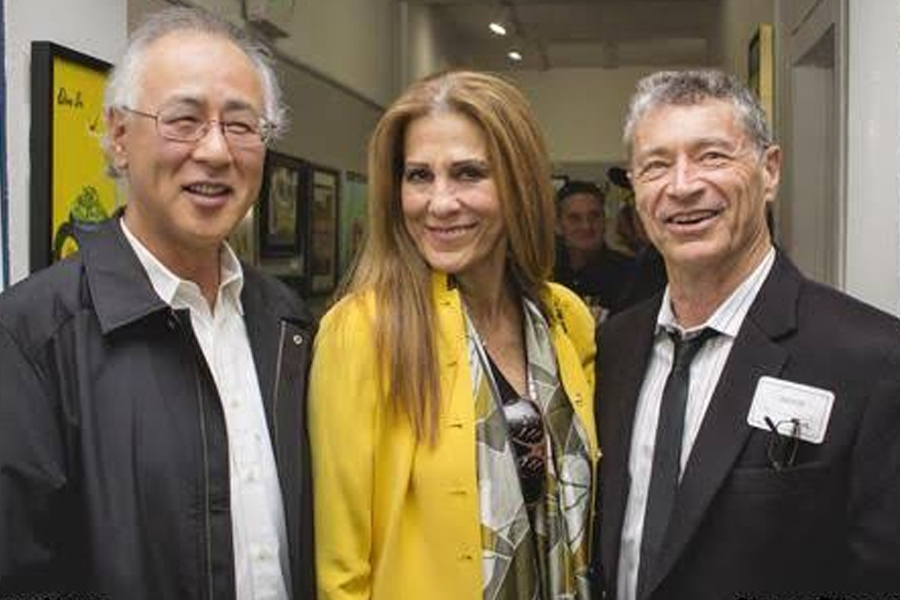
The public knows Suda not only for his scholarship but also for a high-profile relationship: he is widely reported to have been married to singer Rita Coolidge. Many public accounts place their wedding in 2004 and describe a separation or divorce around 2012, while other timelines differ. What is consistent across the available record is their long association in the 2000s and early 2010s, a link that brought Suda into a broader cultural spotlight.
Beyond that high-profile connection, public directory listings name his parents as Tatsuo and Toshiko Suda and reference two sons, Kentaro and Shotaro. These family details circulate in biographical databases and profiles rather than major press features, and they are often presented without extensive corroboration. Their presence reflects the way modern biographical information migrates through the internet: a mixture of formal records, personal pages, and aggregated directories. In sum, the most clearly documented personal tie in the public sphere is to Coolidge; other family references appear more quietly in compiled listings.
Financial and Legal Matters
In the early 2010s, Suda’s career entered a legal chapter that drew sharp attention. Investigations into financial conflicts related to outside research support culminated in a 2014 felony plea. The outcome included probation and court-ordered restitution and costs measured in the hundreds of thousands of dollars. It was a consequential case—both for Suda personally and as an institutional warning shot in a university system navigating complex global funding relationships.
That episode coincided with his exit from active faculty duties at UC Irvine, marking the end of one long-running phase of his professional life. In the years since, references to Suda in mainstream news have been more intermittent, though his research legacy, publications, and patents continue to surface in academic and technical contexts.
Legal Timeline (Publicly Reported)
| Date | Event | Outcome |
|---|---|---|
| 2012–2013 | Investigations and allegations related to conflicts of interest | Case develops; administrative and legal processes unfold |
| 2014 | Felony conflict-of-interest plea | Probation; court-ordered restitution and costs |
Recent Footprint and Publications
The mid-2010s marked a pivot from the news cycle to a quieter public presence. Suda’s name largely persists through scholarly databases, technical bibliographies, and a personal/company website outlining services and achievements. The research trail—spanning high-speed networking to molecular communication—continues to be cited, an echo of decades of publication. On social platforms, he does not appear as an outspoken public figure; instead, his digital footprint is primarily scholarly and professional.
For those tracing the evolution of networks from copper to light and beyond, Suda’s corpus reads like a map. It covers the pre-broadband years and carries forward into contemporary concerns about nanoscale, biologically inspired messaging. The range helps explain both his recognition and his enduring relevance in citations and technical retrospectives.
FAQ
Who is Tatsuya Suda?
He is a Japanese-born computer scientist known for research in computer networks and telecommunications, and a longtime professor within the University of California system.
What is he best known for in research?
For contributions to high-speed networks and later work exploring molecular or biologically inspired communication systems.
Did Tatsuya Suda marry Rita Coolidge?
Yes, multiple public accounts link them as spouses; many report a 2004 marriage and a later separation or divorce, though timelines vary.
Does he have children?
Public biographical listings report two sons, Kentaro and Shotaro, though these details are less prominently documented in major press.
What happened in 2014?
He pleaded guilty to a felony conflict-of-interest charge, received probation, and was ordered to pay restitution and costs.
Where did he earn his Ph.D.?
At Kyoto University’s Faculty of Engineering, completed in 1982.
What roles did he hold in the United States?
He served as a professor at UC Irvine and held a leadership role as a U.S. research program director.
Does he have industry or consulting experience?
Yes, he leads a consulting and technology services company offering research support, training, and advisory services.
What are his publication and patent credentials?
He has published hundreds of papers and holds multiple patents and patent applications.
Is his personal net worth publicly verified?
No widely recognized, independently verified net-worth figure is publicly available.