A house rarely becomes messy at the same speed in every room.
The bedroom may stay orderly for days while the entryway looks untidy by afternoon. A kitchen can feel clean in the morning and worn by dinner. The family room may collect shoes, blankets, crumbs, pet hair, and chargers faster than any other space.
That uneven pattern can actually make cleaning easier to manage.
Instead of treating the entire house as one large job, look for the few places where dirt, objects, and daily activity repeatedly gather. These are cleaning bottlenecks: small areas that affect how the whole home looks and feels.
Finding those pressure points can help homeowners focus effort where it makes the biggest difference.
A Cleaning Bottleneck Is Usually Smaller Than a Room
A bottleneck does not have to be an entire kitchen or hallway.
It may be the five feet inside the front door where shoes, bags, packages, and outdoor dirt accumulate. In the kitchen, it might be the stretch between the refrigerator, preparation counter, and sink. In a bathroom, the busiest area may be only the vanity and the floor directly in front of it.
Looking at these smaller zones is useful because different parts of the same room often need attention at different speeds.
A distant kitchen counter may remain clean while the area around the sink already needs another wipe. The middle of a living-room floor may look fine even though debris has gathered beside the sofa.
The room is not necessarily dirty as a whole. One high-use section is simply working harder than the rest.
Watch What Becomes Messy First
One way to find a bottleneck is to notice what changes first after cleaning.
Do not wait until the whole room looks untidy.
Look for the earliest signs.
Perhaps crumbs return beneath one side of the dining table. Water marks appear quickly around the bathroom tap. Pet hair collects beside a particular chair. Shoes gradually spread outward from the entrance.
These patterns reveal how the household actually uses the space.
A surface that becomes dirty every day should not automatically share the same cleaning schedule as one that stays relatively untouched for a week.
Cleaning frequency works better when it follows use.
The Main Entrance Is a Common Pressure Point
The entryway has several jobs at once.
It connects the outdoors to the interior, handles heavy foot traffic, and often becomes temporary storage for shoes, coats, bags, keys, umbrellas, and deliveries.
Start by looking at the floor.
Where does outdoor grit really stop? It may travel beyond the doormat and continue into the hallway or toward the kitchen.
Then look at nearby surfaces.
Door handles, switches, benches, shoe racks, and small tables may all be part of the same cleaning zone.
Treating them as one cluster can be more practical than waiting until each surface becomes noticeably dirty on its own.
The Kitchen Has Its Own Traffic Loop
Food preparation creates another common bottleneck.
Think about the route between the refrigerator, counter, stove, sink, and dining area.
That loop handles ingredients, packaging, crumbs, dishes, spills, fingerprints, and repeated foot traffic.
The mistake is assuming every part of the kitchen needs equal attention whenever this busy area looks messy.
Upper cabinets may still be clean. A rarely used counter may need nothing more than a quick dusting. The floor beneath the preparation area, however, could need care much sooner.
Mapping the busiest kitchen route makes it easier to separate routine maintenance from less frequent detail cleaning.
Draw Three Circles Instead of Writing a Huge Checklist
A simple sketch can make these patterns easier to see.
Draw the main floor roughly on a piece of paper. Exact measurements do not matter.
Circle the three areas that seem to rebuild visible mess fastest.
One circle may sit at the front door. Another may cover the kitchen work zone. The third might fall beside the family-room sofa.
A household using cleaning services edison nj can describe these recurring pressure points when discussing routine cleaning priorities rather than treating every room as though it receives identical traffic and buildup.
The value of the map is its simplicity.
Three focused areas are easier to manage than a vague feeling that the entire house constantly needs cleaning.
Some Bottlenecks Are Really Storage Problems
Not everything that makes a space look messy needs to be scrubbed, vacuumed, or wiped.
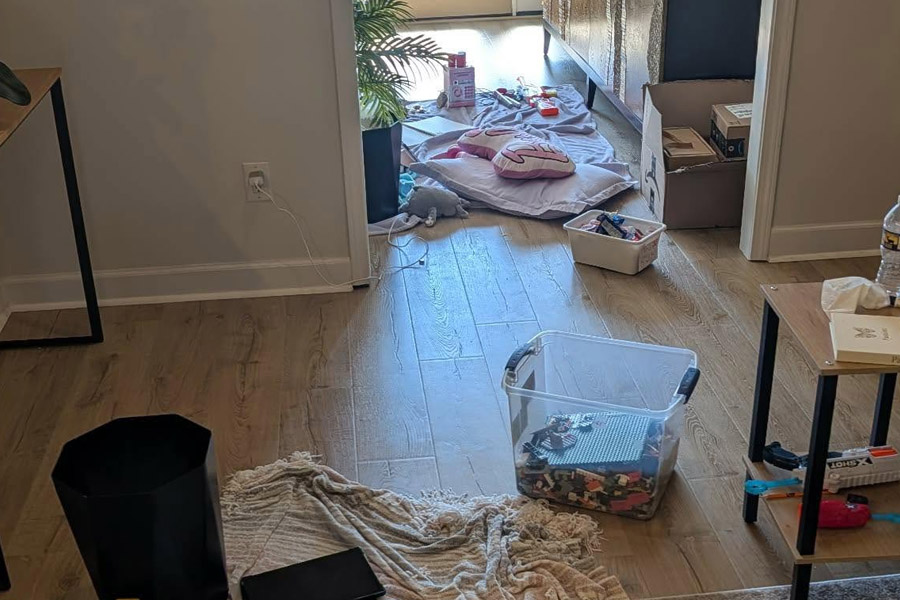
Shoes scattered through an entryway may need better storage. Mail covering a kitchen counter needs sorting. Toys in a family room may simply need a convenient place to go.
This distinction matters because cleaning and organizing solve different problems.
Ask whether the bottleneck is caused by residue or by objects.
If the problem is crumbs, dust, hair, fingerprints, or tracked-in dirt, cleaning is the answer.
If the problem is that everyday belongings have nowhere practical to stop, storage may need attention first.
Many busy areas contain both problems at once.
Follow the Debris Beyond the Bottleneck
Dirt rarely stays exactly where it begins.
Grit from the entrance can move along the hallway. Crumbs beneath the kitchen counter may spread underfoot. Pet hair from one favorite resting spot can gather along nearby furniture edges.
Look at the area around each bottleneck.
Where does the debris travel next?
This can help define a small secondary zone that needs quick maintenance along with the main trouble spot.
For example, cleaning only the doormat may accomplish little if tracked dirt consistently extends another six feet into the house.
Following the movement of debris makes cleaning more precise.
Furniture Edges Often Reveal the Real Pattern
Open floor space is usually easy to reach.
The edges around furniture tell a more interesting story.
Check beside sofas, beneath the front of cabinets, around dining-chair legs, and along frequently used walkways.
Hair, dust, crumbs, and small debris often settle where movement pushes them away from open areas.
If one edge becomes dirty much faster than another, look at what happens nearby.
Perhaps it sits beside a snack chair, pet bed, doorway, or busy path.
Repeated buildup usually reflects repeated behavior.
Bottlenecks Change as the Household Changes
A cleaning map should not be permanent.
A new pet may create a different hair pattern. Working from home can turn a quiet room into a daily-use space. A child’s school routine may shift bags and shoes to another entrance.
Furniture changes can create new drop zones too.
If one area suddenly becomes difficult to keep clean, ask what changed before deciding the entire cleaning routine needs to become more demanding.
The home may simply be functioning differently.
Focus on the Places That Influence the Whole House
The purpose of finding cleaning bottlenecks is not to create another long checklist.
Choose the three areas that have the greatest effect on how the home looks and functions.
Maintain those more consistently while allowing slower-changing rooms to stay on their normal schedule.
This approach can make a home feel cleaner without treating every surface as equally urgent.
Often, a house does not look tired because every room is dirty.
It looks tired because a few hard-working areas have crossed the point where their mess starts affecting everything around them.
Find those areas first, and the cleaning plan becomes much easier to control.