Why Time Matters in Perfumery
Perfume is not simply a quick combination of fragrant materials and alcohol. A newly blended formula can smell sharper, less connected, or less clear than it will after a controlled resting period. Understanding how long perfume macerates helps explain why a finished fragrance can feel more balanced than its earliest blend.
Time does not create extra fragrance oil or change the stated concentration on a bottle. Instead, it allows the formula to settle into a more unified composition. The result may be a smoother transition from the first spray to the dry-down, when the deeper notes become more noticeable.
What Perfume Maceration Means
In professional perfumery, maceration is a controlled resting stage that typically follows dilution of a fragrance concentrate in alcohol. The mixture is left to rest before later production steps such as filtration and filling. Its purpose is consistency, clarity, and a more integrated scent profile.
The length of maceration varies with the formula, concentration, materials, and production process. Bright citrus materials may behave differently from dense woods, resins, musks, or sweet accords, so there is no universal number of days that applies to every fragrance.
Maturation, Maceration, and Aging
These terms are often used interchangeably in fragrance discussions, but they describe different ideas:
- Maturation: the fragrance concentrate rests before dilution, allowing the materials to develop as a blend.
- Maceration: the diluted perfume rests before it is filtered, bottled, or released.
- Aging: gradual changes that occur after a perfume has been bottled and stored over time.
Professional maceration is not the same as leaving an opened bottle in a drawer for several weeks. As perfumers explain when distinguishing maceration from aging, retail fragrances are intended to be stable and wearable when they reach customers.
What Happens While a Fragrance Rests?
During the resting period, aromatic materials distribute through the alcohol base and the composition can become more cohesive. Some formulas lose an initially harsh or disjointed impression, while others become clearer after filtration removes cloudiness or sediment caused by certain materials. This is refinement, not magic. Resting cannot repair an unbalanced formula or guarantee stronger performance.
How Long Should You Evaluate a Perfume?
Rather than judging a fragrance from its first seconds alone, test its full wearing arc. Spray once on skin or a blotter, then notice it immediately, after about 15 minutes, after one hour, and near the end of wear. This approach reveals the opening, heart, and base more reliably than repeated quick sniffs from the cap.
Does a New Bottle Need to Rest at Home?
Usually, no. Advice to spray a new bottle repeatedly, store it in darkness, or wait months before using it is better described as encouraging aging rather than maceration. An opened bottle may change with time, but the outcome is unpredictable. Avoid heating, freezing, shaking, or repeatedly uncapping perfume to speed up development, as these practices can add stress without reliably improving the scent.
Can Resting Make Perfume Last Longer?
Longevity depends on the composition, concentration, evaporation rate of individual materials, weather, and the wearer’s skin. A smoother fragrance may seem stronger because it smells fuller and less sharp, even if its actual wear time has not increased. A perfume with a bold opening can also feel powerful at first yet fade sooner than a quieter, base-note-heavy scent.
Why Perfume Can Change Color
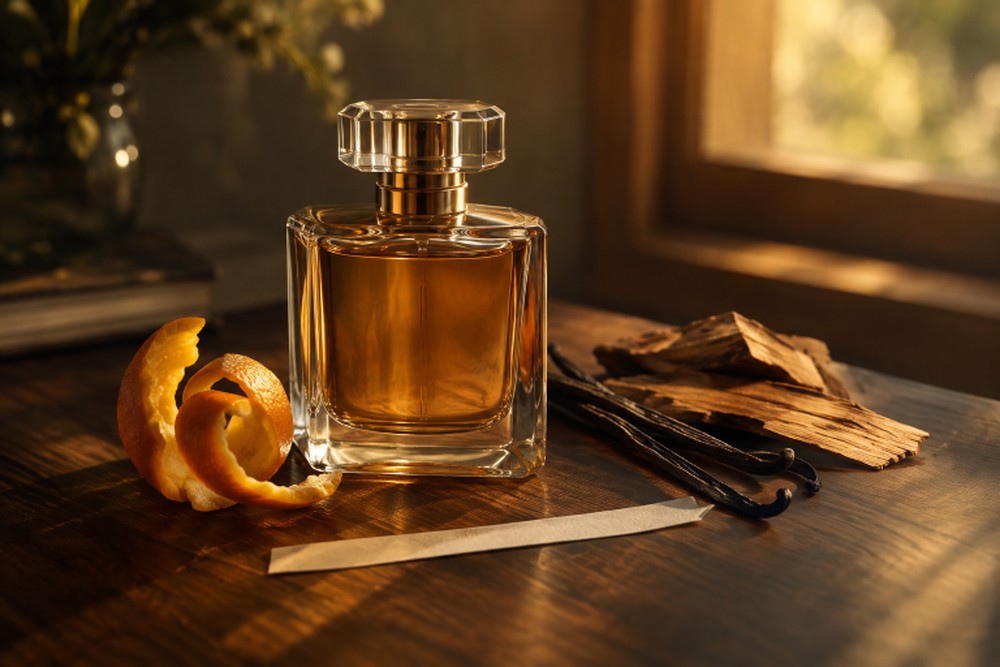
Color shifts can happen as fragrance materials react to light, oxygen, and time. Vanilla-rich, resinous, and naturally derived ingredients may darken more visibly than fresh, pale compositions. Color alone is not a dependable sign that a perfume has spoiled. More useful warning signs include a sour, vinegary, metallic, stale, or unusually harsh smell.
Skin, Air, and Scent Perception
Perfume can smell different on paper, skin, clothing, and in the air around the wearer. Skin warmth and natural oils affect evaporation, while the surrounding environment changes what reaches the nose. Research into the chemistry of perfume in the air near skin also shows that personal-care products can interact with the chemical environment immediately around the body. A blotter remains useful for comparison, but it cannot fully reproduce the wearing experience.
How to Store Perfume Properly
- Keep bottles away from direct sunlight.
- Choose a cool room with stable temperatures.
- Close the cap or stopper securely after use.
- Avoid steamy bathrooms, radiators, cars, and window ledges.
- Keep the original box when it provides added protection from light.
Good storage slows unwanted change, although no storage method can prevent all change forever.
A Simple Way to Test a Changing Fragrance
Spray the perfume on a clean blotter and a small area of skin. Note the liquid color, opening, and dry-down after 30 minutes and several hours. If possible, compare it with a sample or another bottle. Keep in mind that memory, temperature, skin condition, allergies, and olfactory fatigue can all affect perception.
Common Myths About Perfume Resting
- Myth: Every new bottle becomes stronger after a few weeks. Fact: Change is formula-dependent and may not be an improvement.
- Myth: Darker perfume is always better. Fact: Darkening can occur for several reasons.
- Myth: Shaking accelerates development. Fact: It is not a dependable way to improve a finished fragrance.
- Myth: Resting fixes weak performance. Fact: It cannot replace thoughtful formulation.
Frequently Asked Questions
Does perfume improve with age?
Some fragrances may seem rounder or deeper, while others lose fresh top notes or develop off-notes. Aging is not automatically positive.
Should perfume be refrigerated?
Cool, stable room storage is usually more practical than refrigeration. Avoid frequent temperature swings and moisture exposure.
Can perfume expire?
Fragrance quality can decline over time. Stop using a perfume if it smells distinctly spoiled or causes irritation.
Let Time Add Context, Not Hype
Time has a real role in perfumery, from professional maturation and maceration to the gradual aging of a stored bottle. The best approach is simple: use finished perfume as intended, store it carefully, test it patiently, and judge it by how it smells on your skin rather than by online promises about dramatic transformation.